
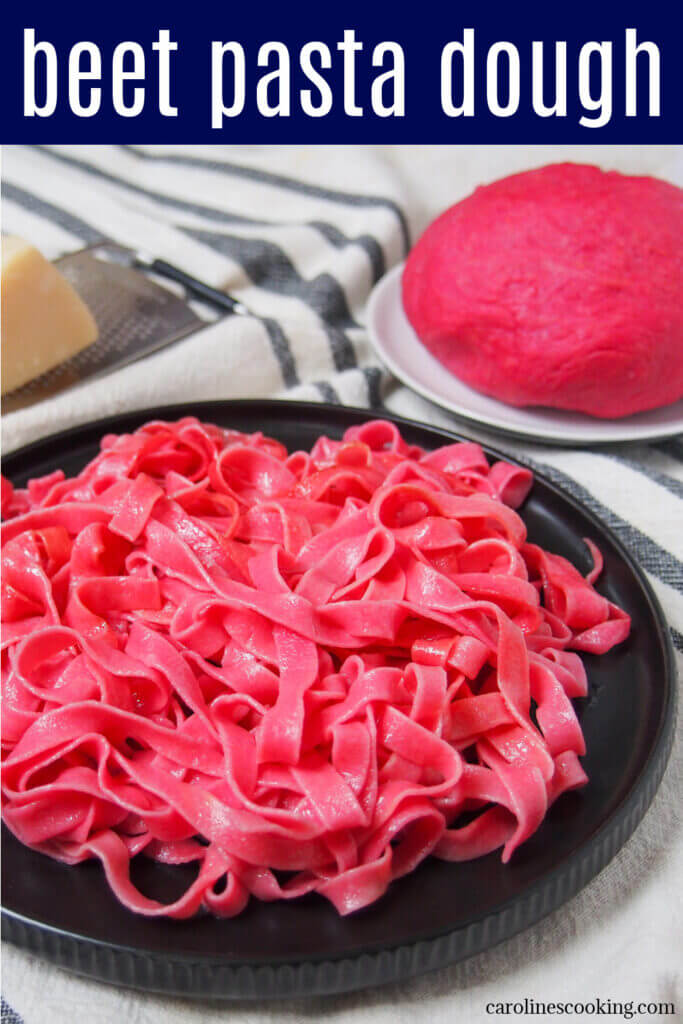
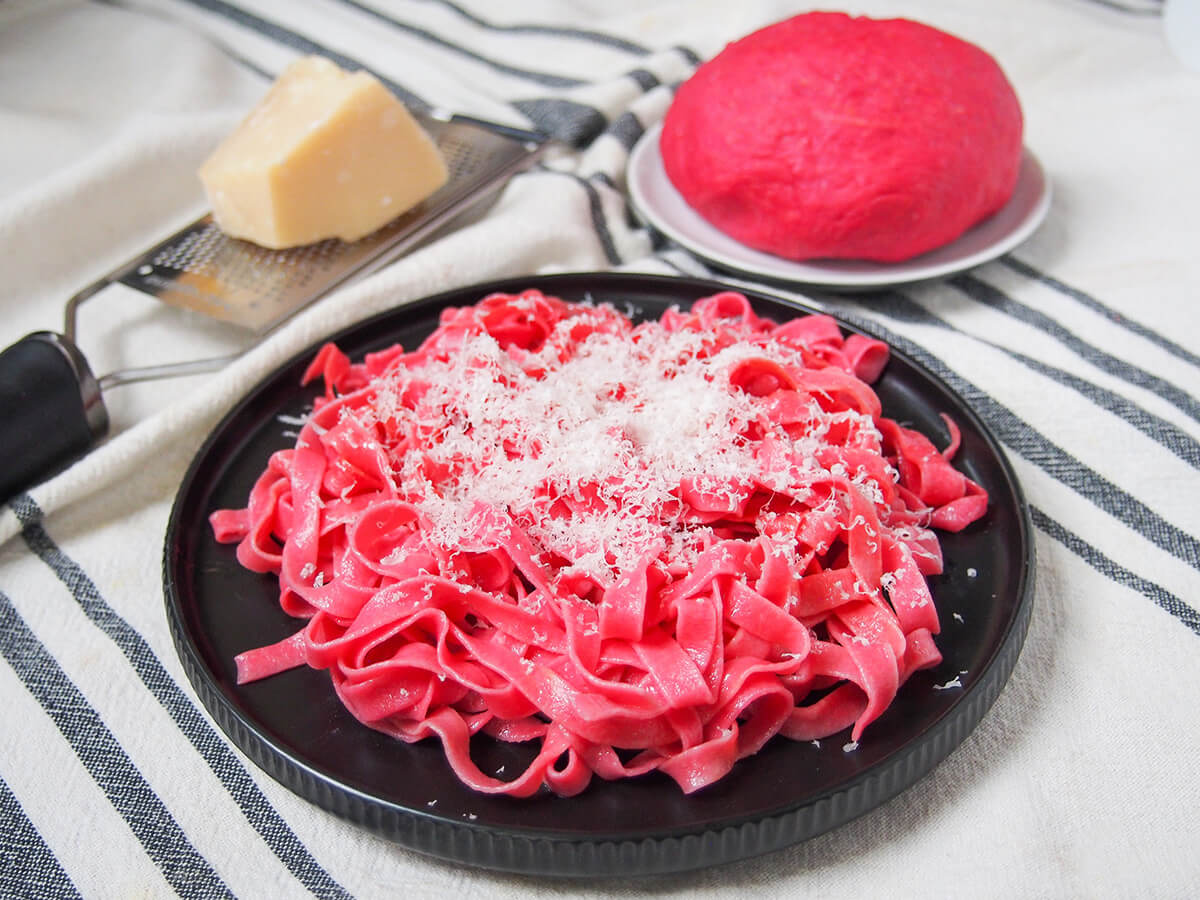
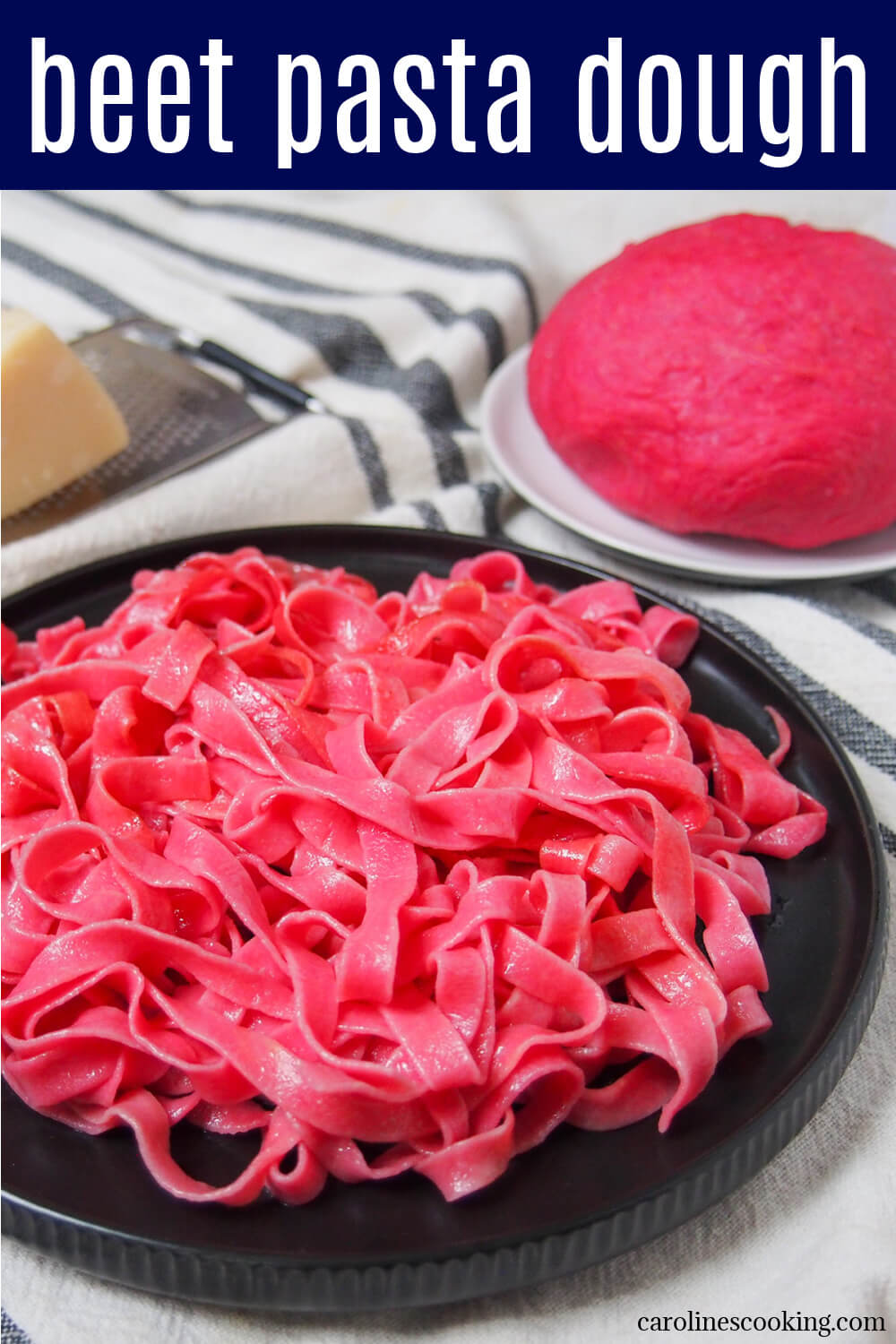
This beet pasta dough (beetroot pasta dough) creates a beautiful pink pasta thanks to beet puree in the dough. It's colorful, with a lovely soft texture and is a great variation on homemade fresh pasta.
This post may contain affiliate links, where we earn from qualifying purchases. See more details in the policy page.
While making your own pasta may seem like a bit of work, as long as you allow a little bit of time, it's really not difficult. And making your own fresh pasta can be pretty satisfying.
It's one of the kitchen projects my kids enjoy helping with. Each of them has a job, and everyone enjoys the results, whether that's pumpkin ravioli, tortellini in brodo, chestnut pasta or others.
This lovely bright pink, almost purple, version is a favorite for everyone. It's soft and easy to work with, has a wonderful color, and I love that it sneaks in a little extra veggies too.

How is fresh pasta different from dry pasta?
Fresh pasta is a little different from the pasta you generally buy in the store in a couple ways. First, the most obvious, is that it is soft as it's freshly made. This means you can roll it, cut it, bend it, fill it and form it into shapes.
Dry pasta, meanwhile, is firm and you can no longer change the shape. Even once you cook it, it simply grows in the shape it was when dried. One of the other knock-on impacts is that dry pasta takes longer to cook as it needs to re-hydrate. It can take anything from around 6 to 10 minutes to cook, while fresh pasta will take only a minute or two.
The other big difference is ingredients. You generally make fresh pasta from flour and eggs, and often a little olive oil. Dry pasta, meanwhile, is generally just flour and water. You can buy dry egg noodles as well, but most Italian dried pastas don't include egg.
In Italy, you often use "typo 00" flour for fresh pasta which is a fine soft flour, but all purpose flour (plain flour) is close and works as well. Dry pasta often includes some or is all semolina flour which is a little coarser.
Preparing the beet for pasta
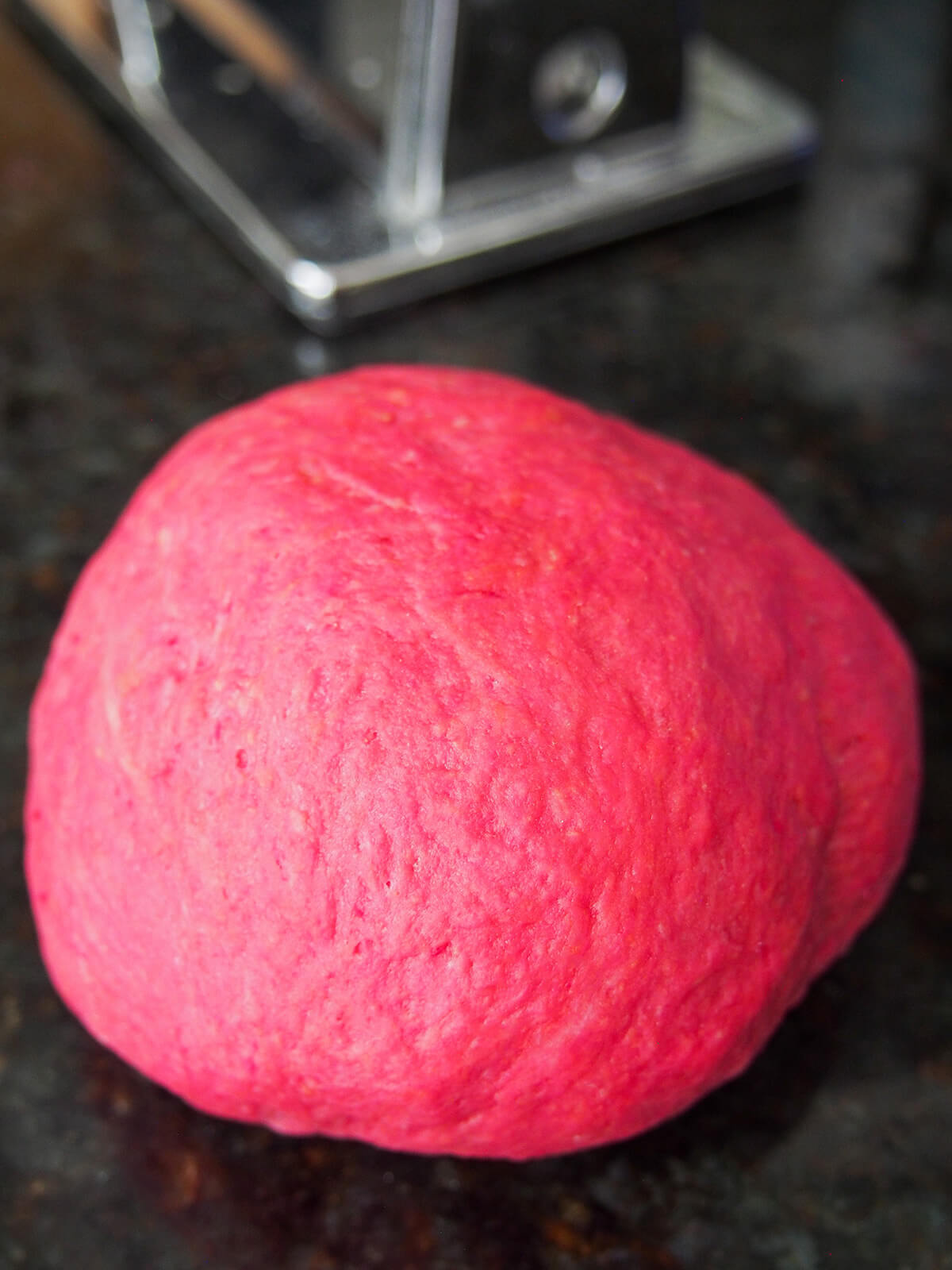
To make beet pasta, you add beet puree (or beetroot as it's called in the UK) into the dough to give it that lovely color. This color only comes from red beet - golden beet will be more yellow, and chioggia will be at best a pale pink, but may even be a muddy color as the color tends to lighten a lot with cooking.
To make the puree, I recommend cooking the beet yourself if you have time. You can either boil or roast beet - it's up to you which you prefer and as suits other things you may be cooking. I generally prefer the flavor from roast beet as it's a little more robust, so I do that if I can.
It's generally best to cook the beet whole then peel it after it cools a little. If you roast chunks, while quicker, you can get crisp edges which isn't ideal for a puree. And if you boil chunks, the juices bleed more which also isn't ideal.
The time it takes to cook a whole beet (beetroot) can vary greatly depending on the size. So start with around 40 minutes and test with a knife to see if it's tender. If needed, cook a bit longer.
Then let the cooked beet cool, peel it then blend it up in a blender or with an immersion magazine to make a smooth puree. You can use a food processor, but I find you often still get some lumps so a blender is better. All this can be done ahead and you can store the puree in the fridge a day or two until needed.
How to make beet pasta dough
To make pasta with beets, you simply mix the beet puree in with the eggs and flour. Since the puree is relatively moist, you reduce the number of eggs relative to flour to compensate.
As with other homemade pastas, make sure you knead the dough a couple minutes, then let the dough rest a little before rolling. This helps the gluten rest so it's a little easier to work with. Wrap the dough with plastic wrap/cling film to avoid it drying out.
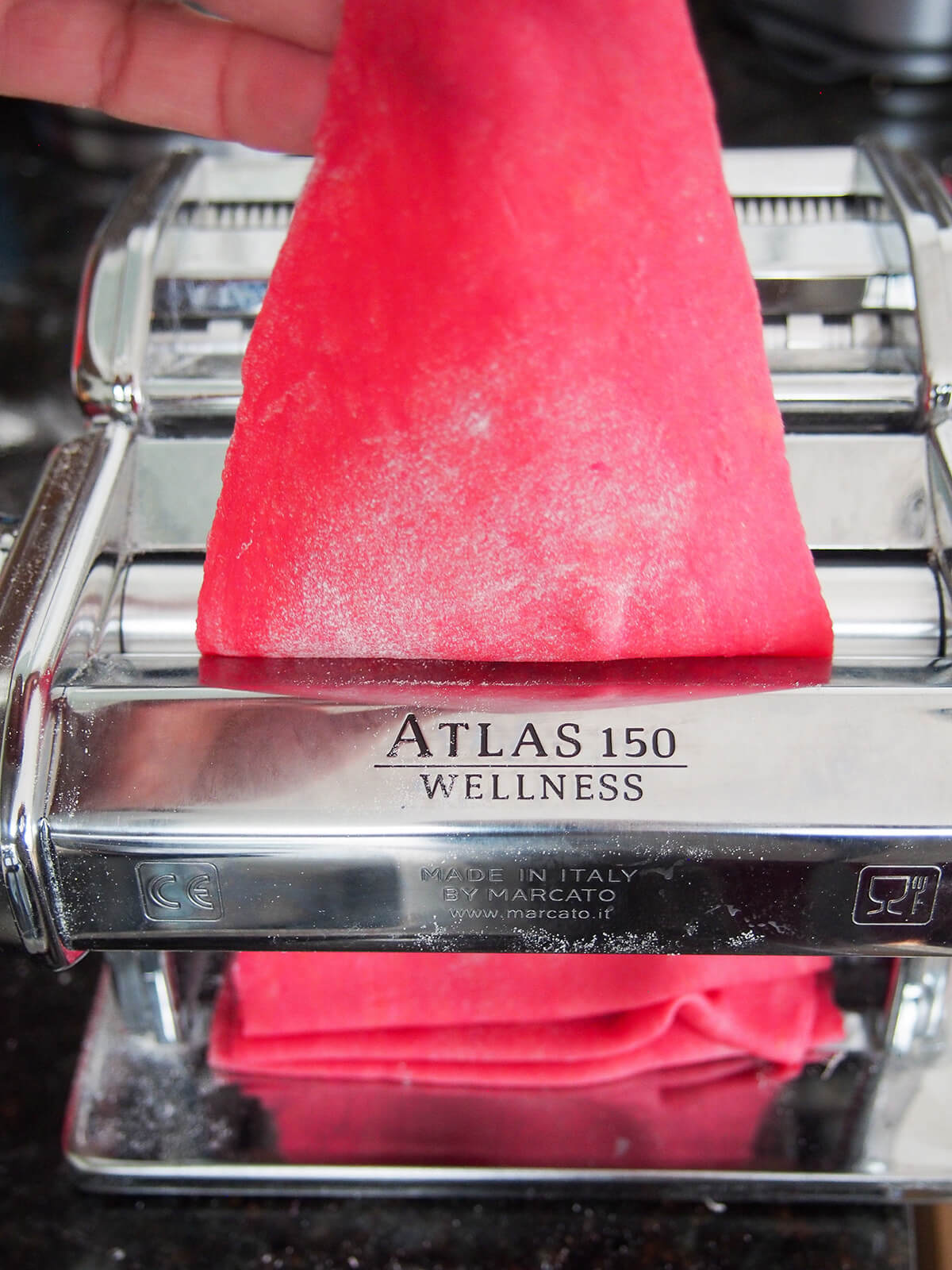
Then, it's time to roll it out. Take part of the dough at a time and if you have a pasta machine, you can roll it through from 0 to the thickness you prefer. But you can also simply roll the dough with a rolling pin.
I like to roll this relatively thin then cut it into linguine, but you can also make other shapes, as you prefer. I find it a little soft as it is here to use to make ravioli or other filled pasta, but you can definitely use it for that. I'd recommend you replace one of the eggs with just a yolk to make it a little less soft.
Whatever way you choose to roll or form the pasta, be sure to dust the dough with flour regularly to avoid it being sticky. Once rolled, set it on a work surface or baking sheet dusted with more flour so it's easy to pick up when you are ready to cook.
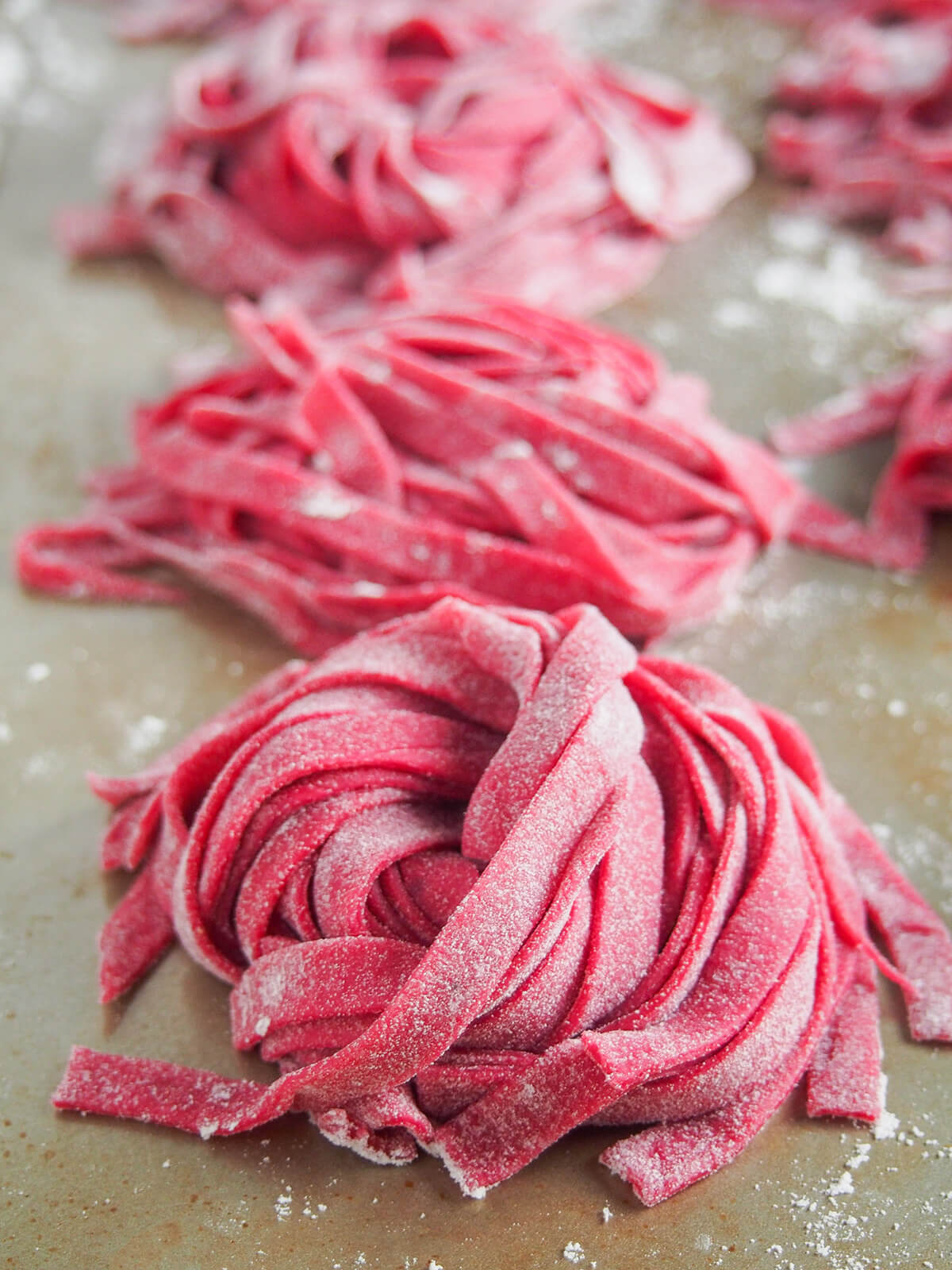
What to serve with beet pasta
This pasta has a lovely delicate flavor so works well with simple sauces. We really like it with walnut sauce or simply browned butter and parmesan. It would also be good with a cream sauce or a gorgonzola sauce, for example.
This pasta is best when cooked for as short a time as possible - so just enough that it rises to the surface for a few seconds and not much more. The reason for this is the color bleeds out if you cook it longer. The cooked pasta will be more pink than the more purple-like color of the dough, but it will be paler if you let it cook longer.
So, make sure you have whatever else you want to serve it with ready. You can enjoy the pasta simply as it is with a sauce, or else have it with a side to for example steak, chicken or shrimp. You could also serve a salad or some grilled vegetables alongside, for example.

This beet pasta dough is easier to make than you might think, and with such pretty and delicious results. It has a lovely delicate flavor and there's something extra satisfying about making and enjoying your own homemade pasta. So be sure to make and enjoy soon.
Try these other homemade pastas:
- Spinach pasta (a lovely green color)
- Crab ravioli (with a tasty, delicate crab and ricotta filling)
- Fresh pumpkin pasta (with pumpkin in the dough!)
- Plus get more Italian recipes in the archives.
Beet pasta dough
Ingredients
- ⅓ cup beet puree beetroot (see below)
- 2 large eggs
- 1 egg yolk
- 1 pinch salt
- 2 ¼ cups all purpose flour plain flour
Instructions
To prepare beet puree
- Preheat the oven to 375F/190C.
- For one recipe quantity (so ⅓ cup/84g puree), use around 7oz/200g of beet, either one or two beet depending on size. Place the beet/beetroot in a piece of foil in a baking dish and drizzle over a small amount of oil (or you can leave as it is if you prefer). Wrap with the foil then roast in the oven until a knife inserted into the middle goes in easily as it is tender. This can take around an hour, or more if the beet is large, maybe a little less if you use two smaller beet. Set aside to cool.
- Once the beet is cool, peel off the skin and cut the beet into chunks. Place the beet in a blender or use an immersion blender to blend into a smooth puree. Measure out ⅓ cup (80ml) of the puree to use for the pasta - if there is more, use for something else.
To make the beet pasta
- Place the flour, eggs, egg yolk, beet puree and salt in a food processor and pulse until well mixed, scraping down as needed. Alternatively, you can mix by hand by placing the flour on a clean surface, creating a well, then adding the other ingredients in the middle.
- Pulse the mixture, if using a food processor, until the dough comes together. If mixing by hand, use a fork to break up the egg and gradually mix in the flour.
- Remove the dough to a floured surface and knead with floured hands for about 5 minutes. It should be soft but not sticky - if it is, add a little more all-purpose/plain flour as you knead.
- Wrap in plastic/cling film and allow to rest at room temperature for around 30 minutes. At this stage, you can keep the dough in the fridge for a day or two until ready to use. Then, let it rest at room temperature around 30 minutes before rolling.
- When ready, cut a chunk from the dough (around ⅙ to ¼ at a time) and cover the piece you aren't working with with cling film/wrap or a damp cloth to save it drying out.
- As you work with each piece, flatten it out slightly, dust with flour then put it through your pasta roller on the widest settings a few times (around 2 - 3 times) until smooth, dusting with flour in between if at all sticky. This is a relatively soft dough so you will likely need a bit extra flour. Then move up the settings rolling ideally twice at each setting (once from either end) until you get to the thickness you would like. On my machine, I typically roll to about '5' or '6'.
- Then, either use the cutter attachment or hand cut if you want to make into linguine/fettuccine and place the ribbons onto a floured tray or surface in little stacks or laid flat. Alternatively, cut into other pasta shapes eg bow ties.
- Once all is done and ready to cook, place handfuls at a time in boiling water, helping the pieces to separate as you add them, for around 2-3 minutes until they come to the surface and are cooked.
- Serve with your preferred sauce (we like it with browned butter or walnut sauce, it's also good with a cream sauce).
Video
Notes
Nutrition
See some of my favorite cooking tools and ingredients in the Caroline's Cooking Amazon store.
Remember to pin for later!
Elyse Ziech says
Much love and thanks! ✨