
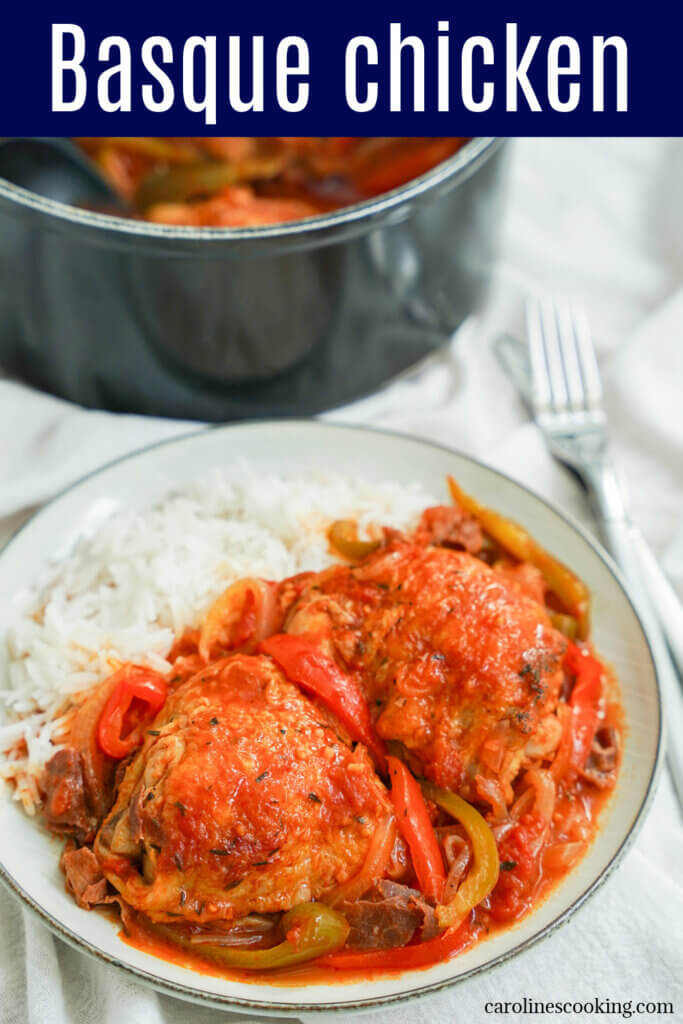
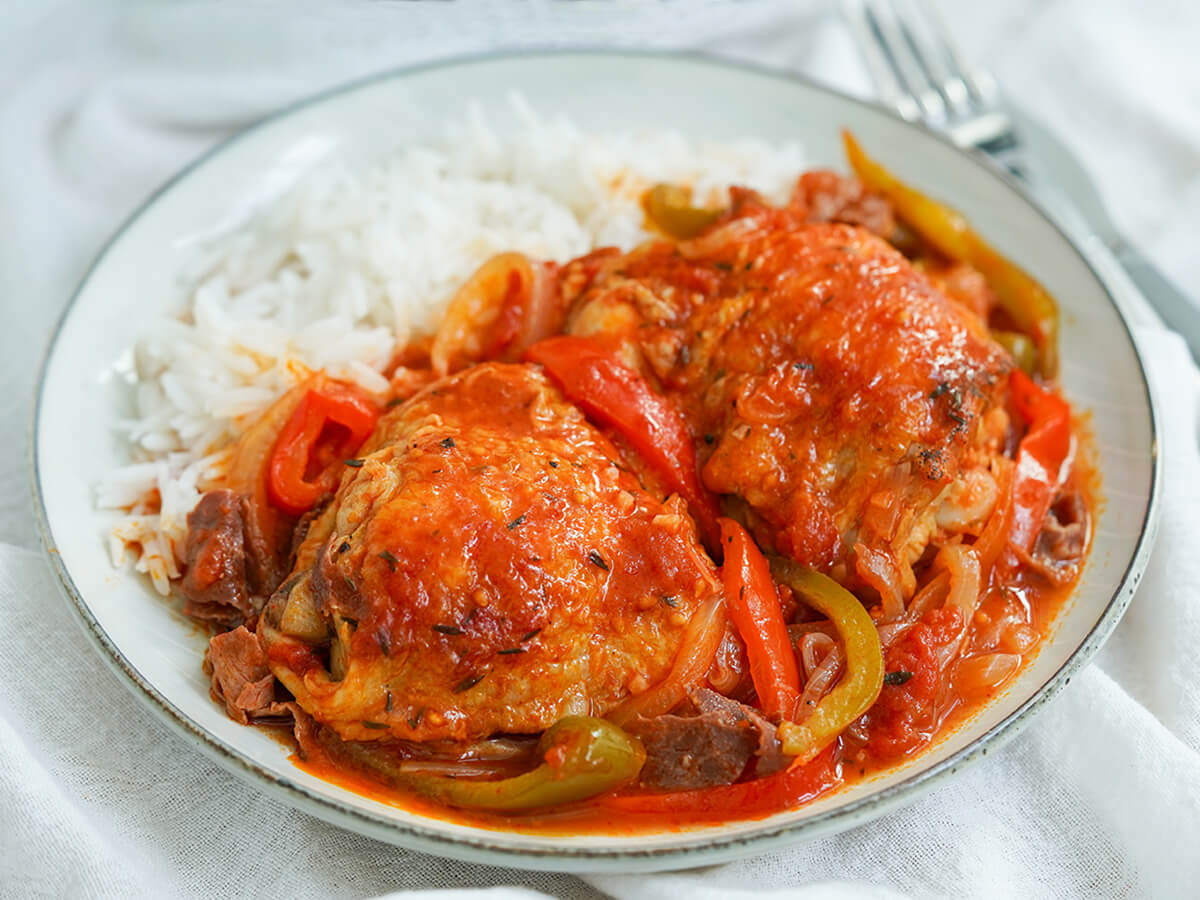
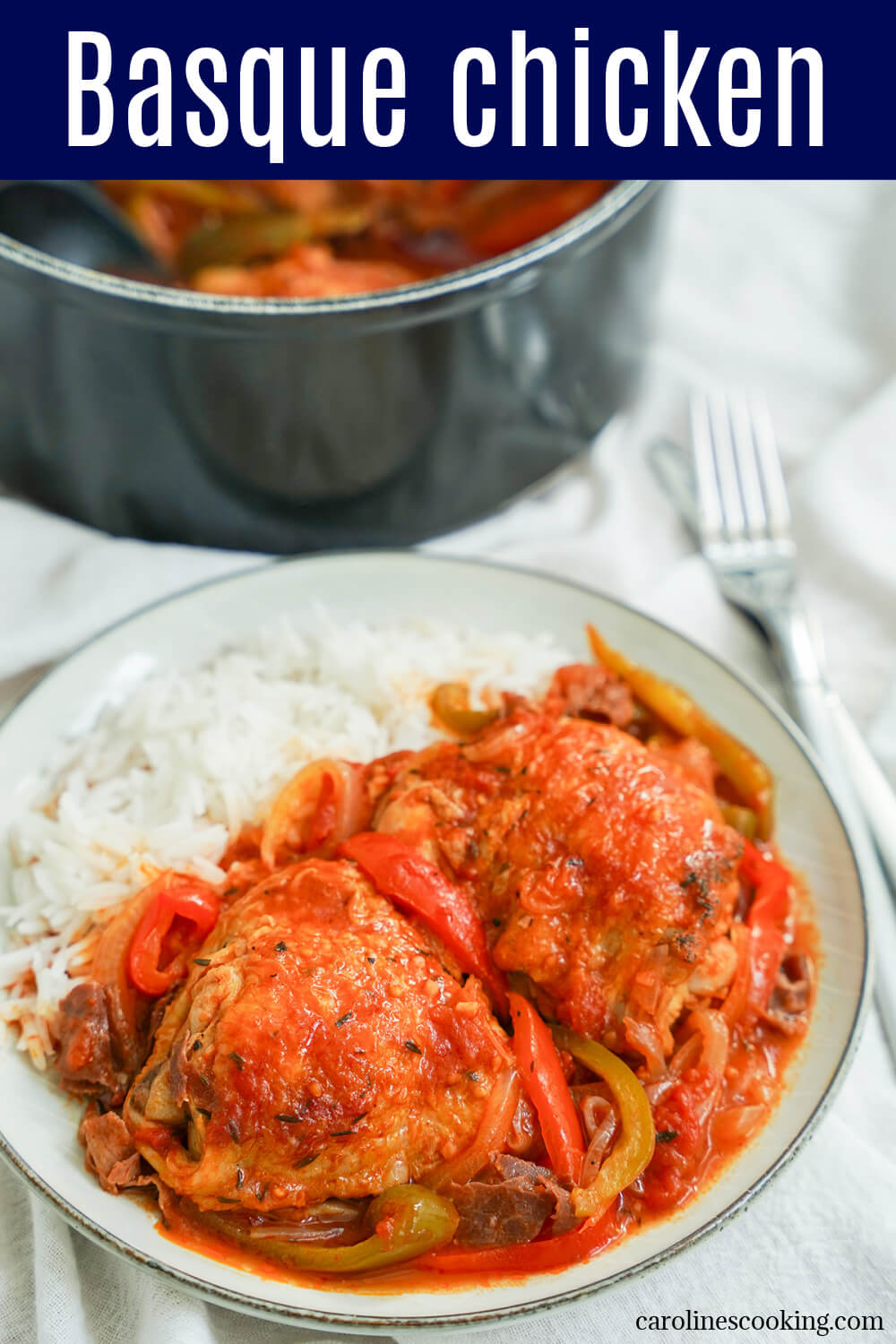
Basque chicken combines tender chicken braised in a flavorful sauce of peppers, onions and tomato. The simple yet bright seasonings make is rustic, comforting yet not too heavy either. A delicious easy meal.
This post may contain affiliate links, where we earn from qualifying purchases. See more details in the policy page.
The first time I went to live in Spain (to teach English), I had to choose between taking a job in Catalunya or the Basque Country. I ended up choosing Catalunya, which is an area I still love, but I knew I at least needed to visit the Basque Country as well. When I did, I found that it, too, is pretty special.
While many think of the Basque Country as being part of Spain, it in fact straddles the border with France. You'll see some French or Spanish influence either side, but a lot is distinctly Basque, like the Basque language. Food and wine are a huge part of the regional culture, both traditionally and becoming more known internationally in recent years.
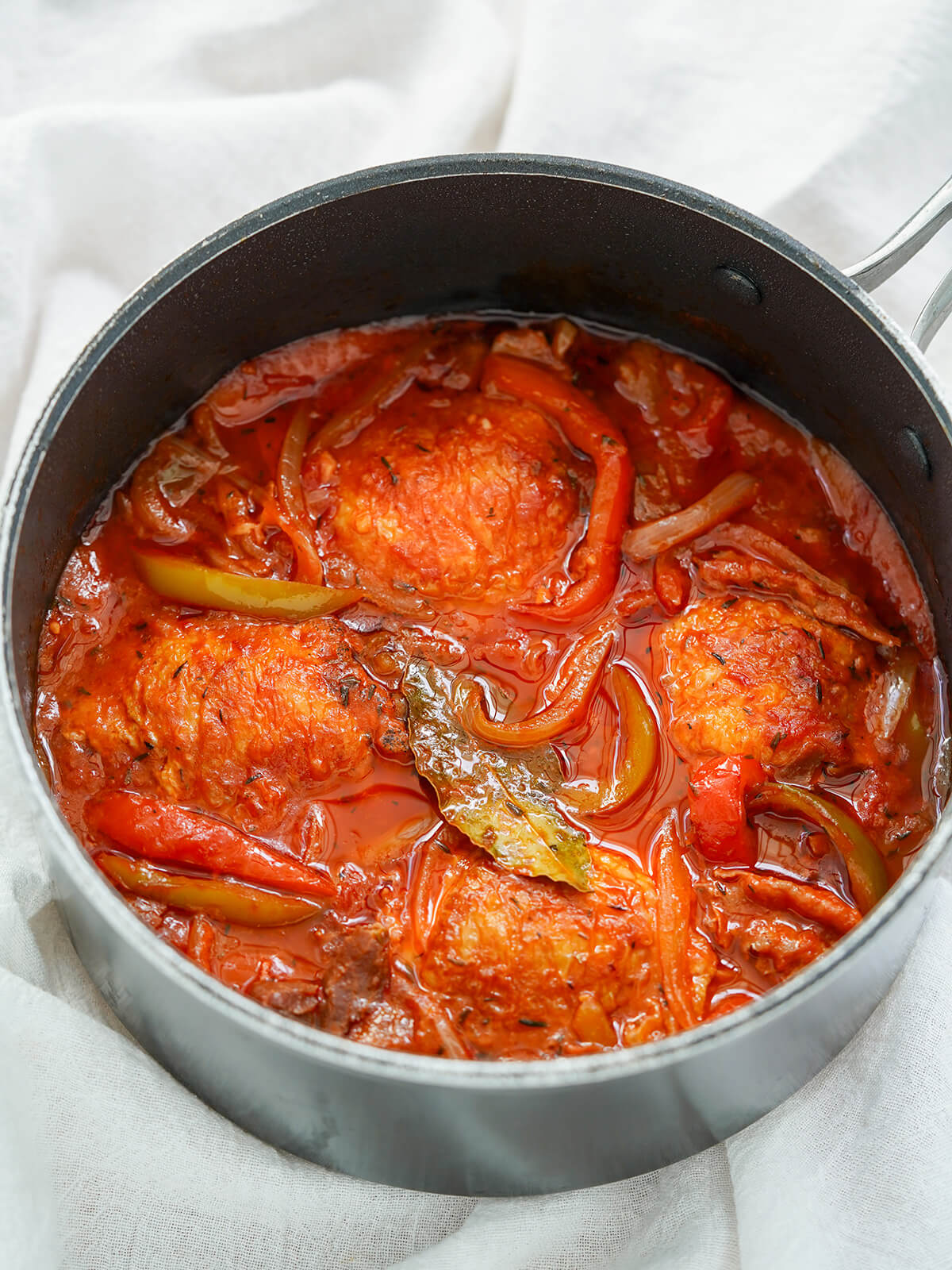
Some dishes are more from the Spanish part, like pintxos, others are French-Basque. Then some are enjoyed across the region and beyond, like this chicken dish. Poulet Basquaise has long been enjoyed across France. In Spain, Pollo al Chilindrón, which some consider the same or maybe a later variation, is especially enjoyed across Northern Spain.
Ingredients in Basque chicken and variations
You'll find a couple variations in this dish, in particular slight differences between what you'll find in France and Spain. All have a few core ingredients:
- Chicken - traditionally you either use a whole chicken cut into pieces of bone-in pieces like thighs and drumsticks. Having both skin and bone helps add to the flavor and keep the chicken tender.
- Peppers - here the sauce is essentially piperade, which is a dish made with pepper, onion, garlic and tomato. All are very commonly used ingredients in the area. You use a mix of red and green peppers, to reflect the colors of the Basque flag and make a more colorful dish.
- Onion and garlic - these form an aromatic base, and are a key part of the piperade.
- Tomatoes - you can either skin and chop fresh tomatoes or use canned/tinned. If the latter, use crushed (or break up if you can only find larger).
- White wine - you typically add a little to deglaze and it also adds flavor to the sauce. If you want to skip, you could use chicken stock instead, and maybe add a splash of vinegar or lemon for a touch of acidity.
- Espelette pepper/paprika - piment d'espelette is a French Basque mild chili that adds a lovely depth of flavor and is typical in the French version. In Spain, you may more often see pimentón, Spanish paprika, which also has a lovely aromatic depth. Paprika with a pinch of cayenne would work as an alternative, but I do recommend espelette pepper if you can as it has such a lovely flavor to it.
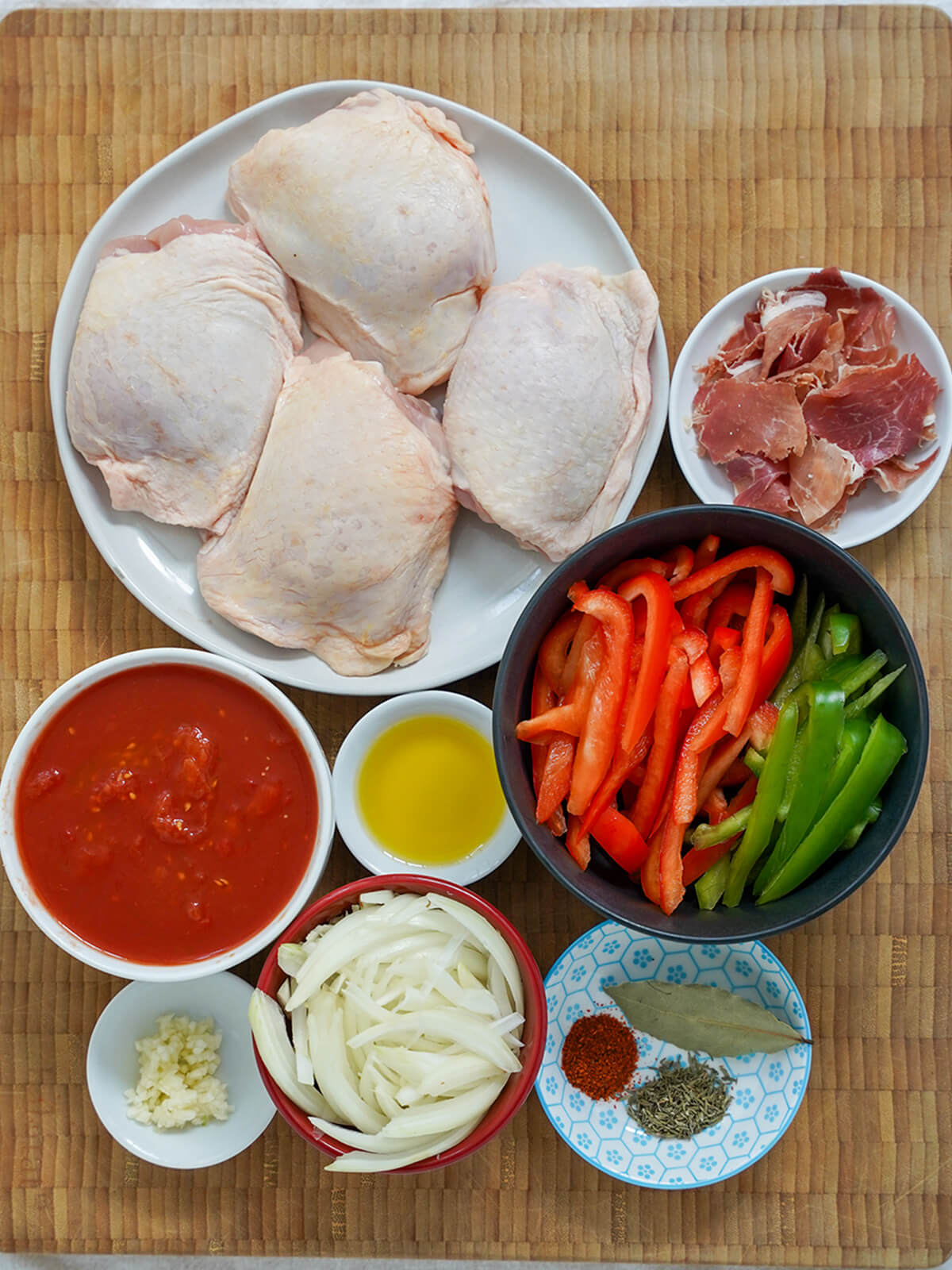
You also typically add some herbs, particularly thyme and bay, to add aromatic flavor. Most also include either ham or chorizo - in France you typically use the local Bayonne ham, while in Spain it would be Serrano ham or chorizo. If you can't find either ham, prosciutto works as an alternative.
Some add olives, though I don't tend to as I prefer the other flavors to shine. I've kept more with the French style here, though as I say the differences are relatively minor.
Tips and steps to make this dish
This dish comes together pretty easily with limited hands on cooking and just a few steps. Though a few tips to help it come out well:
Have everything ready before cooking - Start by preparing the vegetables so they are ready when you come to cook them and season the chicken. You typically cut the onions and peppers in strips so you get more texture in the end dish.
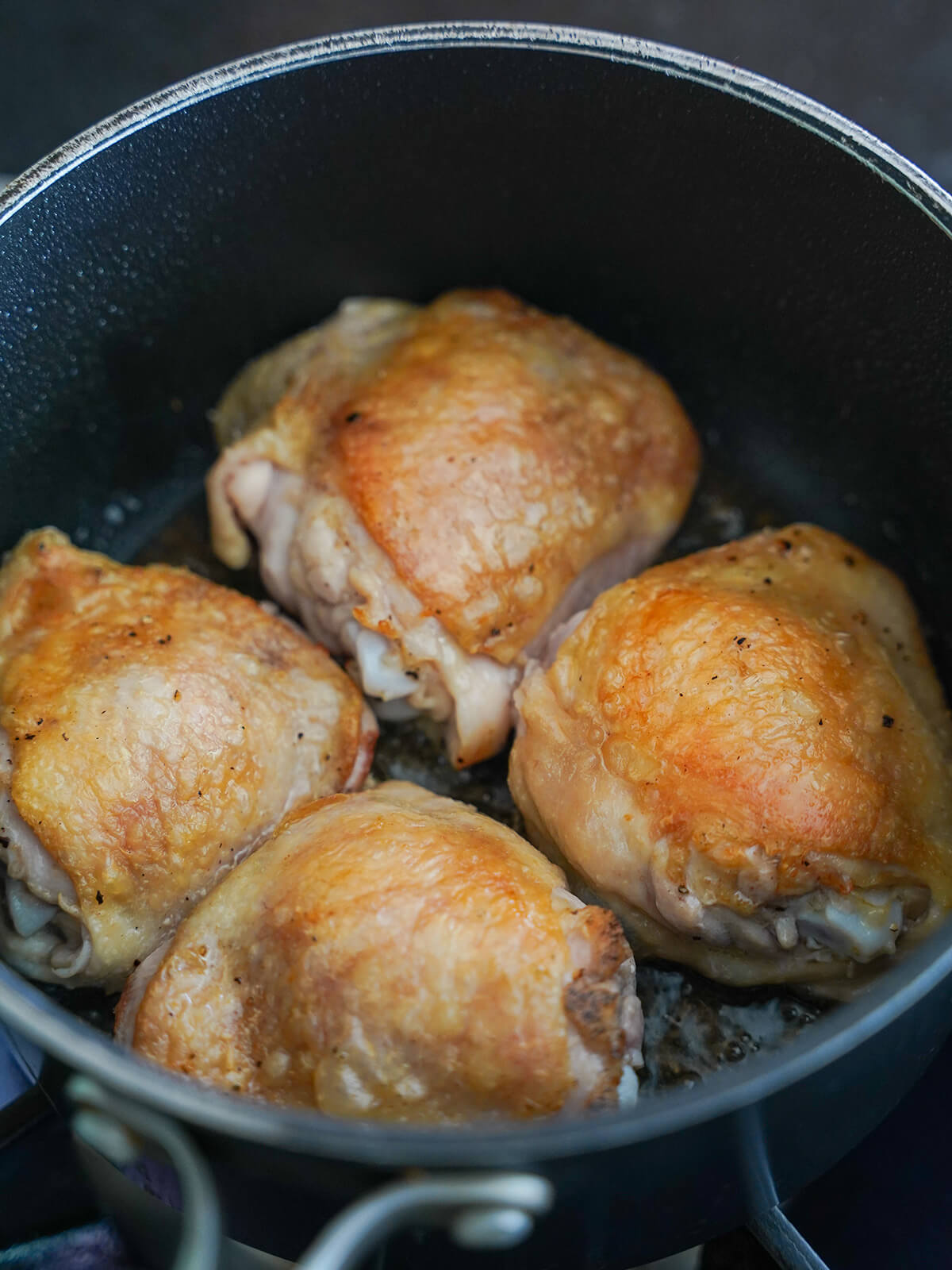
Don't rush browning the chicken - The first step in cooking is browning the chicken, skin side down first. Cook over relatively high heat and in batches, if needed, to get a nice sear. Don't rush this, as it's important for developing flavor. Then, quickly crisp the ham. Set each aside after cooking then start on the sauce.
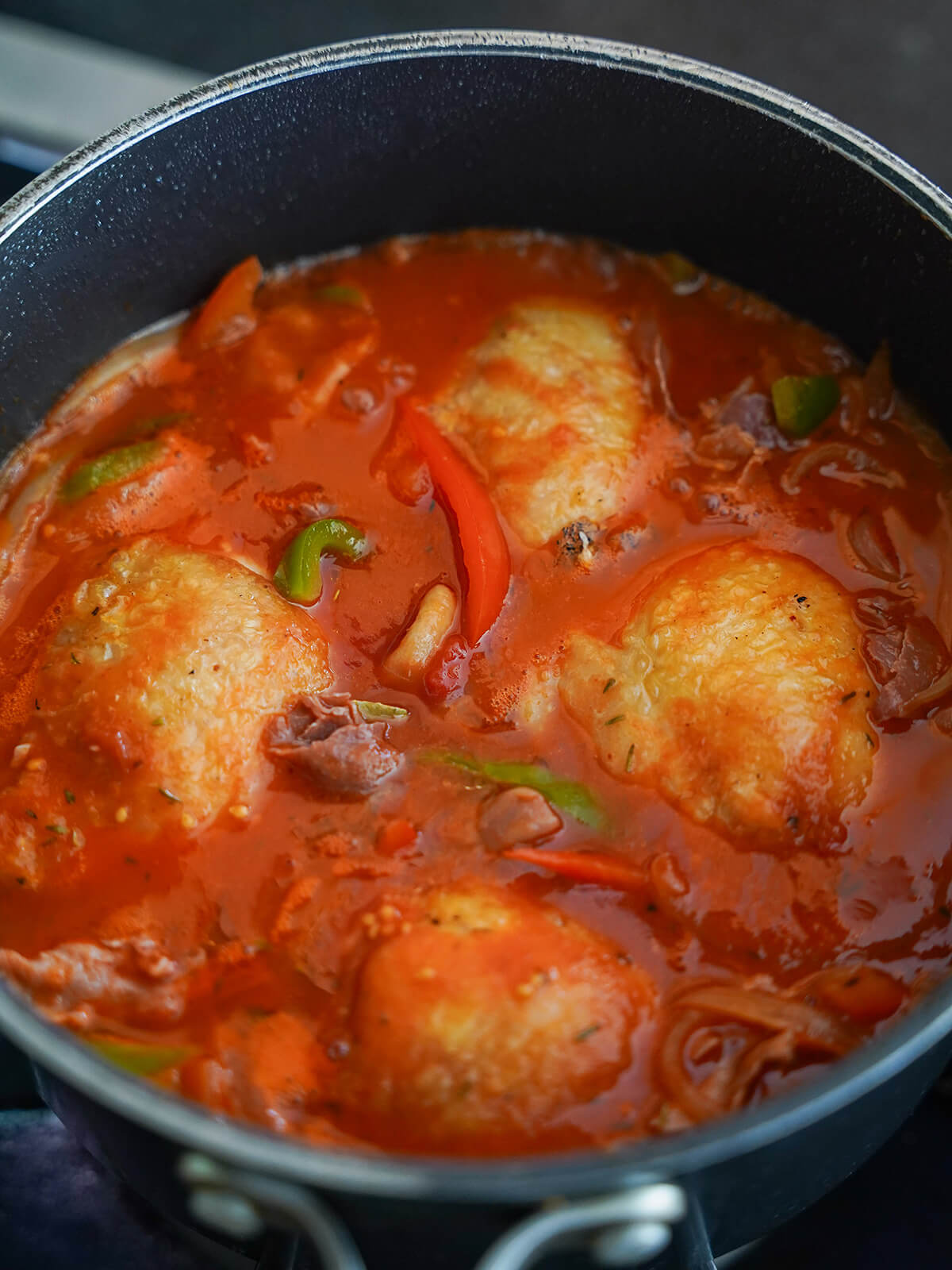
Give the sauce time to cook - You first soften the onions and peppers to bring out their natural sweetness. Then add the garlic, cook briefly, and deglaze with the wine. Scrape to get any browning from the bottom of the pot - this all adds flavor! Next add the espelette pepper, herbs and tomatoes and bring to a simmer. Add back the chicken and ham and simmer uncovered. Give it time, as this is what lets the flavor develop, the sauce thicken and the chicken become wonderfully tender.
Serving and storing
Since the sauce is packed with vegetables you don't need a lot more to go with it. You typically serve this with either white rice or potatoes - both great for soaking up the tasty sauce. You could have some bread on the side to get every last drop!
If you have leftovers, you can store them in the fridge in a sealed container for a couple days. Then either reheat in the microwave, on the stove or in the oven. If heating on the stove or oven. I'd suggest a medium-low heat and keep it covered as it is probably already about the right thickness. If it looks like you need more liquid, add a little stock.
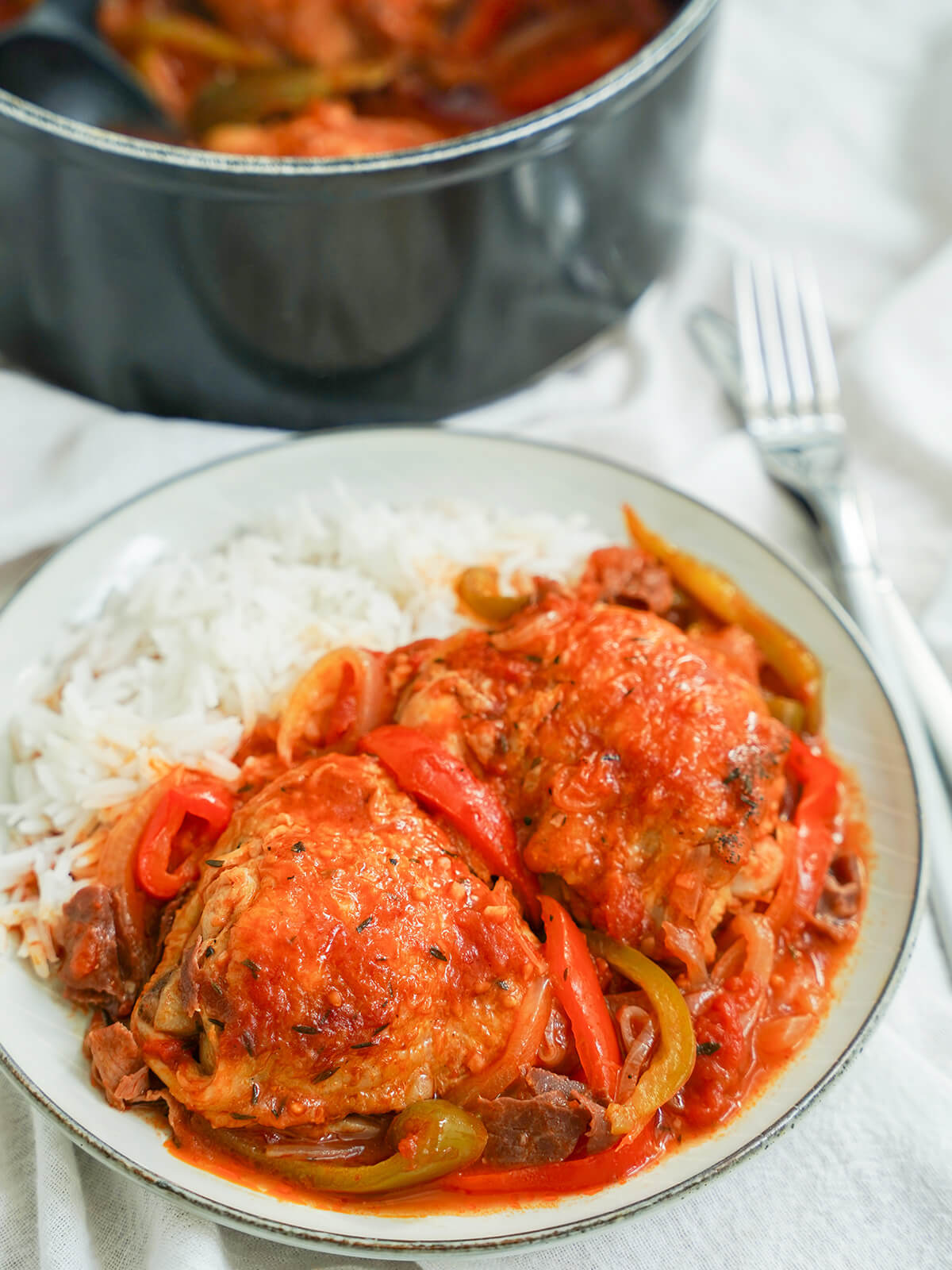
Basque chicken is a deceptively simple chicken and pepper stew that's easy to make with wonderfully tasty flavors. It's comforting and colorful, and perfect to enjoy any time.
Try these other favorite chicken recipes:
- Aji de gallina, Peruvian chicken stew - deliciously comforting with a tasty sauce that's creamy, nutty and with a little chili kick.
- Chicken and leek pie - the filling has delicate flavors, a creamy sauce, all topped with a crisp pastry layer on top. Perfectly comfort food.
- Baked tarragon chicken - a wonderfully simple and light set of flavors, this chicken pairs perfectly with rice and other simple sides.
- Plus get more main dish recipes and French recipes in the archives.
Basque chicken
Ingredients
- ½ large onion
- 1 red pepper
- ½ green pepper
- 2 cloves garlic or less if large
- 1 oz Bayonne ham or prosciutto/serrano ham
- 1 ½ lb bone in chicken thighs or part thighs, part drumsticks
- ¼ teaspoon salt or more/less as needed
- ¼ teaspoon pepper or more/less as needed
- 2 tablespoon olive oil (may not need all)
- ¼ cup white wine
- 14 oz crushed tomatoes
- 1 sprig fresh thyme or use around ½tsp (2.5ml) dried in place of a sprig
- 1 bay leaf
- ½ teaspoon espelette pepper or more to taste, see notes on substitute
Instructions
- Peel the onion and cut into relatively thin strips (lengthwise or rings, as you prefer). Remove core from the peppers and cut into strips. Peel and finely chop the garlic. Roughly tear or chop the ham into small pieces. Season the chicken pieces all over with salt and pepper.
- Warm around half of oil in a medium pot/pan over a medium-high heat , swirl to form a thin layer, then and add the chicken pieces, skin side down, in a single layer. Cook for around 5 minutes until the skin has a good sear and medium browning on it. Turn and cook a couple more minutes on the other side so lightly browned then remove the chicken from the pan.
- Add the ham to the pot and cook for a minute or two to gently cook and crisp very slightly, then remove it as well.
- Add the additional oil, as needed, then add the onions and peppers to the pot, cook for a few minutes until they are softening and the onions are becoming translucent. Stir regularly so they cook evenly and reduce the heat if needed to avoid them burning. Add the garlic and cook, stirring, for a minute more.
- Reduce the heat to medium and add the white wine. Stir to deglaze - scrape any browning from the bottom and sides of the pot to mix in as it all adds flavor.
- Add the chopped tomatoes, thyme, bay leaf and espelette pepper and stir to mix. Bring the mixture to a simmer then add back the chicken and ham. Press the chicken into the sauce so it is largely covered then continue to simmer, uncovered, for around 45 minutes. By then, the chicken should be cooked and tender enough to come away from the bone easily, and the sauce should have thickened up a little. Reduce the heat as it is cooking, if needed, to save it boiling too strongly. If it seems to be reducing too quickly, you can part cover for some of the cooking time.
- Adjust the seasoning a little as needed to your taste before serving (salt, pepper and espelette pepper), and serve warm for example with rice or mashed potatoes.
Video
Notes
Nutrition
See some of my favorite cooking tools and ingredients in the Caroline's Cooking Amazon store.
Remember to pin for later!
Leave a Reply