
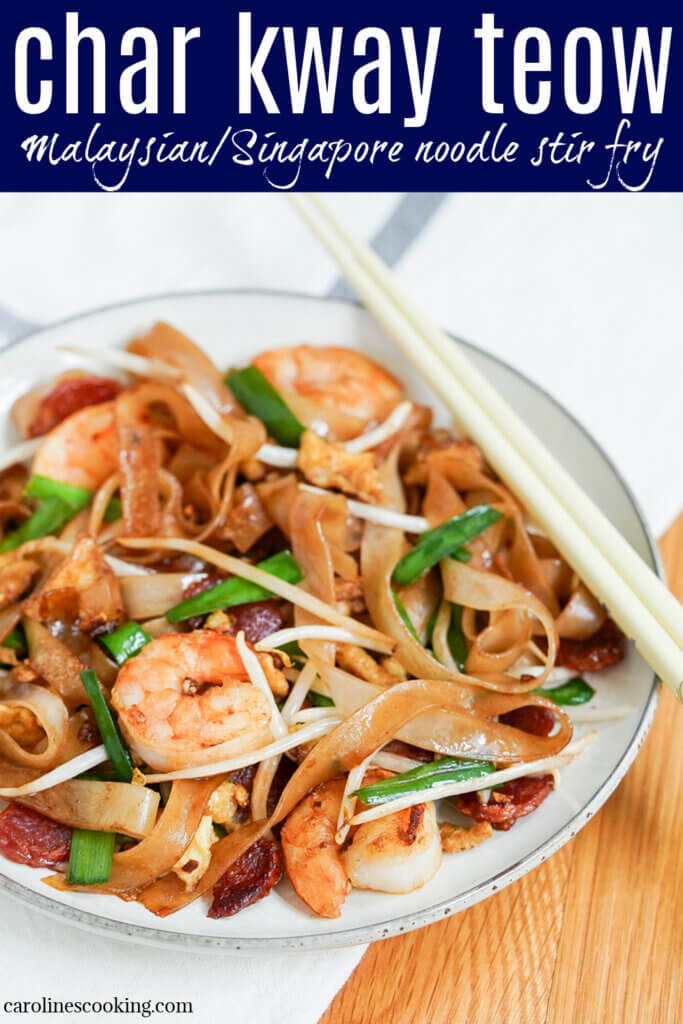
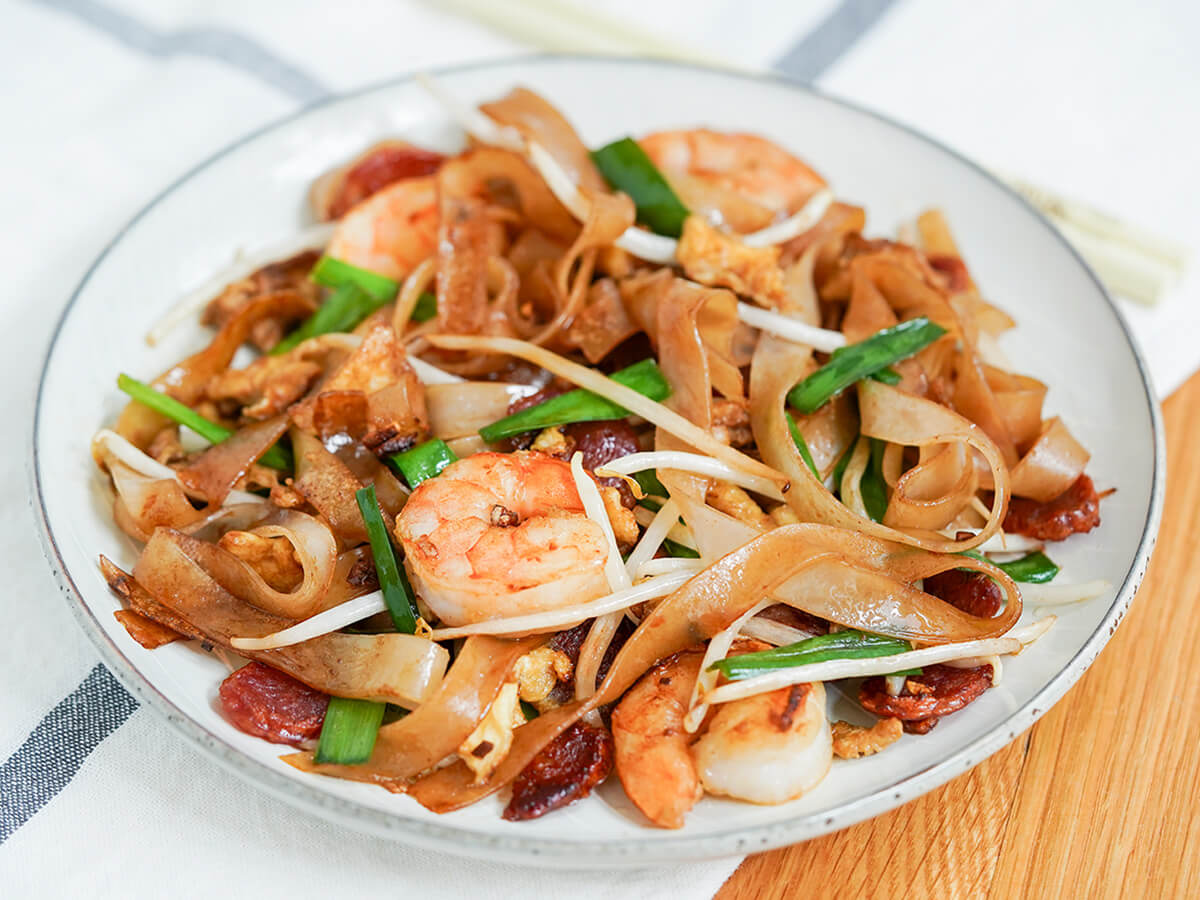
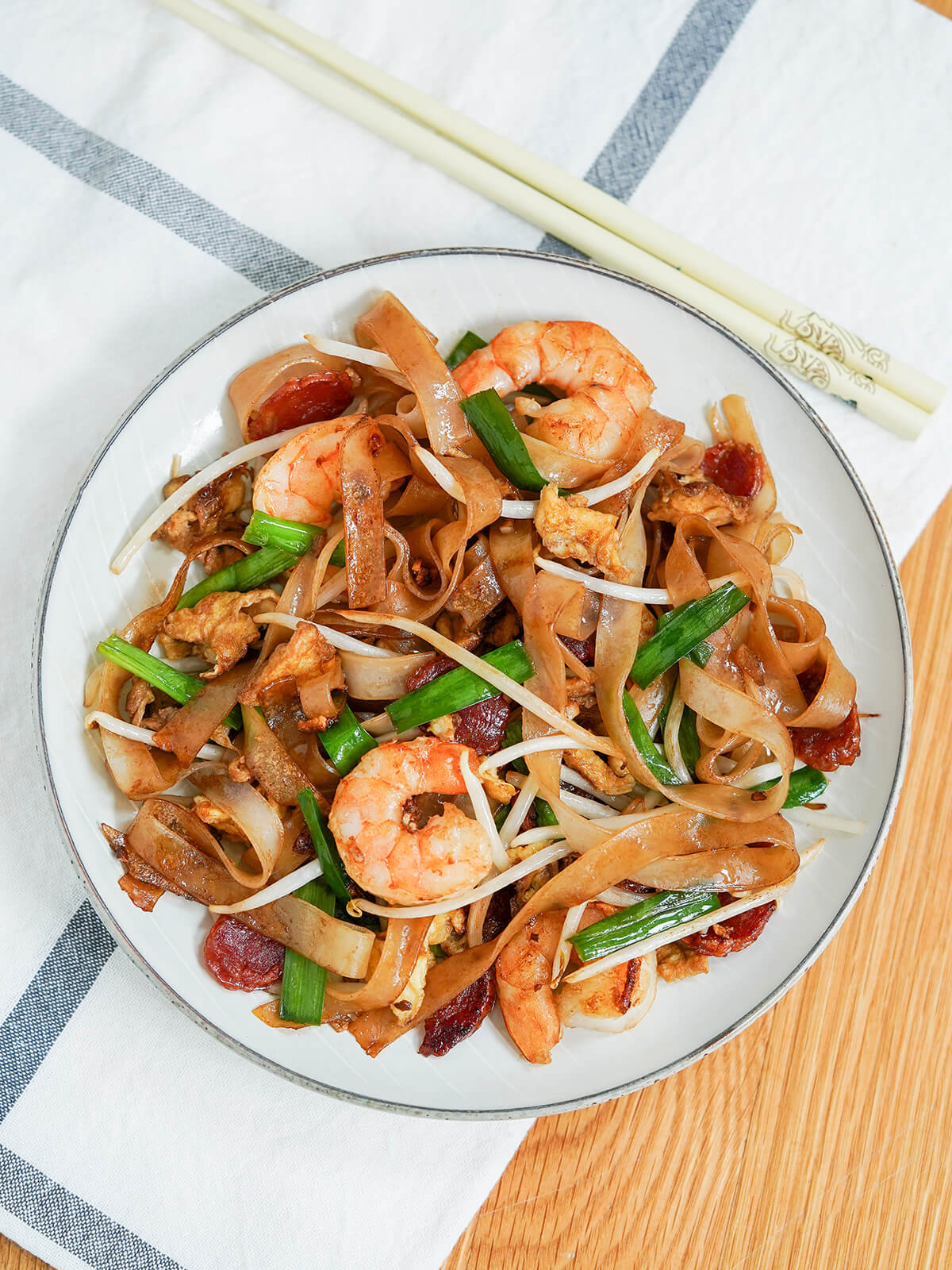
Char kway teow is a classic noodle stir fry that comes together really fast. It gets it's color and flavor from a soy-based sauce with add-ins that you can adapt to taste. While often seen as a street food, it's also perfect for a quick and easy meal.
This post may contain affiliate links, where we earn from qualifying purchases. See more details in the policy page.
Before we went to Singapore a couple years ago, I naturally researched what we should eat. I knew it's very much a crossroads of cultures and so you can enjoy a wide variety of foods, including Indian, Malaysian and Chinese and others.
Some dishes have evolved into uniquely Singaporean dishes, like kaya toast. Others have slight variations in Singapore compared to what you may find elsewhere. This is particularly true with dishes you find both there and Malaysia, like this.
Origins of char kway teow
This dish is from the maritime area of Malaysia and Singapore with Southern Chinese origins. It likely developed from Chinese immigrants to the area in the 19th century as a cheap, quick meal. As with a few dishes that developed in the region from Chinese immigrants, like Nonya pineapple shrimp curry, it uses Chinese techniques, adapted to use local ingredients.
The name comes from the Hokkien and Teochew words "char" meaning stir fry and "kway teow" referring to the flat rice noodles that are the base of the dish. Originally it was primarily lower-cost ingredients - noodles, pork lard, soy sauce and bean sprouts - but over time more expensive ingredients were added as it became the street food staple it is today.
Ingredient variations
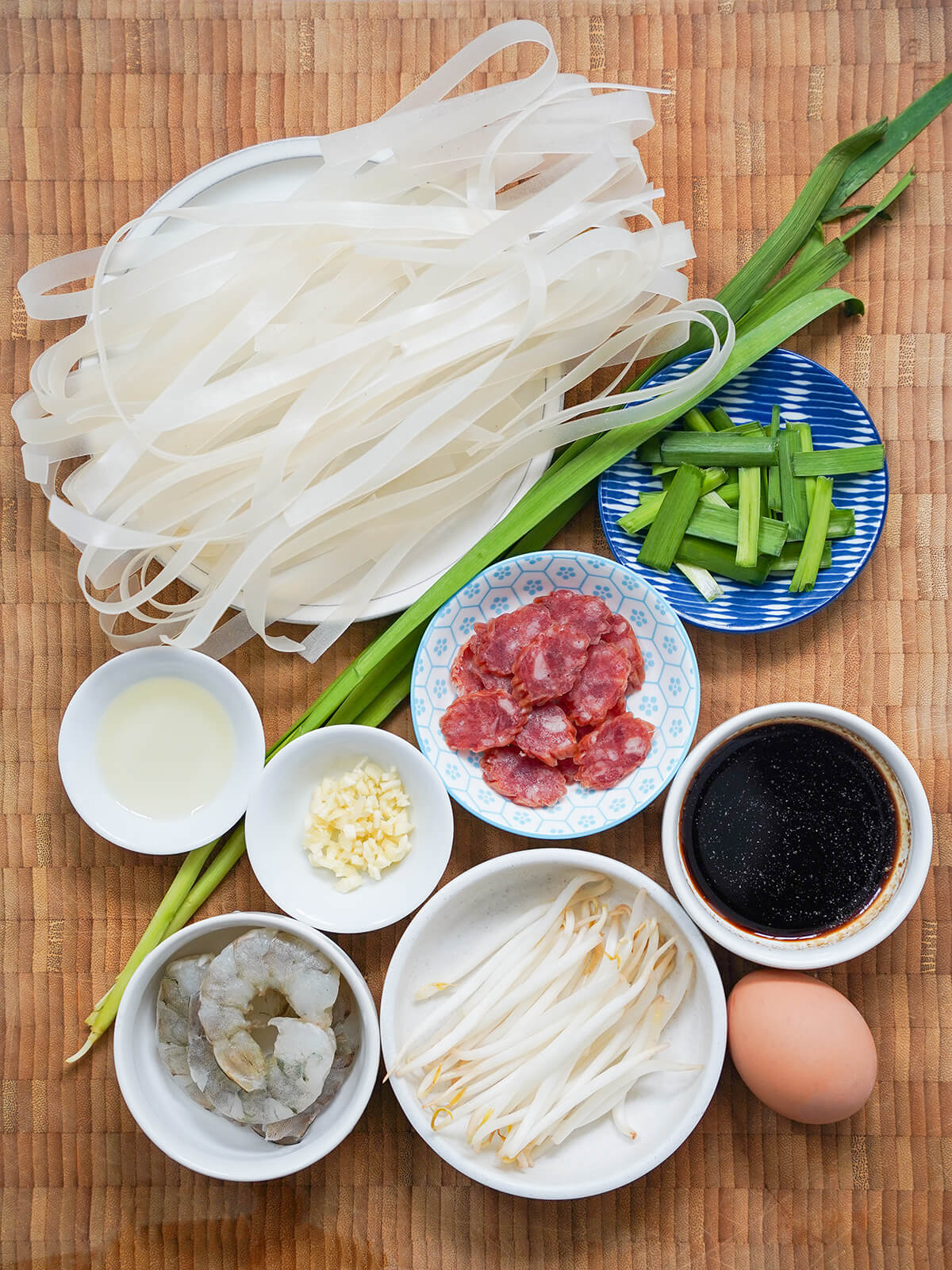
You'll find a few variations in exactly what goes into it - noodles, beans sprouts, seafood and Chinese sausage are in all, but which seafood can vary as can the noodles. Some use just rice noodles, others also wheat. You might find duck egg in Penang versions, but less so in Singapore. The sauce can vary too, with most hawkers (street food vendors) having their preferred blend.
Here I've kept broadly in the Singapore-style, but without the blood cockles that are not widely available elsewhere (and have quite a strong flavor). If you can source them and like them, feel free to add a few right at the end, as they cook fast. I've also kept to just rice noodles rather than also wheat, as some use, as much for ease but again feel free to vary.
Most ingredients are easy enough to find in larger supermarkets and if not, certainly in Asian supermarkets. Chinese sausage is definitely worth looking for as it's almost salami-like and adds a great flavor you can't quite get from other types.
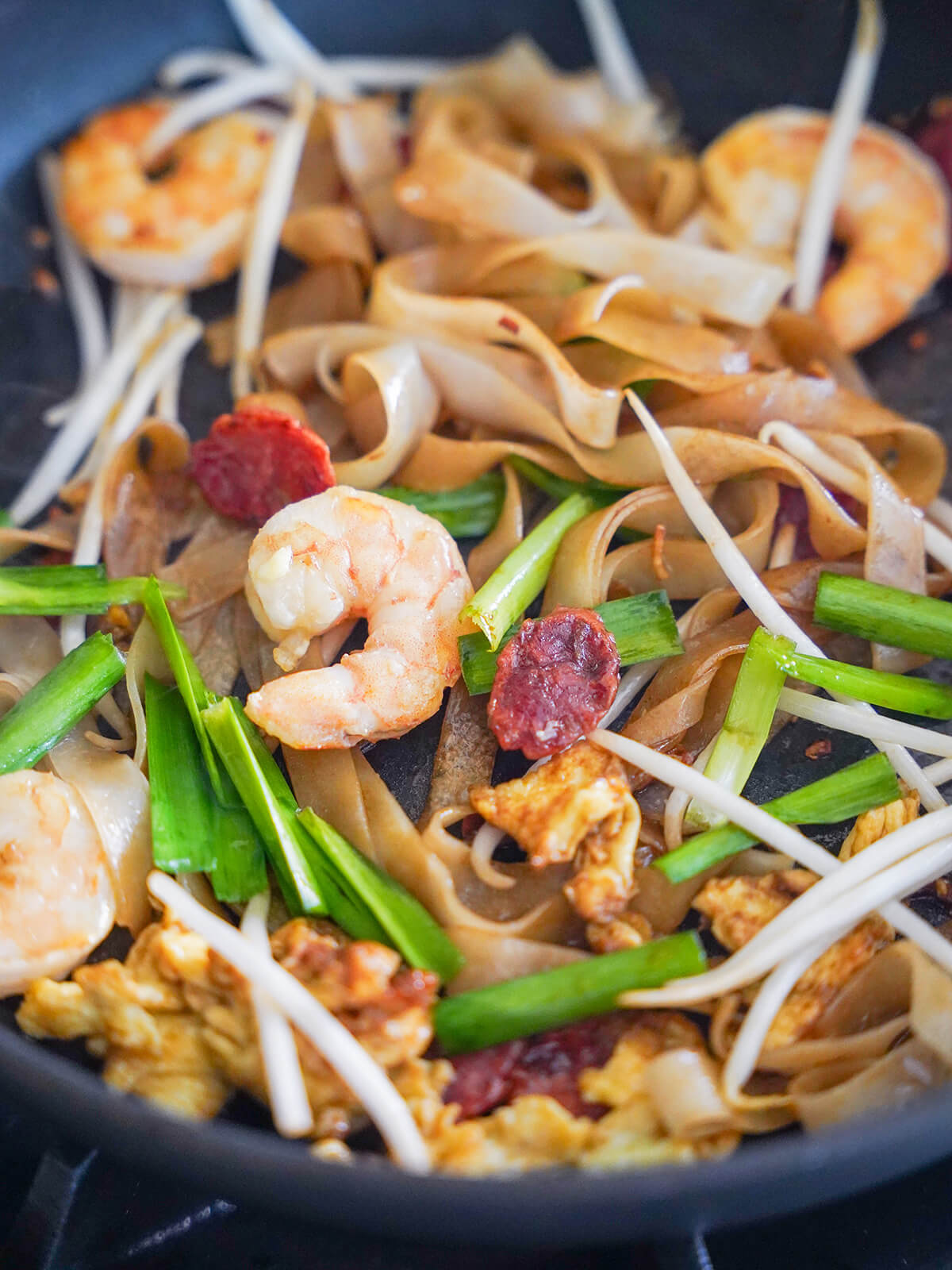
It can be a little tricky to make it quite the same as you would get in street stalls at home, as none of us have that same high-heat wok and the smokiness it gives, but you can get close. And it's a tasty dish no matter what.
The key is to get everything ready before you start cooking, as the cooking is fast. And add things in the order that reflects their cooking time. Work quickly, and keep a close eye.
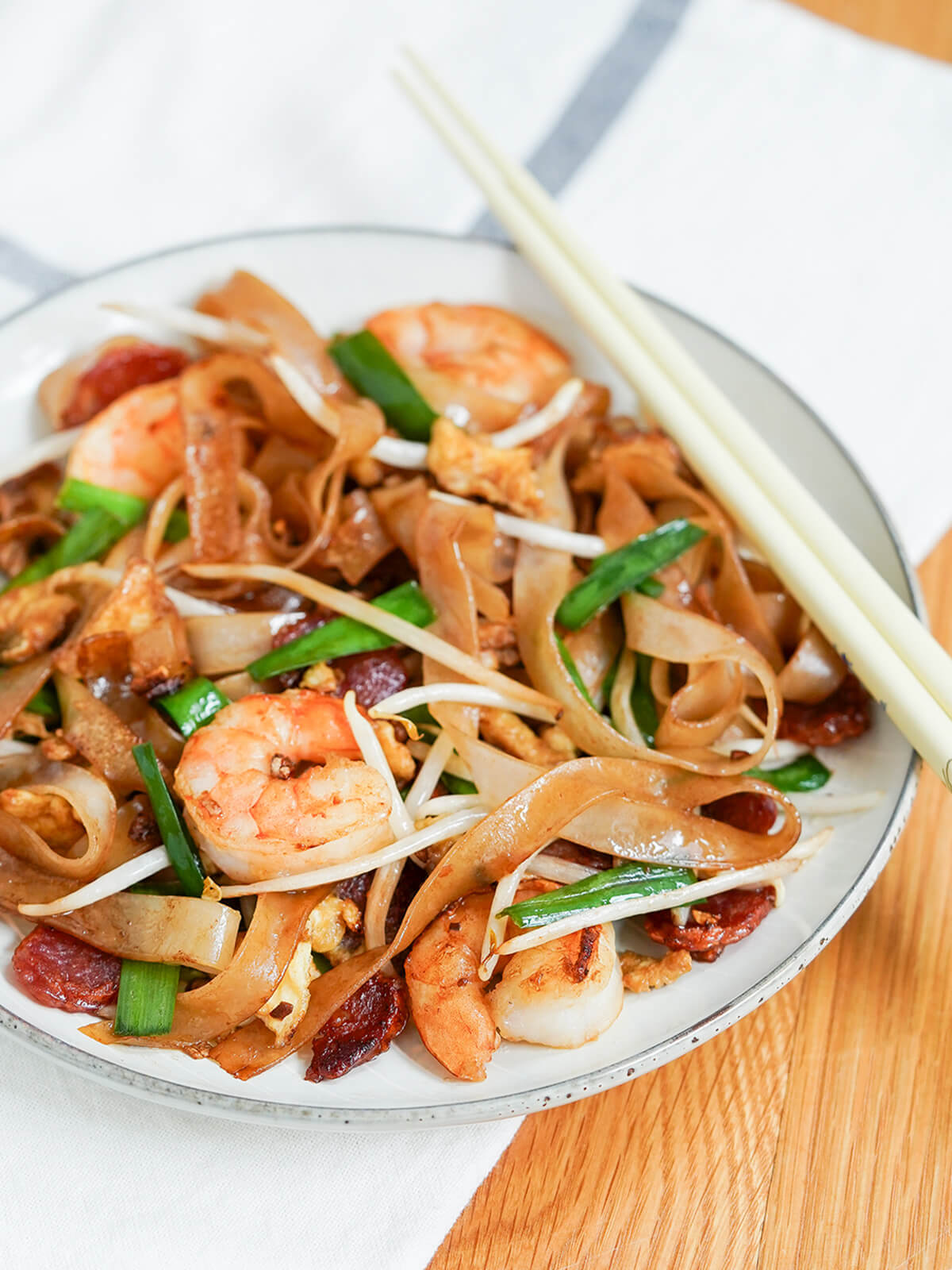
Char kway teow is a classic Singapore and Penang street food that's well worth making at home, too. It's quick to make, packed with savory flavor, and lots of great texture, too. A tasty meal well worth enjoying soon.
Try these other noodle dishes:
- Singapore laksa (a delicious coconut and curry broth packed with tasty additions)
- Yaki udon (a classic Japanese stir fried noodle dish, with a tasty mix of flavors)
- Japchae (Korean glass noodle, vegetable and beef stir fry that's quick, easy and delicious)
- Short rib beef udon (a favorite for colder weather, with a wonderfully flavorful broth and tender meat)
- Plus get more Southeast Asian recipes and main dishes in the archives.
Char kway teow
Ingredients
For the sauce
- ½ tablespoon dark soy sauce
- 1 tablespoon light soy sauce
- ½ tablespoon fish sauce
- 2 teaspoon oyster sauce
- ½ teaspoon sugar
- 1 pinch white pepper
For rest of dish
- 8 oz fresh flat rice noodles or approximately half weight dried rice noodles
- 2 stems garlic chives also known as Chinese chives
- 2 cloves garlic
- 1 Chinese sausage lap chang
- 1 egg
- 1 tablespoon vegetable oil
- 4 oz shrimp prawns (weight without shell and head)
- 2 oz bean sprouts
Instructions
- Get everything prepared before cooking as it cooks really quickly. Mix together the sauce ingredients - dark and light soy sauces, fish sauce, oyster sauce, sugar and white pepper - in a small bowl and set aside. If using dry noodles, soak them in very hot (not quite boiling) water until they rehydrate and are pliable. No need to cook as such. Cut the chives into lengths of around 1 inch (2 ½cm), trimming off either end. Finely chop the garlic and cut the sausage in thin slices, ideally cut on diagonal. Lightly beat the egg in a small bowl and set aside.
- Warm the oil in a wok or wide skillet/frying pan over medium-high heat. If using dried noodles, give them a slight pre-cook and add them to the skillet and if needed, add a little water. Cover with a lid, cook a minute, then remove and set aside. If using fresh noodles, you can skip this and just add later. With dried, you may need to add a little more oil after taking out the noodles.
- Add the garlic to the wok/skillet and cook very briefly, stirring constantly, so it's aromatic but take care it doesn't burn. Add the sausage and shrimp and cook, stirring regularly, so the shrimp cooks through and change color and become opaque (but don't over-cook).
- Push the ingredients to one side and add the egg in the space you made. Let it cook briefly then stir to break it up and cook completely. Add the noodles and pour over the sauce. Mix everything together so the ingredients become well distributed. Add the bean sprouts and chives and mix through so they soften. It's fine if the noodles become crisp in places. Serve immediately.
Video
Notes
Nutrition (per serving)
See some of my favorite cooking tools and ingredients in the Caroline's Cooking Amazon store.
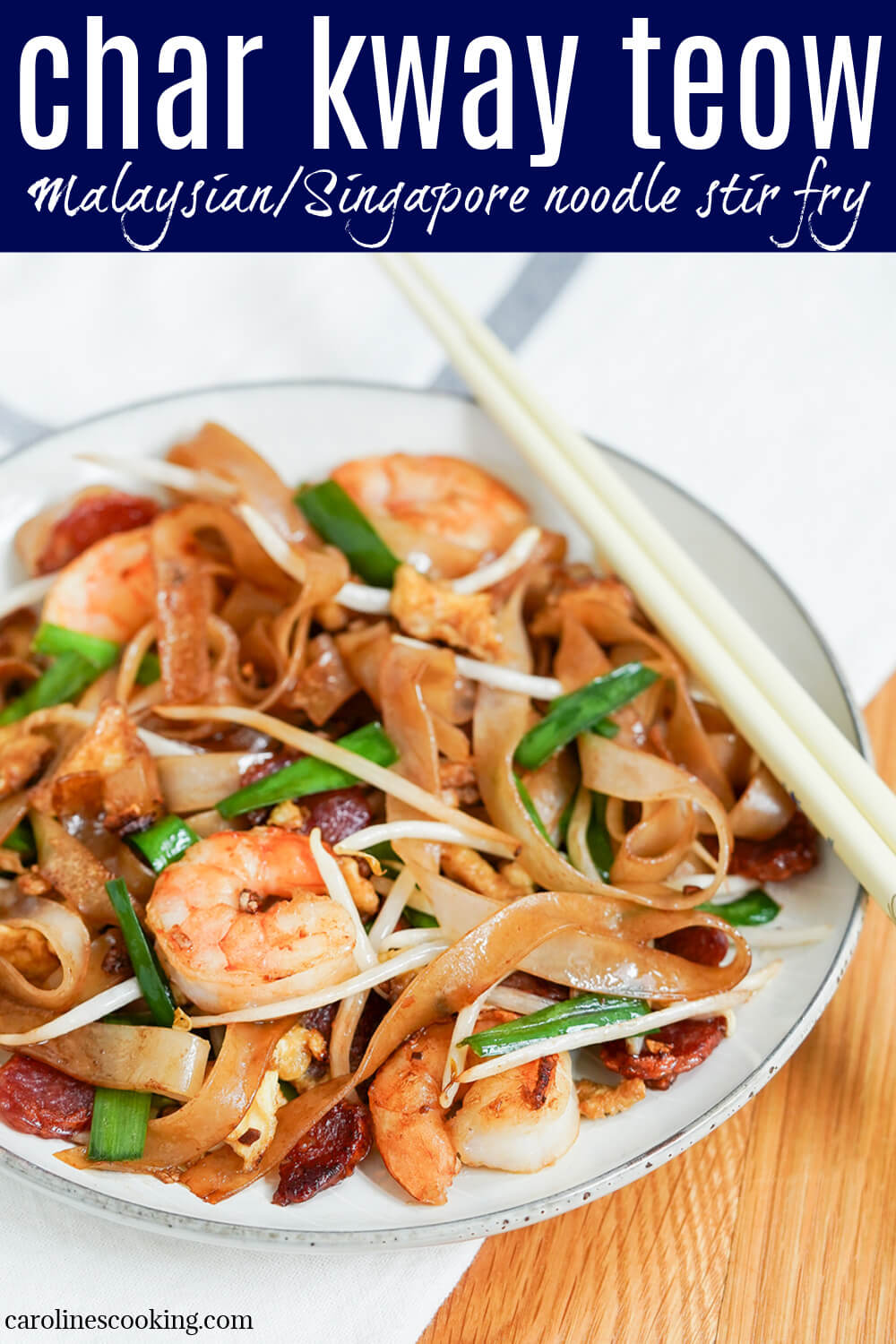
Remember to pin for later!
Leave a Reply