
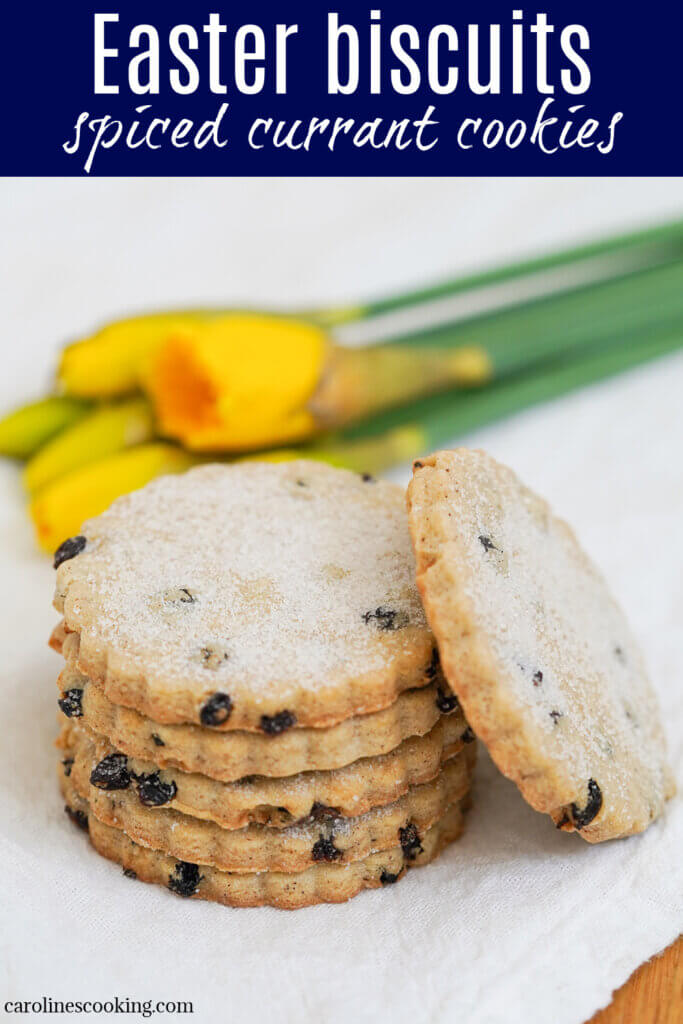
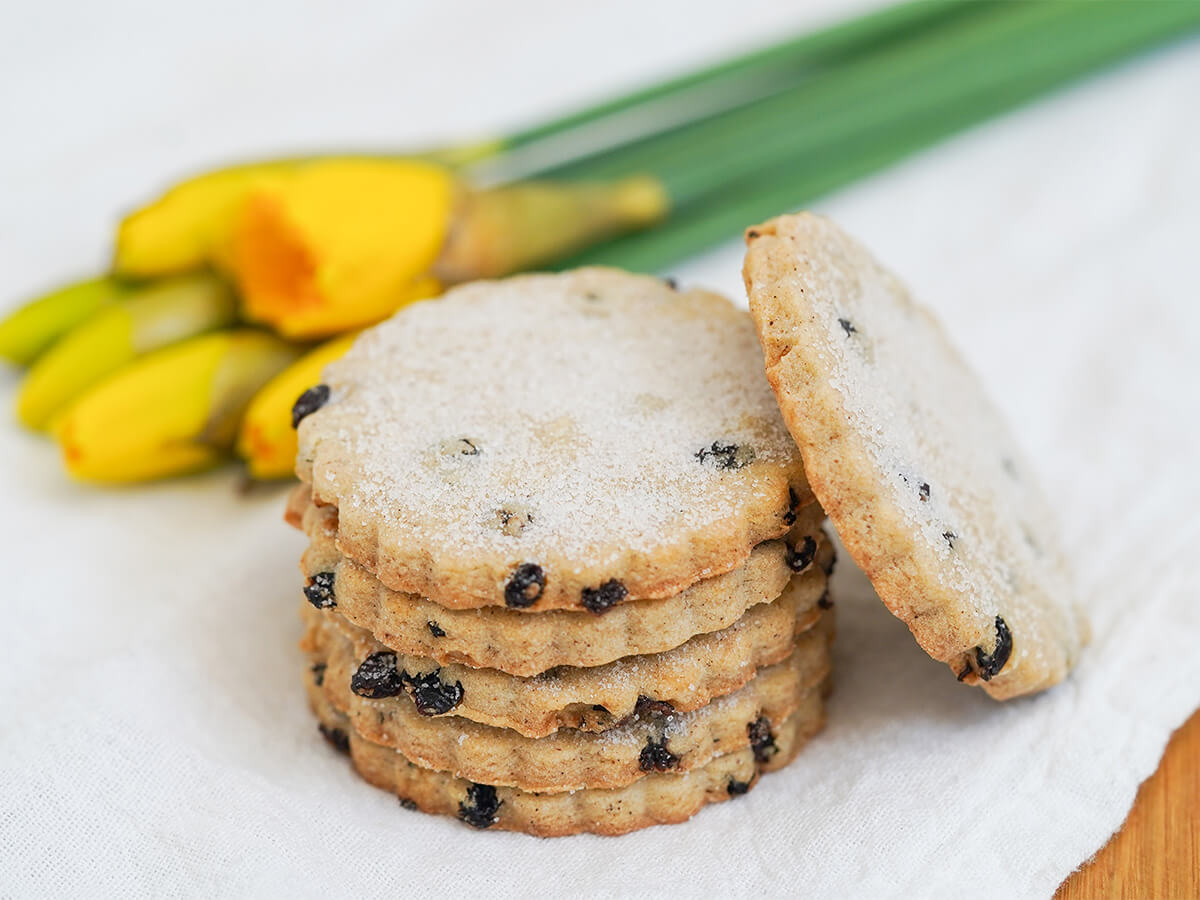
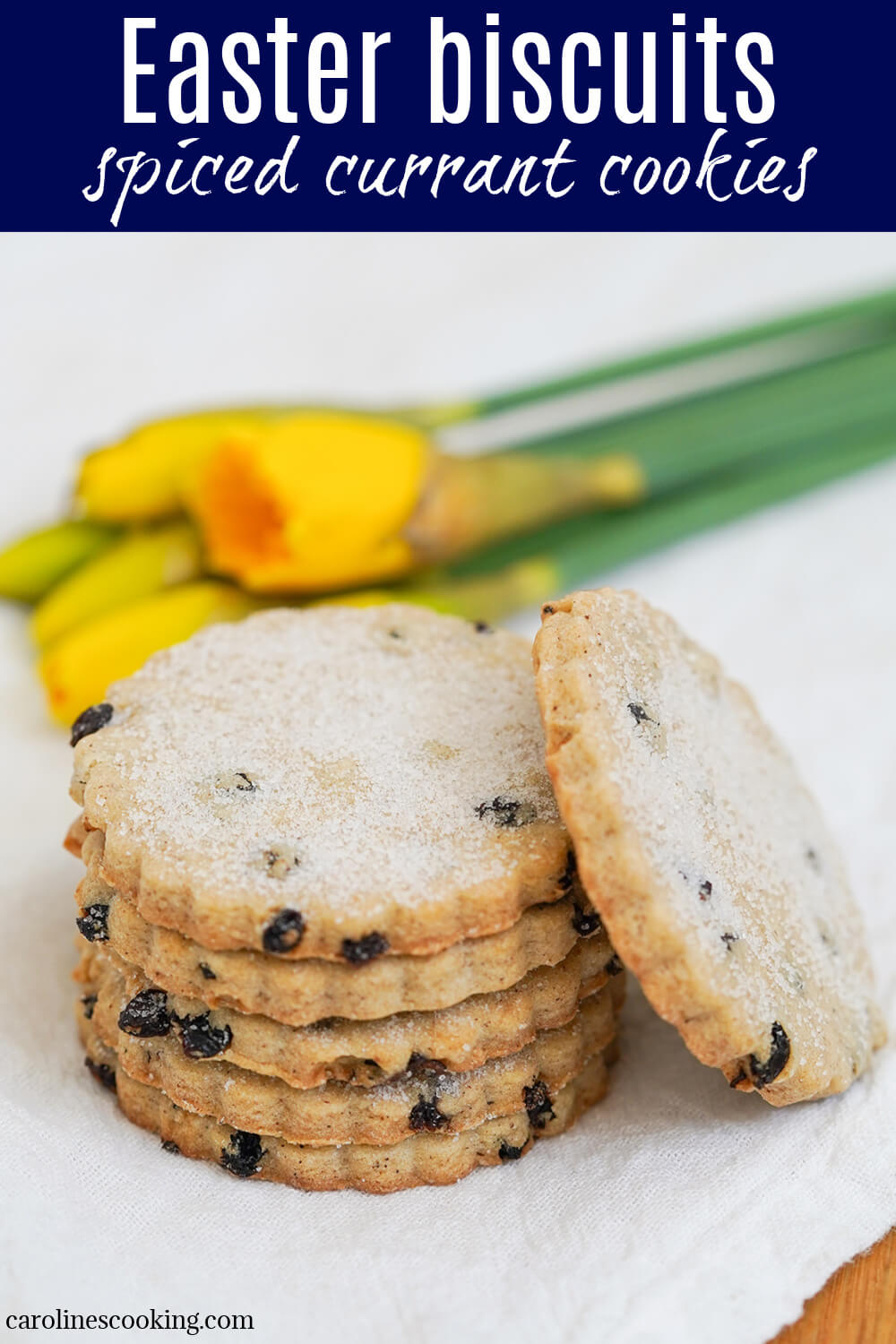
These Easter biscuits are a traditional British Easter treat. They're a relatively simple biscuit/cookie made with a touch of warm spice, studded with currants, and dusted with sugar. Sweet, crisp and tasty.
This post may contain affiliate links, where we earn from qualifying purchases. See more details in the policy page.
Many places have traditional Easter foods, and some of them are pretty regional. While the most known in the UK are hot cross buns and chocolate eggs, some also have simnel cake, then there are these little biscuits, too.
While these are maybe less common these days, as either chocolate or decorated cookies have become more favored, they are still most definitely worth getting to know. They're easy to make and have a lovely crisp texture and delicious flavors.
Origins of Easter biscuits
These Easter biscuits are originally from the West Country, most likely specifically the Bristol/Somerset area. They were traditionally given as gifts on Easter Sunday, such as after the Easter church service. Ingredients included things that had been avoided during Lent, and could now be enjoyed, like eggs, butter and dried fruits.
Some say these biscuits have Pagan origins, while others date them more around the 16th century. Either way, they have been enjoyed for some time. Some traditional recipes included cassia oil, which was believed to have been used as part of the embalming process after the crucifixion, though it's generally not in more recent recipes.
The ingredients are a reflection of the area's history, too. Bristol has long been a port on international trade routes and so used to be where some ingredients like sugar and spices (as well as cassia oil) came into the country.
These biscuits are essentially a bit like a shortbread with the addition of a bit of spice and dried fruit - they're a relatively buttery biscuit/cookie rather than a particularly sweet kind. But don't worry, sweet enough to be tasty!
Easter biscuit ingredients
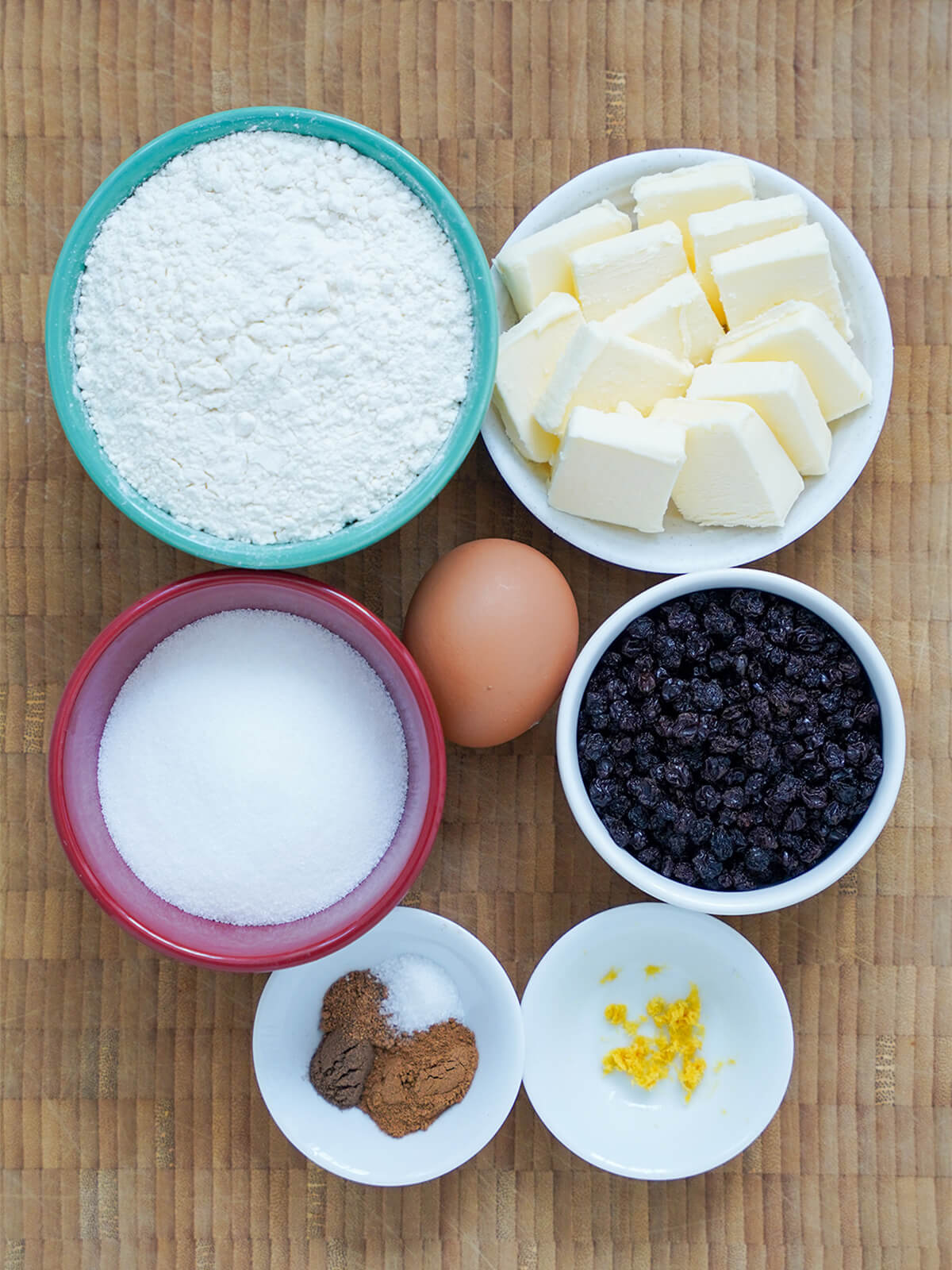
These tasty bites have a relatively simple set of ingredients:
- Flour - just regular plain/all purpose flour is all you need here.
- Butter - use unsalted butter then add a little salt as salted butter can vary a lot. If you can, use a European-style butter that has a slightly higher fat content.
- Sugar - needed for flavor and sweetness, these also have some on top to add a pretty (and tasty!) sugar crust.
- Egg - this helps bind the ingredients together and adds to the texture of the biscuits.
- Currants - the dried fruit kind, part of the raisin family, known as Zante currants in the US (not the black currant/red currant berry). These add lovely bursts of fruitiness.
- Dried spices - the exact spices can vary from one recipe to another - some use nutmeg, others cinnamon, others mixed spice which is a combination of the two along with coriander, cloves, ginger and allspice. You just add a little to give a gentle warm spice and depth of flavor.
- Lemon zest - this isn't in all recipes, but is a great addition as it adds a lovely slight freshness and balances the sweetness. It's also a perfect flavor for spring!
The spices are generally considered as a replacement for the cassia oil used in many older recipes, that similarly added that bit of aromatic flavor. Lemon is less traditional, but I think works well - feel free to skip if you prefer.
The right kind of currant...
The only ingredient here that might be a little harder to find in some in some places is currants, by which I mean dried currants, sometimes called Zante currants. These are pretty common in British baking but less so in the US. They're similar to raisins except smaller, being from a variety called Corinth grapes. They're small, dark and have a relatively strong flavor.
The name "currant" is likely because they resemble black currants, which are a different fruit entirely. And it's this name association that is probably why they are less common in the US, as black currants were banned for many years as they could host a fungus that could affect the forestry industry.
While you can get dried currants in the US, I for one can't find them quite as easily. But they are worth hunting down for these and other British baking. They're lovely in scones, for example - and are tasty too. But in a pinch raisins would work as an alternative.
Making Easter biscuits
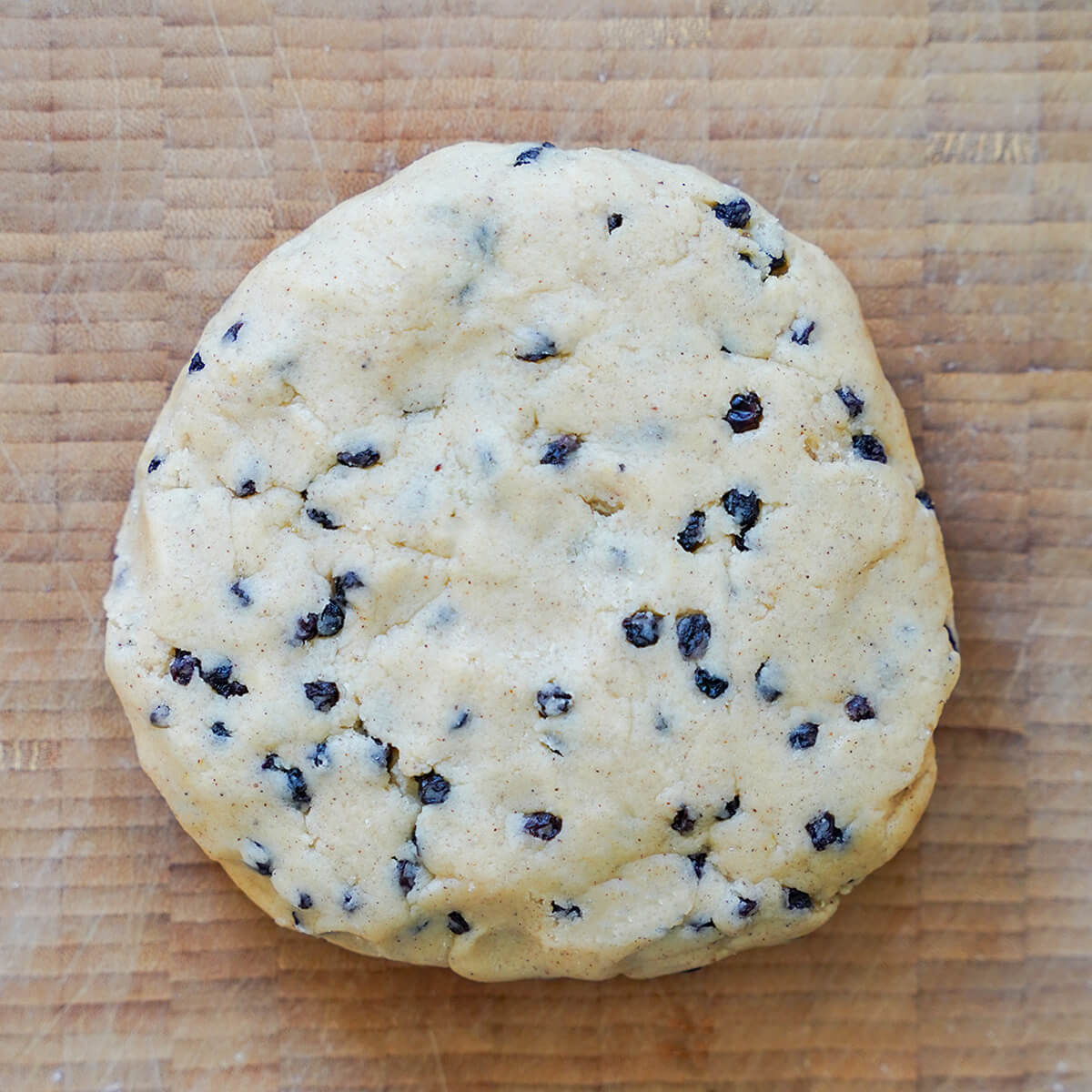
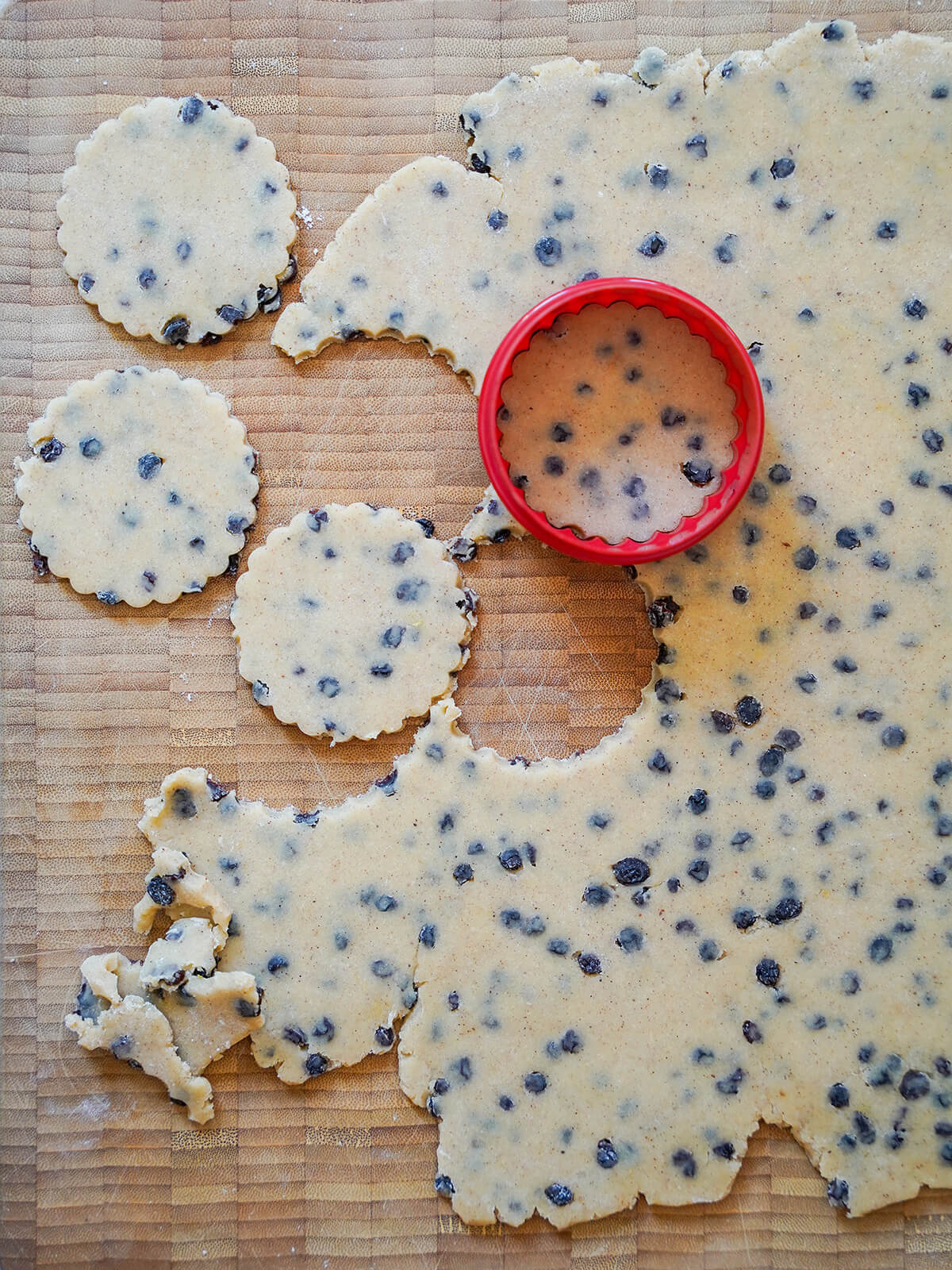
Once you have your ingredients, these come together easily, much like many other cookies/biscuits. You start by creaming together the butter and sugar, then mix in the egg followed by the flour and spices. Finally fold in the currants and lemon zest and bring the dough together in a flattened disc.
It's well worth chilling the dough at this point so it's not too soft as you roll it out. You can also store the dough overnight in the fridge, wrapped, if that suits your schedule better. Note, though, if you chill more than about 30 minutes, you might want to leave it out a little before rolling. Roll on a lightly floured surface and cut out fluted circles (or plain circles also fine if you don't have a fluted cutter).
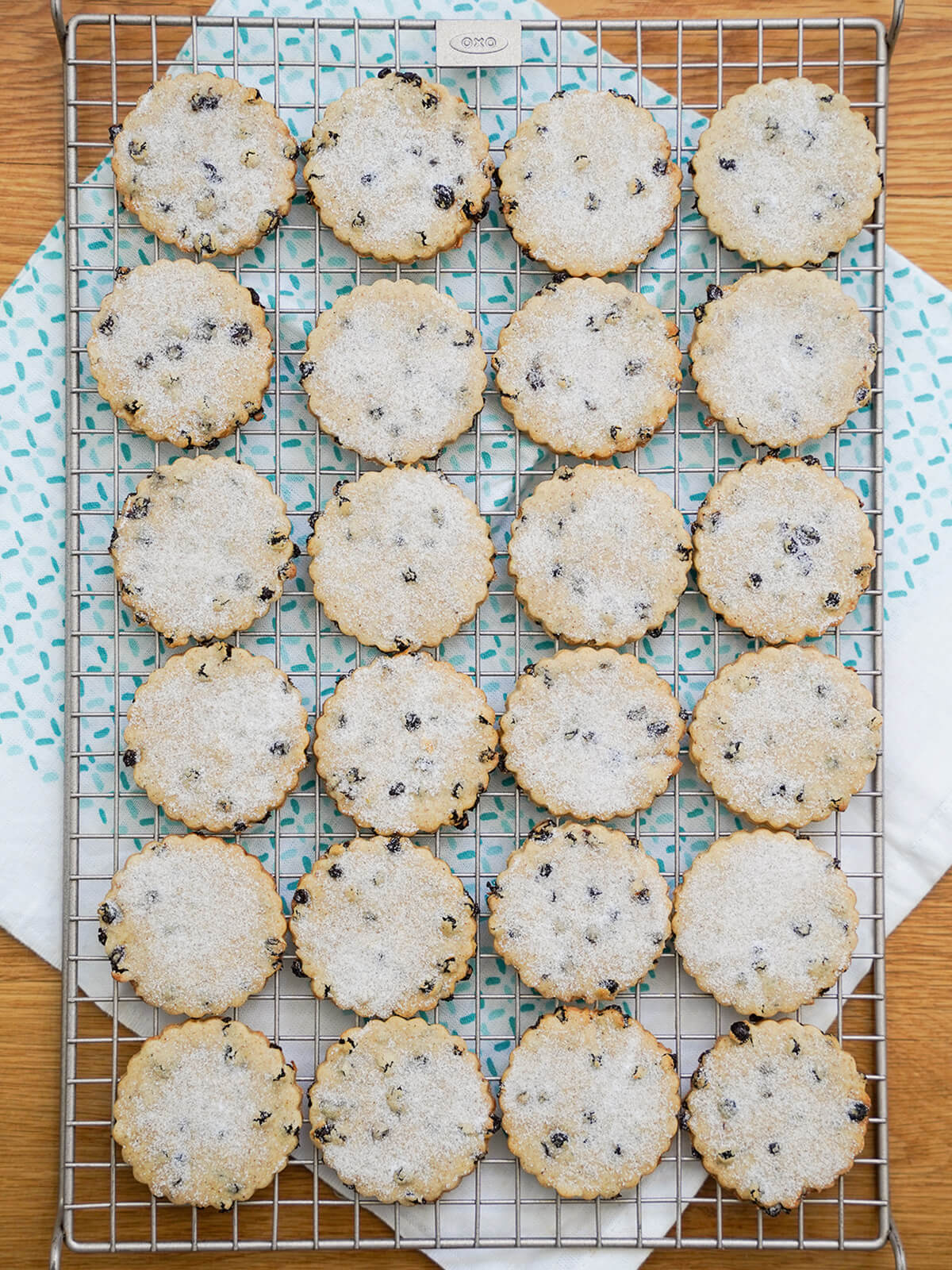
You typically dust these with extra sugar on top which you can add in a couple ways. First option is to take them out during baking, brush with egg white then add sugar. With this method, the sugar generally sticks better but you do have to be careful not to add too much egg white. If it's not super light, it will dissolve the sugar. You don't add before baking as the sugar can caramelize or become very crisp - it should be a bit lighter and crumbly.
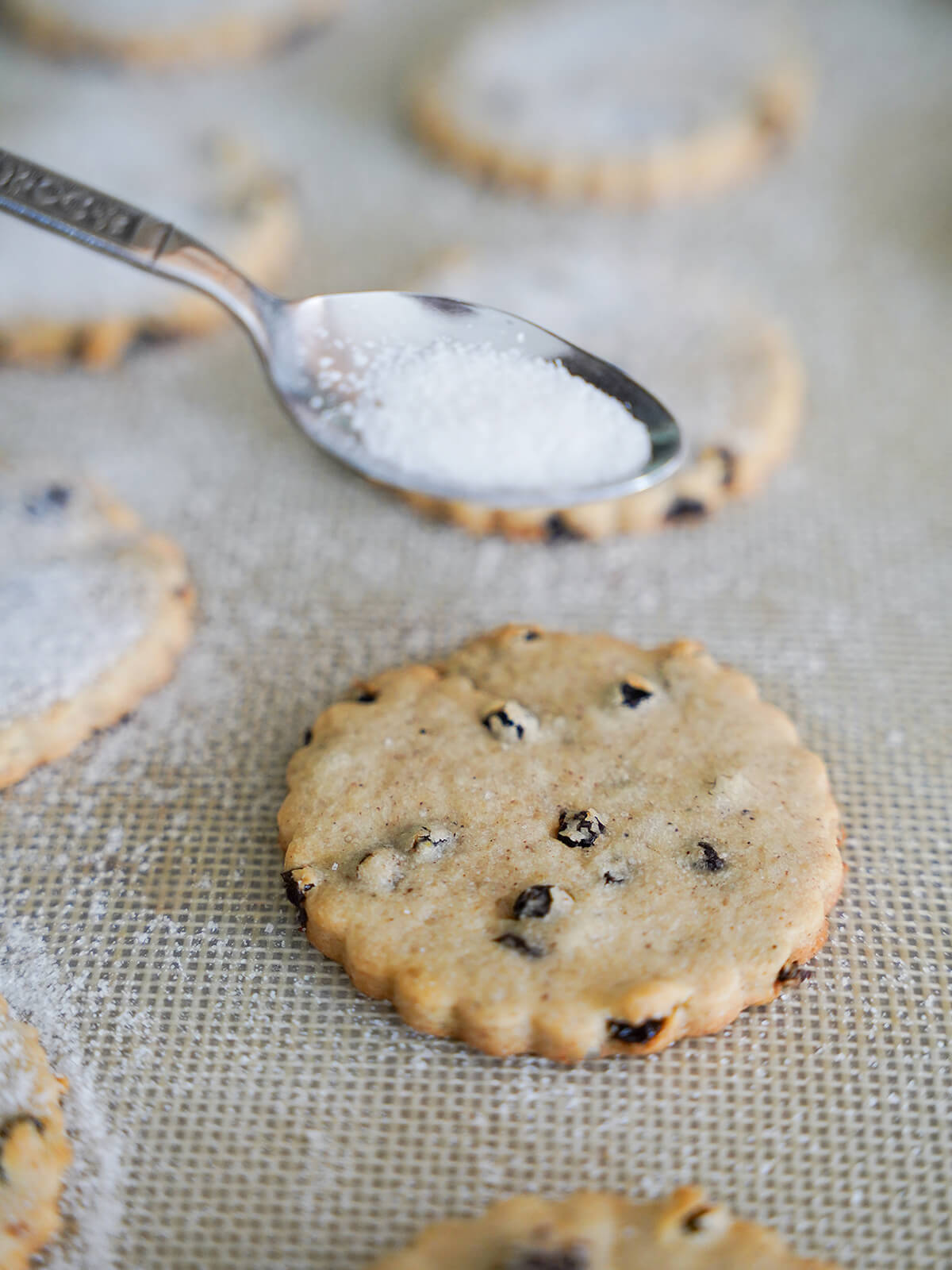
The other option is to add sugar immediately as they come out the oven. The heat of the biscuits/cookies helps the sugar to stick. With this option, you don't need the extra egg white, and don't risk adding too much, since only a certain amount sticks. But you do need to be a little quick or the sugar won't stick. While some may brush off, I find enough stays and so this is generally my preferred method.
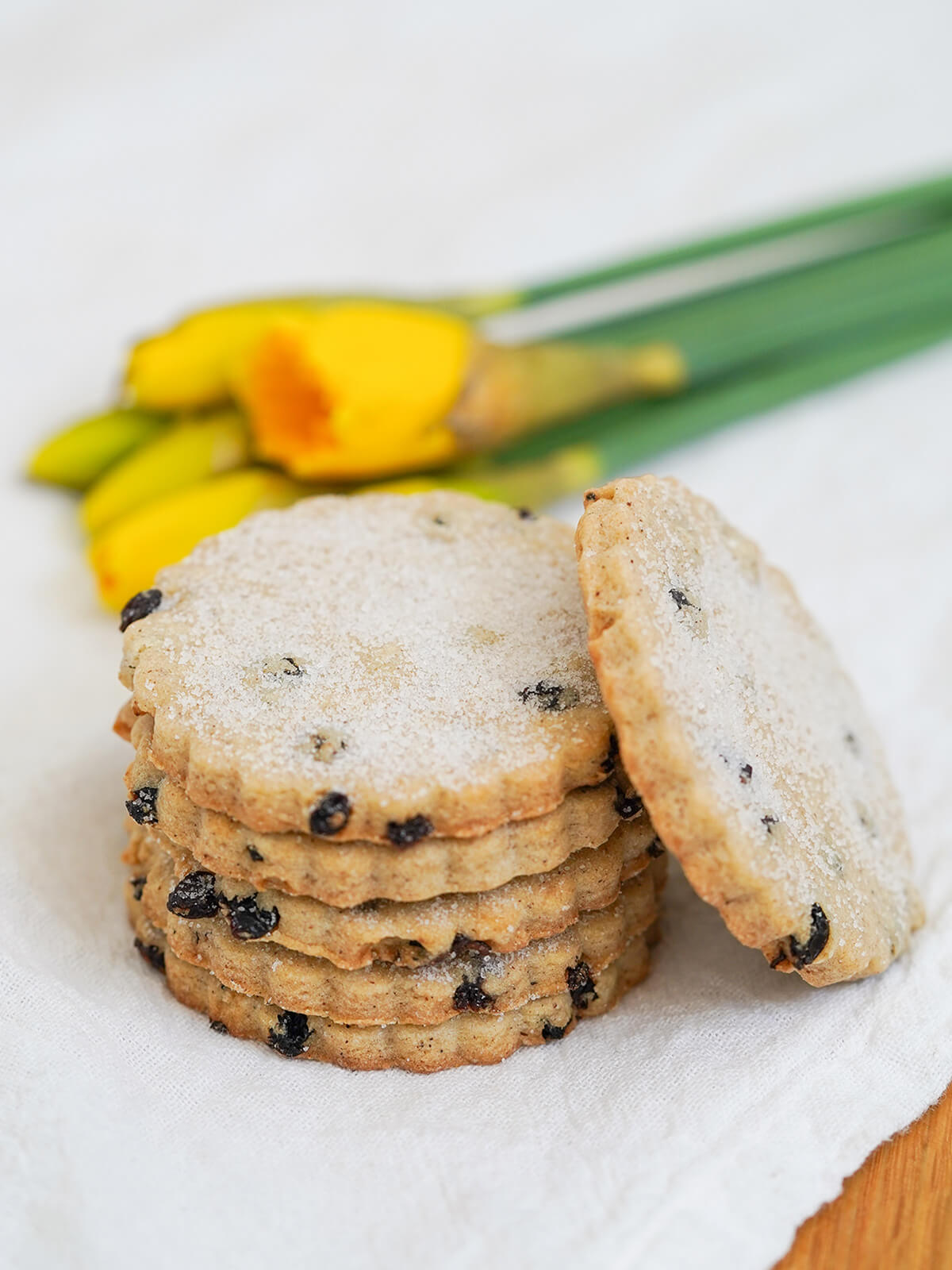
These Easter biscuits are a lovely relatively simple biscuit/cookie that stand the test of time. They're a lovely combination of buttery crispness, a gentle spice flavor and little bursts of yummy currants dotted throughout. They're easy, tasty and well worth enjoying soon, Easter time or not.
Try these other tasty biscuits/cookies:
- Anzac biscuits - a classic tasty Australian treat to celebrate Anzac day, they're packed with oats and plenty sweetness.
- Persian walnut cookies - nan-e gerdui, these delicious bites are easy to make with just a few ingredients. They're light and wonderfully sweet and nutty.
- Meyer lemon cookies - another that draws on shortbread style, these are perfect for any lemon fans.
- Plus get more British recipes and snack recipes, both sweet and savory, in the archives.
Easter biscuits (spiced currant cookies)
Ingredients
- 7 tablespoon unsalted butter room temperature
- ½ cup granulated sugar
- 1 egg
- 1 ½ cups all purpose flour plain flour
- ¼ teaspoon salt
- ½ teaspoon cinnamon
- ¼ teaspoon allspice
- ⅛ teaspoon nutmeg
- ½ lemon zest ie from ½ lemon, optional
- ½ cup dried currants also known as Zante currants
- 2 tablespoon caster sugar or fine sugar, approximately (to sprinkle after baking)
Instructions
- Cream the butter and sugar in a medium bowl until well mixed and gently glossy. Add in the egg and mix in so well combined.
- Add the flour, salt, cinnamon, allspice, nutmeg and lemon zest, if using, and mix together so everything is well combined. The dough should be on the drier side, but still come together - if it seems too dry, you can add a splash of milk but I don't fine it needed. Fold in the currants and mix through so relatively evenly distributed.
- Bring the dough together into a flattened ball/disc and wrap in a freezer bag or cling wrap/film. Refrigerate for around 30 minutes to allow the dough to firm up a little more before rolling.
- Preheat oven to 350F/180C. Line a couple of baking sheets/trays with silicone mats or parchment paper.
- Roll out the dough on a lightly floured surface to around 5mm (¼in) thick. Use a fluted round cutter that's around 7cm (2 ¾in) in diameter and cut out as many as you can - if you don't have a fluted cutter, a plain round will be fine. Once you have cut as many as you can, bring the leftover dough into a ball, roll out and cut out more. Try not to re-roll too much as you will likely get part currants in the leftovers rather than whole ones and the dough will get softer so harder to roll, but still try to use up the dough.
- After rolling, transfer the biscuits/cookies to the lined baking sheets. Leave slight gaps between them but they don't spread as they bake so the gaps don't have to be big.
- Bake the cookies for around 10-14 minutes until the cookies look dry and are just starting to brown on the base and edges. Immediately as you take them out of the oven, sprinkle over additional fine sugar to give a thin layer over each biscuit/cookie (you need to do this while they are still hot or the sugar doesn't stick). Don't worry if some areas have a little too much, you can shake off any excess once they cool. Leave to cool before gently shaking off any excess sugar - store at room temperature in a sealed container.
Video
Nutrition (per serving)
See some of my favorite cooking tools and ingredients in the Caroline's Cooking Amazon store.
Remember to pin for later!
Leave a Reply