
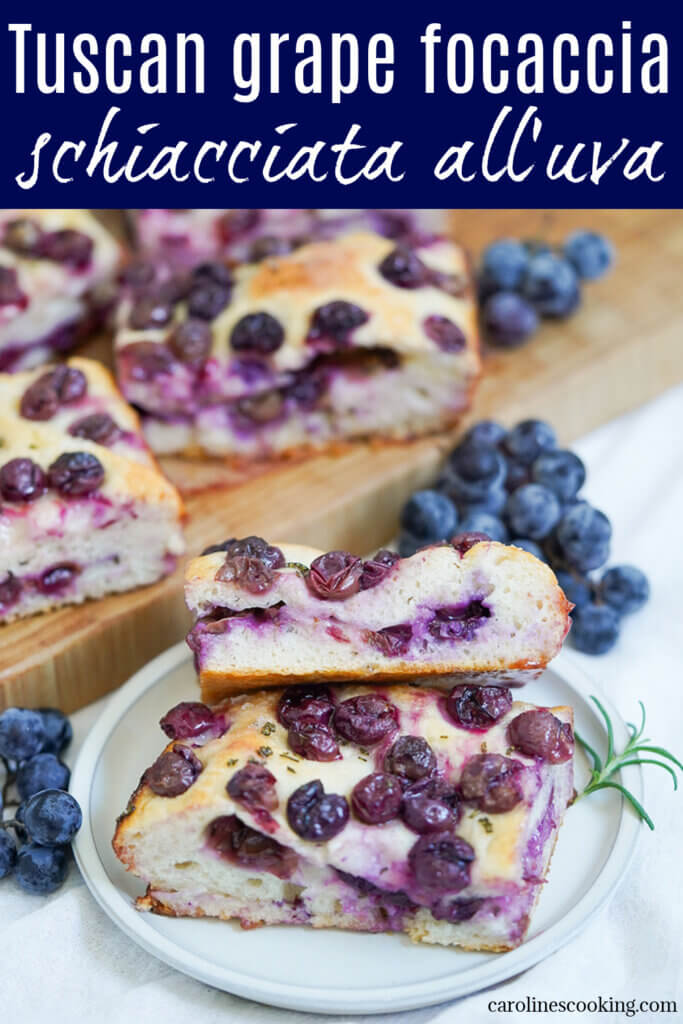
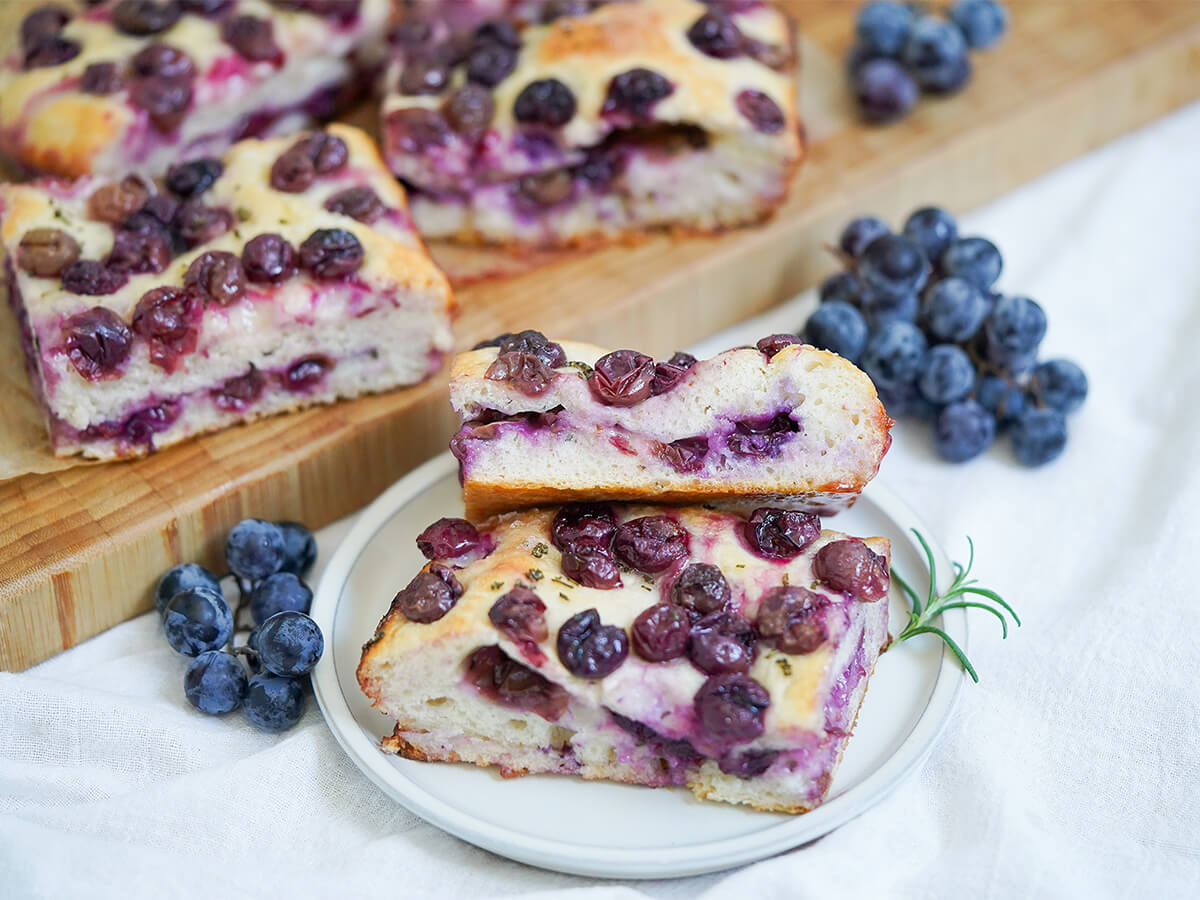
Schiacciata all’uva is a slightly sweet bread traditionally made to use wine grapes that might otherwise go to waste. It's a delicious combination that's soft, aromatic and with jammy bursts of juiciness. Perfect for snacking on.
This post may contain affiliate links, where we earn from qualifying purchases. See more details in the policy page.
For any regulars here, you may have noticed that over the years I have been adding to the list of Concord grapes here. After inheriting a mature vine a few years ago, which I have somehow got to be pretty productive, I am always needing ways to use them, And, I figured I may not be alone.
Concord grape jam is always a go-to, and the kids have requested grape gummy bears ever since I first made them, too. Then I'll sometimes make other things, too. As I've dug around for ideas, I came across this traditional Tuscan grape bread that I knew I needed to add to our list.
Origins of Schiacciata all'uva
The easy part of the name is "all'uva" which means "with grapes". As mentioned above, this was created to use some of the wine grapes during the annual harvest, and is a traditional that has been around centuries.
"Schiacciata" is a little more tricky to define. It translates as "squashed" or "crushed" in the Tuscan dialect, generally understood as referring to the process involved. In general, the name refers to breads that would be called focaccia elsewhere, and it's a bread that dates back to pre-Roman times.
There are a couple exceptions to the focaccia-like definition, though. One is the Schiacciata di Pascua that's a little more like a panettone, gently sweet and tall, enjoyed during Easter. Then there's Schiacciata alla fiorentina which is flat but more of a bread-cake cross. It's aromatic with orange and traditional during Carnevale/Mardi Gras.
This grape version is more of the typical focaccia-like flatbread, but it's more sweet than most. You'll find a couple of variations in how to make this, but the basic style and ingredients are the same and work so well. I've drawn on a few recipes here, including this Memorie di Angelina recipe and this Emiko Davies recipe.
The olive oil helps the dough be tender and flavorful. Then the sugar makes the grapes slightly jammy and brings out their flavor. It also means this bread can work as pretty much anything from breakfast to a snack or even dessert.
What type of grapes should you use?
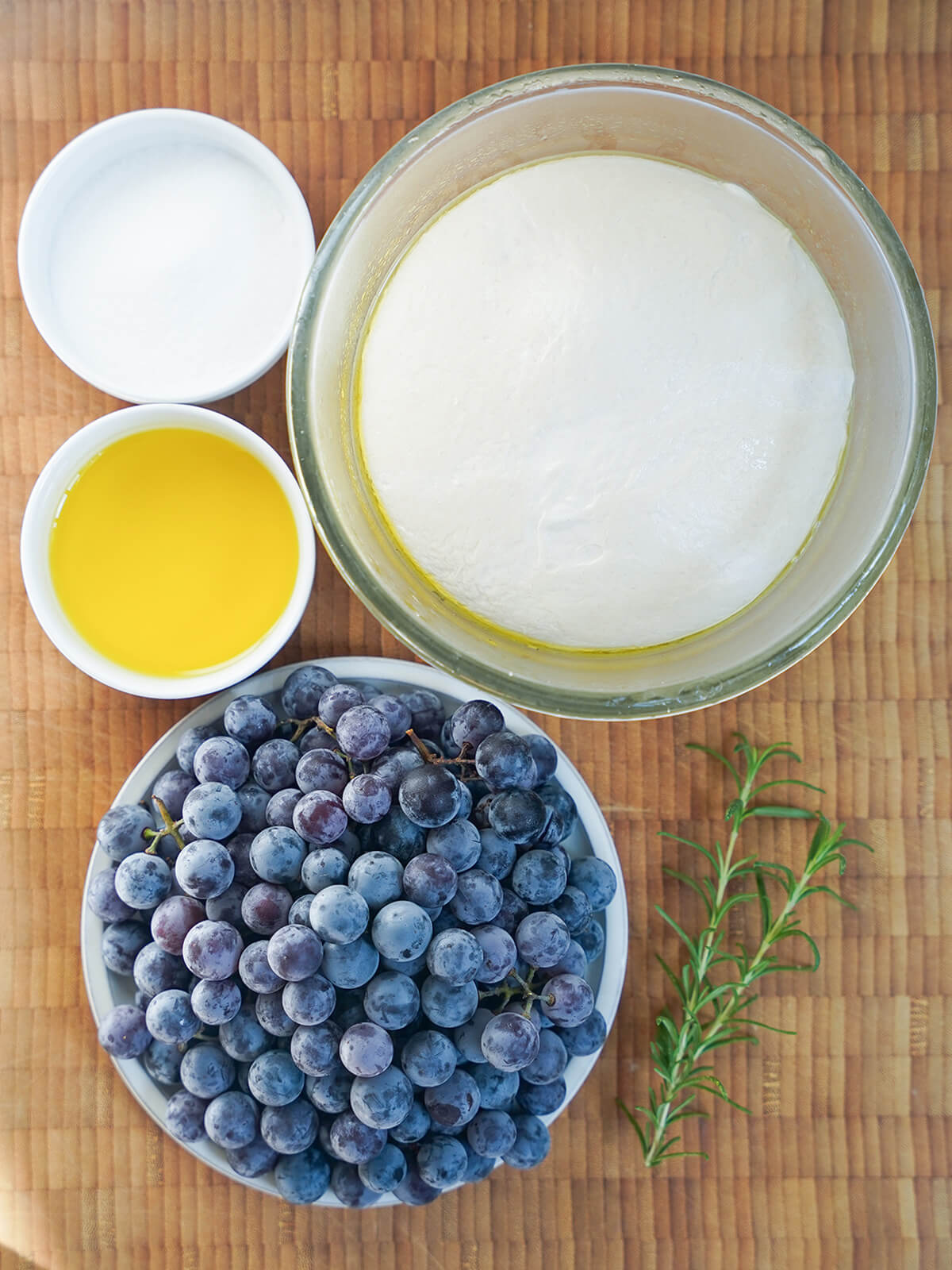
Traditionally, this would be made with Tuscan wine grapes which tend to be small, dark and with lots of flavor. If they're not available then another more common grape that you might use is "uva fragola", (literally strawberry grape) that's a close relative of Concord grapes. So, Concord grapes make a great choice, both with good flavor and being relatively small.
While the Tuscan wine grapes have seeds, they're pretty small and so you usually leave the grapes whole and just have a little added crunch. With Concord grapes, its up to you whether you want to leave the seeds or try to remove them. I removed them here, in part as I wasn't sure how those eating it were about seeds. But, it is a bit of a laborious process.
Thomcord is a hybrid variety that still has much of the aromatic flavor of Concord grapes but without the seeds that is another option. But in general, I would avoid most table grapes as they just don't have the same depth of flavor and are larger with a lot of juice. One possible exception is small black grapes.
Tips for making grape bread
The general process of making this bread is much like many others and so if you've made other breads, it will feel pretty familiar. A couple things are worth keeping in mind, though, to help it turn out it's best:
- I suggest making the dough the night before and giving a slow rise in the fridge overnight. To me, it usually fits in better time-wise, but also it helps develop the flavor. However if that's not an option, you can instead do a shorter rise the day of at warm room temperature.
- The dough is relatively sticky, but that's part of what keeps it light - resist the temptation to add extra flour. Instead, give it a good knead and it should become only gently tacky.
- I recommend lining the baking pan as the the grapes and sugar tend to form a syrup which can ooze. Lining helps avoid the whole loaf becoming stuck.
- Use slightly more grapes on top than in the filling - a lot of grapes inside can mean it gets overly moist and the layers separate. It's still tasty, just doesn't look quite as good.
- Pinch the top and bottom layers of dough together to help the whole loaf hold together better as it bakes.
- Allow the loaf to cool, at least mostly, before slicing and enjoying. It's best eaten on the day of baking.
The combination of sweet-tart grapes, aromatic rosemary along with sugar and olive oil might seem a little unusual in terms of sweet and savory mixing but believe me, it does most definitely work. The resulting bread is wonderfully tender, aromatic and with a lovely stickiness and jaminess from the grapes and sugar combining.
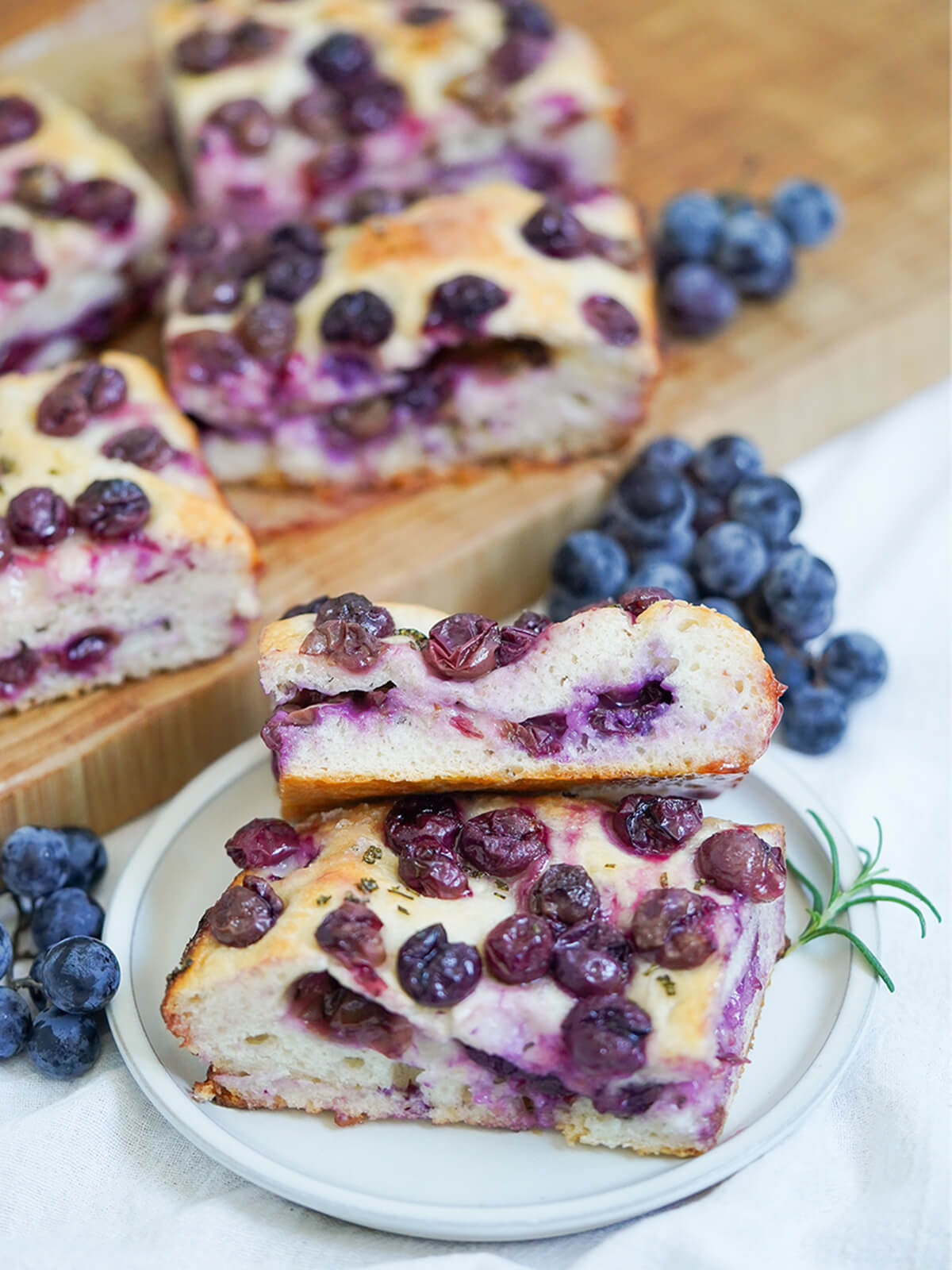
This Tuscan grape bread, schiacciata all’uva, is a delicious sweet-savory treat that's a fantastic celebration of the harvest. I can understand why many look forward to it, and hope you'll make and enjoy it, too.
Try these other sweeter breads
- Norwegian chocolate buns, sjokoladeboller - gently aromatic with cardamon, and studded with chocolate, these buns/rolls are a delicious treat.
- French spice bread, pain d'epices - traditional during the festive period, this loaf is packed with delicious warm spices.
- Puerto Rican sweet rolls, pan de Mallorca - these coiled rolls are made with a gently sweet enriched dough. Popular as breakfast but worth enjoying any time.
- Plus get more Italian recipes and bread recipes in the archives.
Schiacciata all’uva, Tuscan grape focaccia
Ingredients
- 350 g all purpose flour plain flour, or use 00 flour
- 5 ml instant yeast or can use active dry, see notes
- 1 pinch salt
- 255 ml water lukewarm
- 390 g Concord grapes or other similar aromatic, smaller grape
- 5 ml fresh rosemary finely chopped volume
- 45 ml extra virgin olive oil
- 44 g sugar approximately
Instructions
- Sprinkle the yeast over the water, if using active dry yeast and set aside a couple minutes while you measure other ingredients - with instant you can add it to the flour. Place the flour, salt (and yeast if using instant) in a stand mixer or medium bowl if mixing by hand. Mix the dry ingredients briefly then add the water. Mix to combine then knead for a few minutes - roughly 3 - 5 in mixer or 5 - 8 by hand. It will be sticky, but resist the temptation to add extra flour. Just work it and it will gradually become les sticky and just a bit tacky but very smooth.
- Once kneaded, bring the dough into a ball, place in a clean, lightly oiled bowl, cover and ideally, place in the fridge overnight to rise slowly. Alternatively, leave to double in size, roughly 1 ½ to 2 hours at warm room temperature.
- Prepare a 9 x 9in (23x23cm) baking pan/tin with parchment at least on bottom and two sides, if not all sides. Finely chop the rosemary.
- If the dough rose in the fridge, take it out roughly 30 minutes before using to come to room temperature. Once the dough is ready/doubled, uncover and knock back the dough with your hands. Divide the dough in two and take one half and ease it out relatively thinly with your fingers to be roughly the size of the baking pan. Place in the pan and spread the dough to the edges, dimple the dough a little with your fingertips.
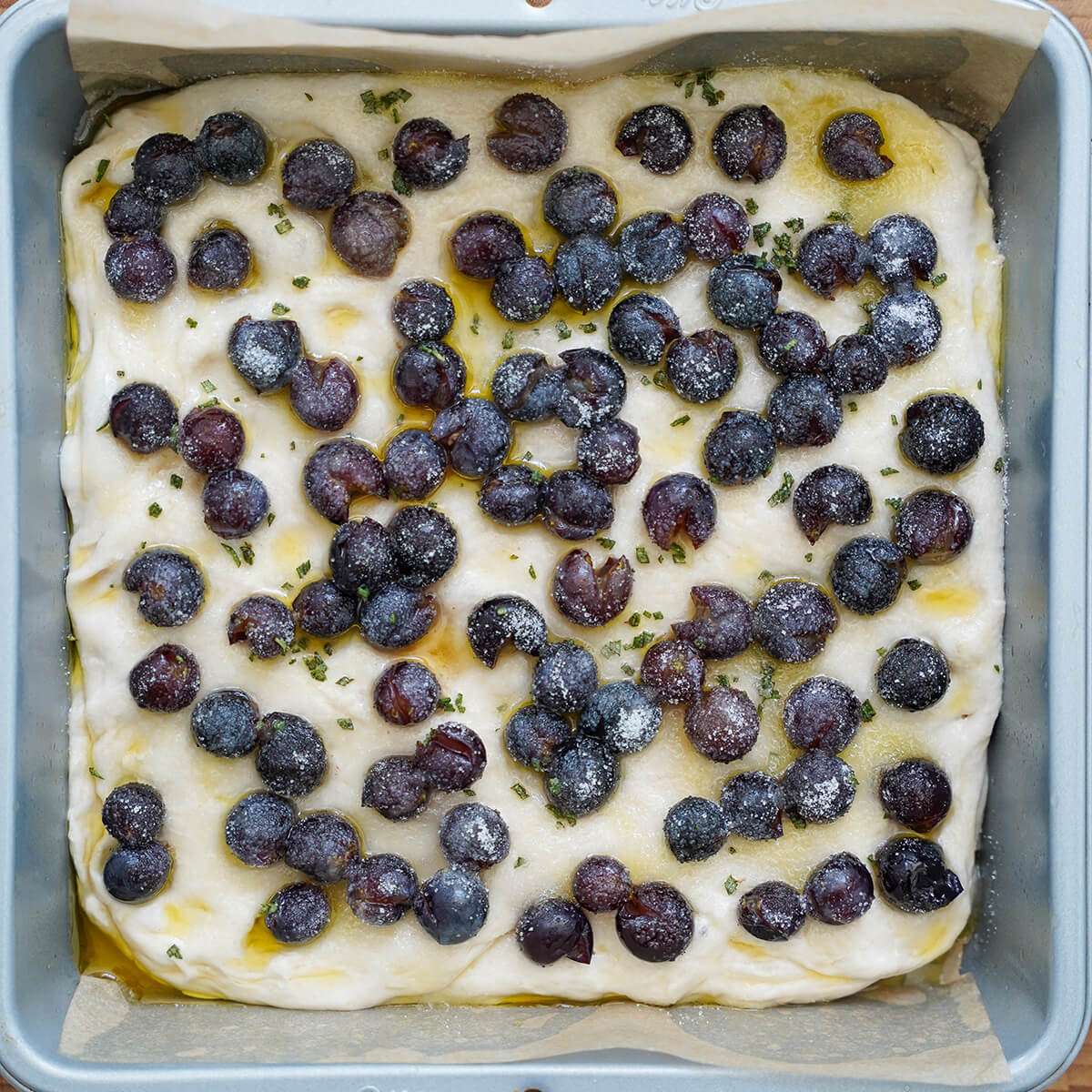
- Top the dough with a little under half of the grapes, scattered relatively evenly and nestled into the dimples. It should look like quite a few but with some gaps in between. Sprinkle around half of the rosemary and drizzle over around half of the olive oil, both as evenly as you can over the top. Sprinkle over around half of the sugar, again as evenly as you can.
- Stretch out the other half of the dough and place over the top of the grapes in the baking pan. Pinch together the edges of the dough to try to help the layers stick together. Dimple the dough again, though it will be tricky with the grapes underneath. Top with the rest of the grapes, rosemary, olive oil and sugar (for this layer I quite like the oil first, then grapes, but the order is not particularly important).
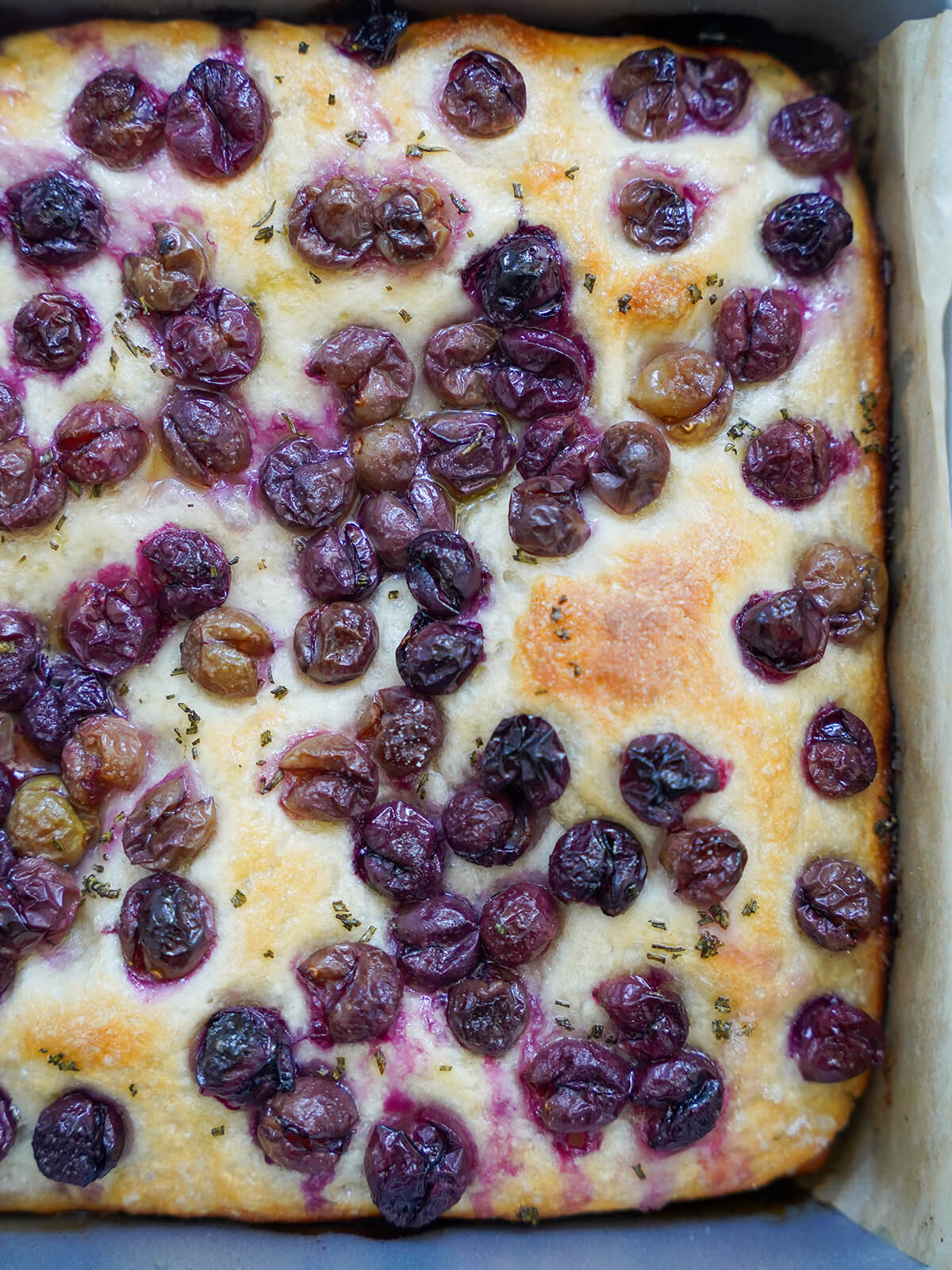
- Once the bread is formed, preheat the oven to 375F/190C and let the bread sit as the oven warms. Then, bake for around 35 - 50 minutes, depending on your oven and pan, until the top of the bread is gently browned and the bread is cooked through. Allow to cool until at least just warm, or cool completely (it's delicious warm, but a bit easier to cut and eat once cool). Best eaten on day of baking.
Notes
Nutrition
I use this 9x9 inch square baking pan for this that works well (and has a lid, handy for storing any leftovers; affiliate link).
See some of my favorite cooking tools and ingredients in the Caroline's Cooking Amazon store.
Remember to pin for later!
Leave a Reply