

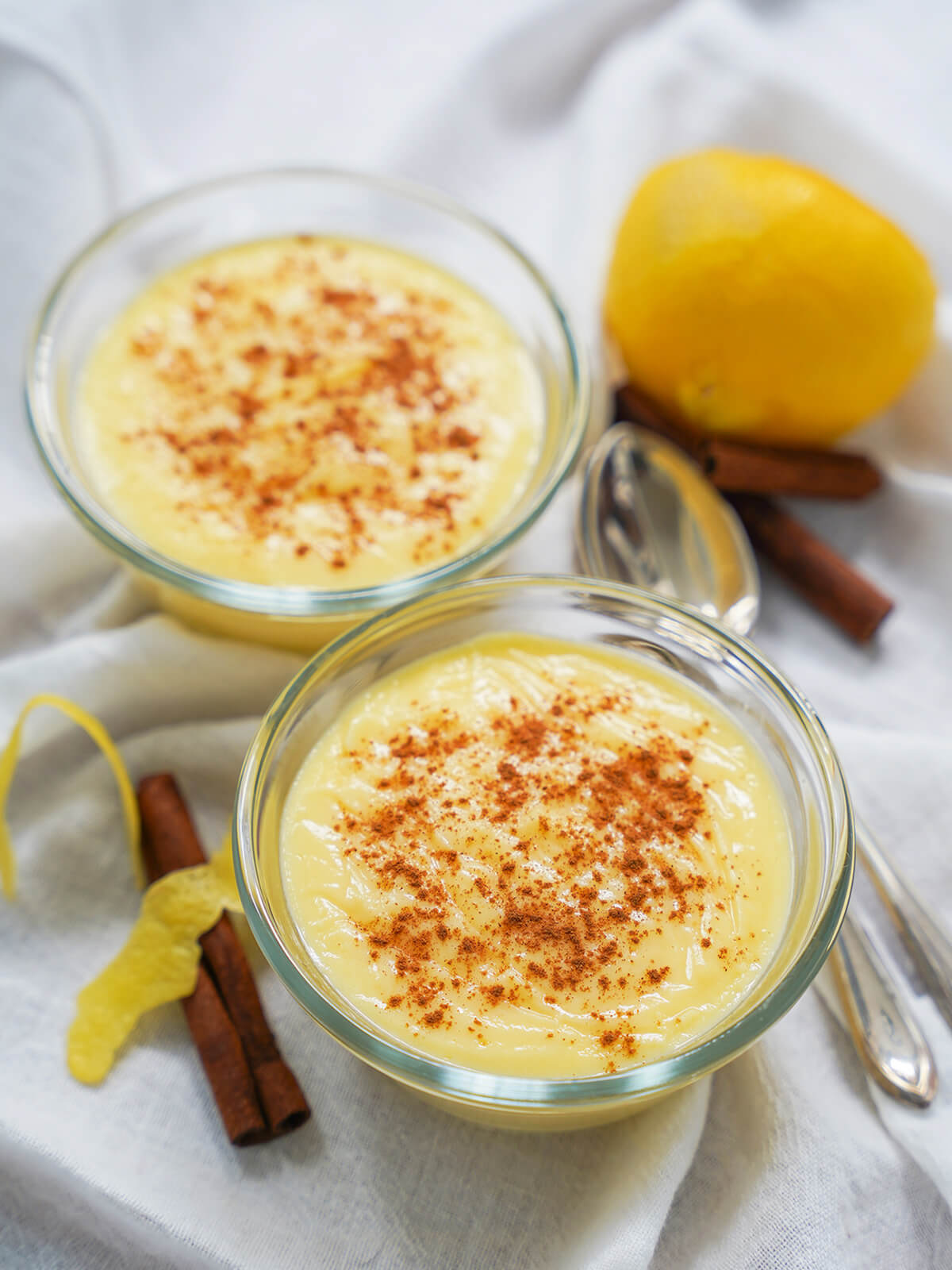
Natillas is a wonderfully smooth and creamy Spanish custard, just the right level of sweet with a gentle cinnamon and citrus flavor. It's easy to make, perfect for making ahead and a delicious dessert or treat whenever you choose.

This post may contain affiliate links, where we earn from qualifying purchases. See more details in the policy page.
While on the whole Spanish cuisine has a good amount of variety, and you'll find many regional dishes, the exception is maybe desserts. I remember at first being a little dissapointed that most Spanish dessert menus are pretty short.
But then I came to realize that if the few you find are delicious, why worry? Many Spanish desserts are wonderful in their simplicity like tarta de Santiago (almond cake), Basque cheesecake and even lesser known gems like menjarblanc (almond pudding).
This Spanish custard is another perfect example. It combines just a short list of ingredients but the result is such a lusciously smooth, comforting treat.
Natillas origins and variations
The name natillas is a diminutive of the word "nata" meaning cream. While it is known to be from Spain and date back centuries, the exact origins are unknown. Many believe it was originally made by nuns in the Middle Ages. It likely shares some roots with similar custard-like dishes like creme Anglaise which is typically thinner.
Certainly, nuns in the region are known to have created a few different egg yolk-based desserts (like Portuguese egg tarts) as a way to use up leftover yolks, since the whites were used to starch clothes in the convents.
Natillas was taken by Spanish conquistadors to the Americas where it evolved into a number of different variations. The natillas in New Mexico is most similar to the Spanish version, but sometimes with flour rather than corn starch. Columbian natilla generally uses panela rather than refined sugar, and has no eggs. The Cuban version is similar to Spanish except starts with evaporated milk rather than fresh.
Difference between natillas and crema Catalana
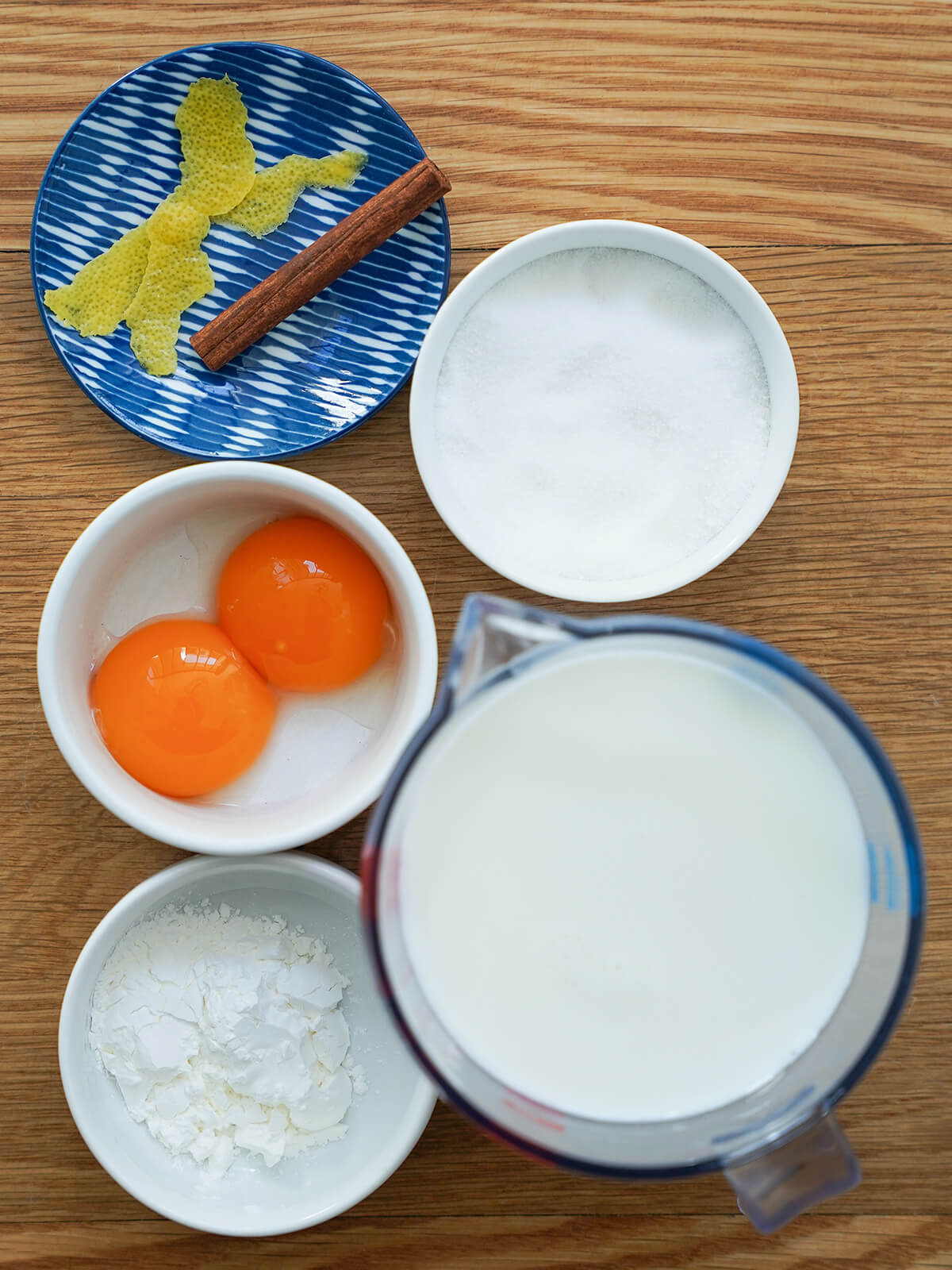
Natillas and crema Catalana are two very similar Spanish desserts. Both have a custard-like base made with milk, egg yolk, corn starch (corn flour in the UK) and sugar.
The main difference is the topping. Crema Catalana has a caramelized sugar crust on top, similar to crème brulée. Natillas does not have a topping, though you often add a dusting of cinnamon on top. Sometimes you might add a Maria cookie on the top though this is less typical.
You then can have other slight variations, though these are not completely consistent. The base for crema Catalana is nearly always infused with cinnamon and orange, sometimes lemon. Natillas is typically cinnamon and lemon, and sometimes vanilla. You might use orange, though less often. Some would say crema Catalana is thicker, though this is not always the case.

And in case you are thinking of yet another creamy Spanish dessert, flan, it's a bit different again. Flan is more of a set pudding made with caramel at the bottom that then becomes the sauce over the top. It's generally sweeter and less creamy.
Tips for making natillas
As I say, natillas uses just a small handful of ingredients and is easy to make. There are really only a couple things I would say to watch for.
The first is making sure you temper the eggs - this means bring up the temperature gradually, by adding just a small amount of the hot milk, mixing, then adding a little more. This avoids accidentally cooking the eggs before they mix in (which would not be tasty).
The second part is to not rush. Warming the milk gradually over a low heat lets it infuse more, and warming the combined mixture more slowly means there's less chance it becomes lumpy.

Finally, if you do get the odd lump don't panic - you can strain the mixture through a fine strainer to help remove or break lumps up before you pour into dishes.
Despite the short list of ingredients, there are a couple slight variations in how to make this. They essentially boil down to the order you combine ingredients. I have gone with combining the sugar, egg yolks and cornstarch that you then add the warm milk to.
The reason for this is twofold - first, you want to dissolve the cornstarch in a liquid to avoid lumps, so that can just as easily be the yolks as some of the milk. Secondly, my sense is having the yolks sweetened gives less chance of issues when adding the warm milk, though that could just be me.

Natillas is a wonderfully simple yet tasty Spanish custard that's perfect to end a meal or enjoy as a snack. It's delightfully creamy, gently aromatic with cinnamon and citrus, and just sweet enough to feel like a treat. Be sure to enjoy it soon.
Try these other make ahead desserts:
- Coffee panna cotta (another easy, creamy dessert but in this case flavored with coffee and more set)
- Strawberry mousse (a tasty mix of creaminess and bright berry flavor)
- Rhubarb fool (a super simple combination of stewed rhubarb and creaminess)
- Plus get more dessert recipes and Spanish recipes in the archives.

Natillas, Spanish custard
Ingredients
- 2 cups milk
- 2 strips lemon peel (not zest)
- 1 cinnamon stick
- 2 egg yolks
- ⅓ cup sugar (fine/regular will work)
- 1 ½ tablespoon corn starch (corn flour)
- ½ teaspoon cinnamon approximately - for dusting to serve
Instructions
- Gently warm the milk with the pieces of lemon peel and the cinnamon stick over a medium-low heat in a small to medium saucepan to infuse it. The mixture should become fairly warm but not boiling (small bubbles around the edge are fine).
- Meanwhile, whisk together the egg yolks and sugar in small bowl until it becomes paler and glossy. Add the corn starch (corn flour) and mix in well to a smooth paste.
- Let the milk cool and infuse a minute or two, then remove the lemon peel and cinnamon stick from the milk. Temper the egg mixture by adding a little of the warm milk to the egg mixture, whisking as you go to ensure you don't get scrambled egg lumps. Add a little more, mixing as you do so, then transfer the milk-egg mixture back to the pan with the rest of the milk. Stir to mix.
- Put the pan back on a low heat and warm, stirring gently but constantly until it is thickens enough to coat the back of a spoon/spatula. This will take a few minutes. Remove from the heat.
- Pour into individual ramekins (or custard dishes/glasses), let cool then refrigerate at least 1 hour, or longer is also fine. I'd recommend covering with cling wrap against the surface to avoid it forming a skin and taking in any smells from the fridge, though it's not strictly needed.
- When ready to serve, dust with a little ground cinnamon and serve chilled.
Video
Notes
Nutrition (per serving)
Remember to pin for later!

Mary says
We made this for a school class fiesta, so we did the x 3 option and while it tasted nice it didn’t set at all overnight and was completely liquid still the next day, we followed the recipe to the letter and it was a complete disaster 🙁
Caroline says
Sorry it didn't quite work for you, but a couple things I would point out - Spanish natillas is not a "set" dessert like some other countries' natillas. It's more of a thick custard so it's spoonable but also that bit fluid, too. The other thing is it sounds like maybe you needed to have it thicker before you stopped heating it. Particularly when you increase the quantity you are making, cooking times can increase. It's more about getting the right thickness - this will thicken a little more as it cools, but still needs to be reasonably thick before you stop heating. As in the recipe, it should coat the back of a spoon, not just slide off.
Ray Quick says
I prefer a stronger hint of lemon. The outcome was a bit grainy. I have a creamier recipe that I prefer.
Caroline says
You can certainly leave it to steep a bit longer to get a stronger lemon flavor, if you prefer that. As for the graininess, it may be that the heat was a little too high or the corn starch wasn't quite blended properly, plus it can just become a little that way. It can be worth testing a little then if it seems like it has lumps/graininess you can put it through a fine strainer as you transfer to dishes before cooling. On creaminess, this is a pretty typical as a traditional natillas - for something more creamy, you might be thinking more like a creme anglaise which is similar but slightly different.