
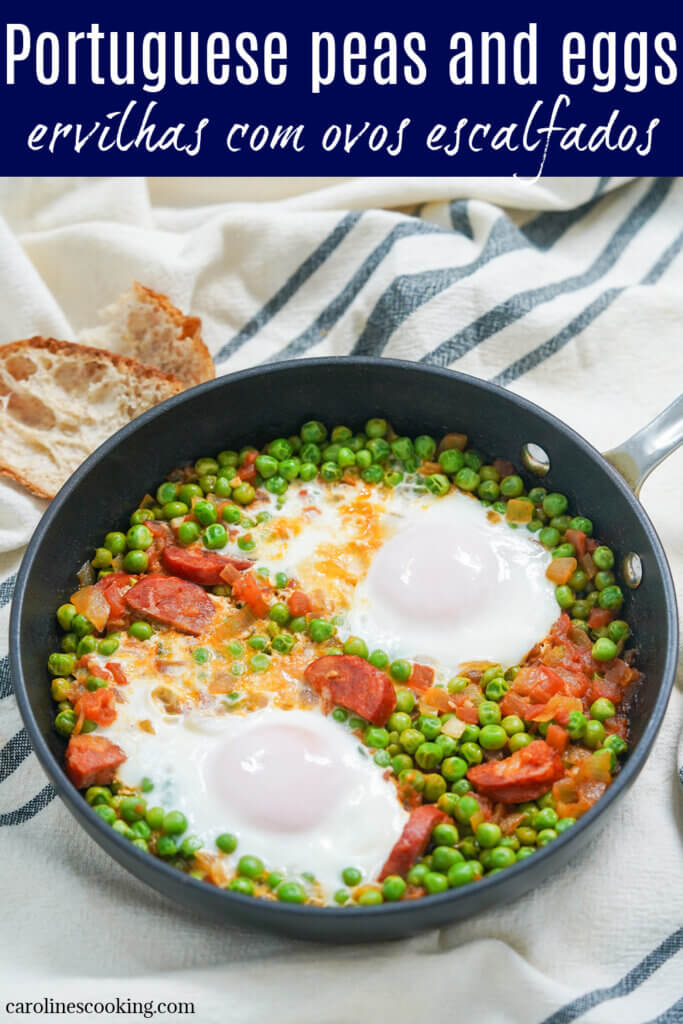
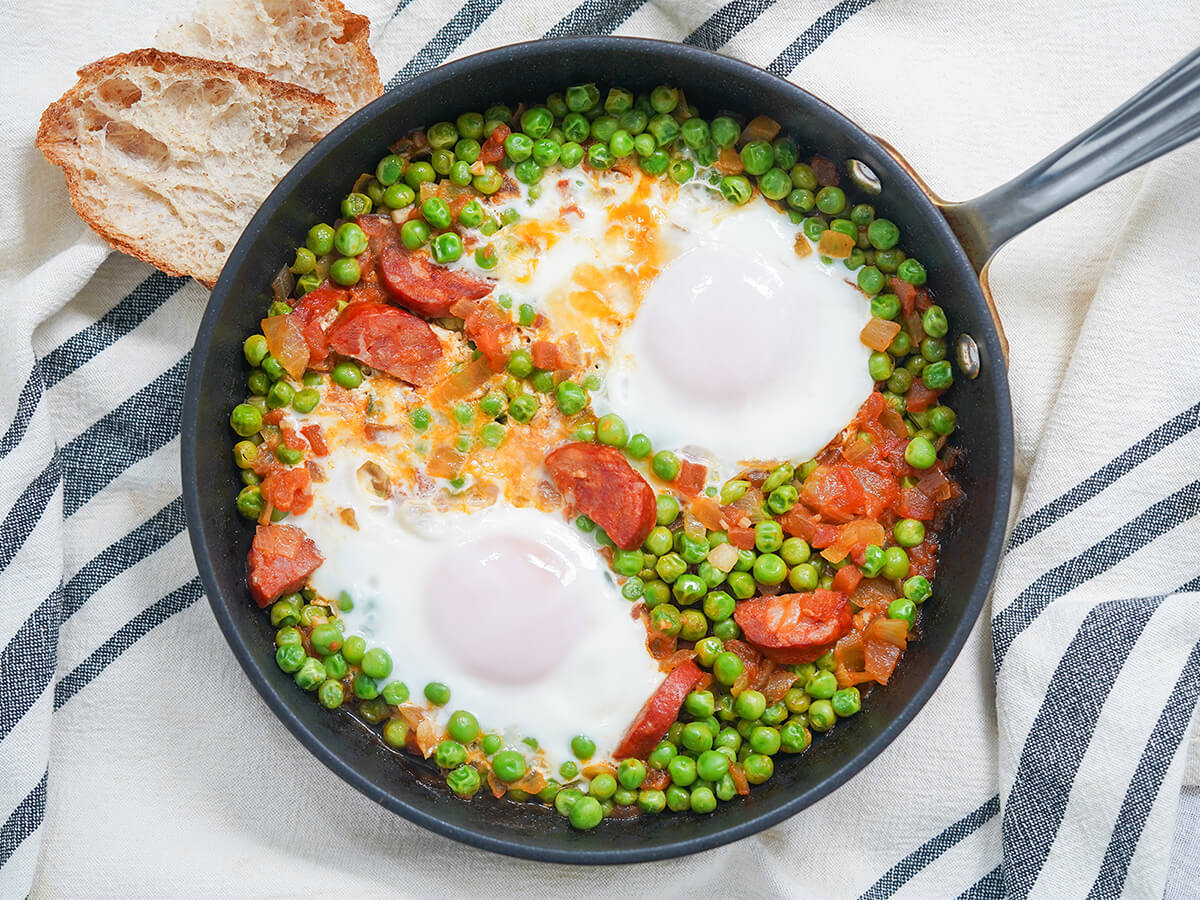
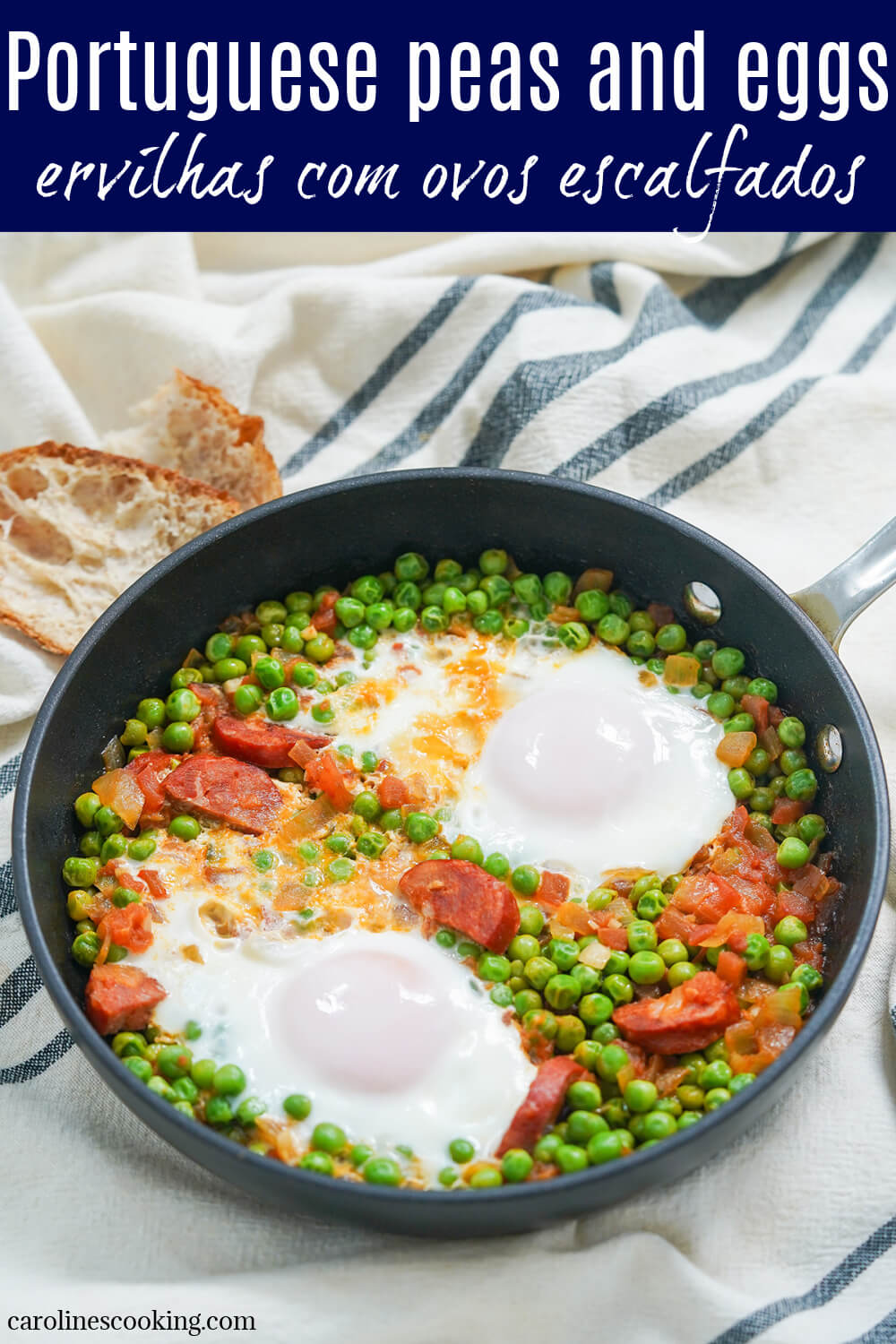
Portuguese peas and eggs is a wonderfully simple dish that's made with just a few ingredients, but is so tasty and comforting. It's quick, easy and perfect for any meal.
This post may contain affiliate links, where we earn from qualifying purchases. See more details in the policy page.
It's always good to have a few of those back-pocket meals. The ones that need no real thought, come together quickly, and you probably don't even need to buy anything to make them. This is one such meal in Portugal. And if it's new to you, I highly recommend giving it a try and it could become just that for you, too.
I've mentioned before that peas are one of those vegetables you might think of as common, but they're rarely well-loved. But they're actually one of the oldest cultivated vegetables. And some dishes do bring out the best in them, like braised French-style peas and pea and mint soup.
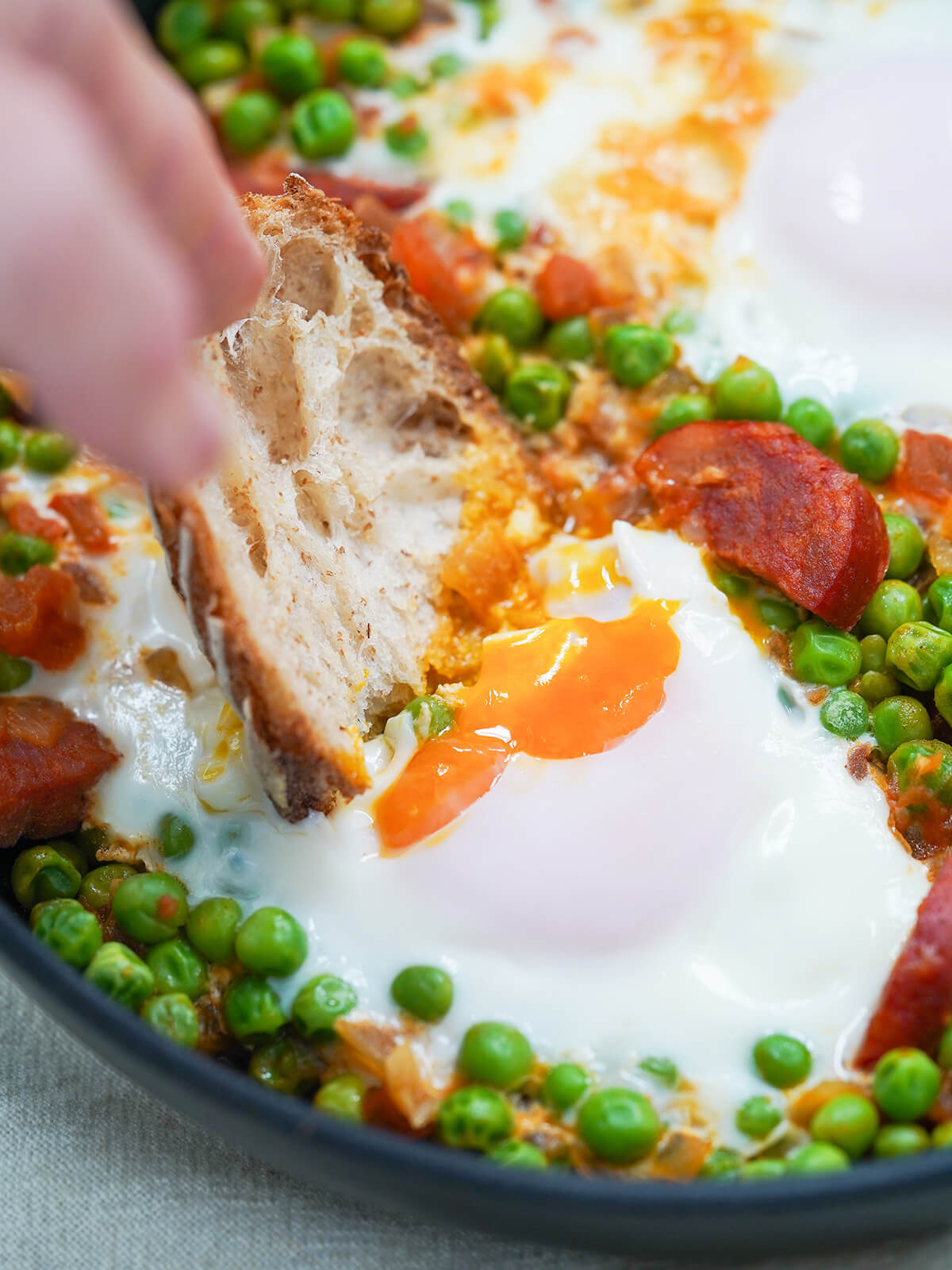
To me, two things are key with peas. First, don't overcook them - the flavor difference between fresh-tasting peas and overcooked ones is huge. And second, seasonings and other additions can be great, but don't go overboard. Peas have a delicate flavor that it's worth being able to taste.
This dish follows both of these points, and does it with ease.
Variations of peas with eggs
The idea of combining peas and eggs is not by any means a purely Portuguese idea. You'll find other variations on the theme particularly in other Mediterranean countries, like Spain and Italy, as well as in Argentina. While you get variations within each place, too, broadly they typically are:
- Italy - here the dish is often combined as a frittata or scramble, with the eggs mixed through the pea and onion base. Some add some cheese, too.
- Spain - here the peas and eggs are often a little more separate in cooking, with the peas often cooked with Serrano ham, then a fried egg added on top.
- Argentina - I love the fact the name here gives a good hint at how it comes together - it's called pea mattress (colchón de arvejas). The base is peas along with onion, tomato and often bacon, carrots and pepper. Then the eggs are poached in the mixture.
- Portugal - almost a cross between the Spanish and Argentinian versions, the base typically includes onion, tomato and bacon and/or chouriço. Some are more stew-like, others with less liquid. But all poach the eggs in the mixture as is in the name (literally "peas with poached eggs").
Despite the variations, they all have a few things in common - they're quick to cook and only need a few ingredients. This is very much frugal, home cooked food, but the end result is tasty and conveniently a one pot meal, too.
Ingredients and substitutions
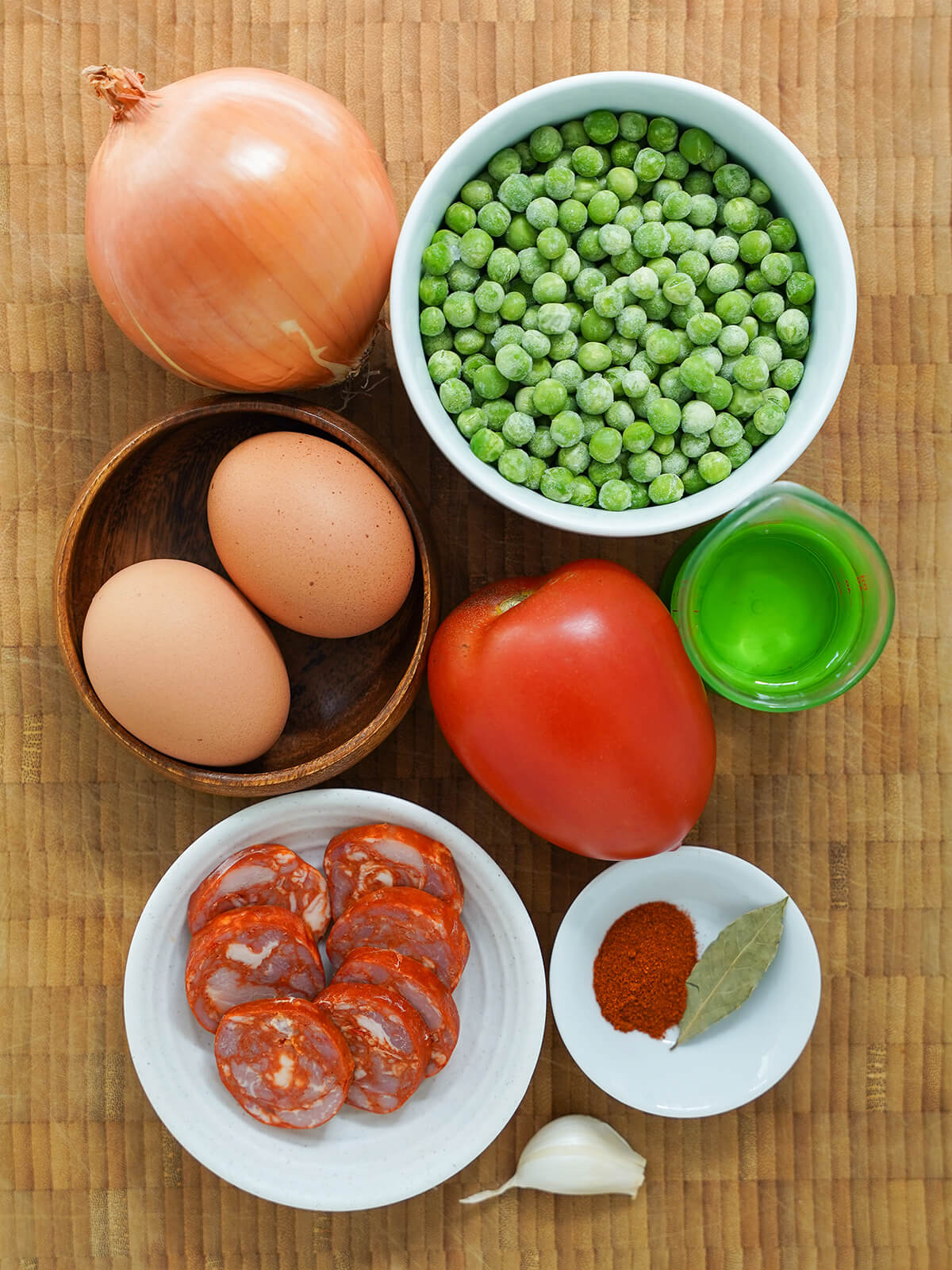
For this dish, as I say you will find a few variations but I have kept with a pretty classic mix:
- Peas - fresh are a little better as they tend to have more flavor but only if really fresh, otherwise frozen are best. Fresh need a little longer to cook, so keep that in mind. I don't recommend canned. Some also make this dish with fresh fava beans, though the flavor is a bit different.
- Eggs - the other star ingredient! Size is not particularly important.
- Onion and garlic - these form the aromatic base for the sauce.
- Chourico - this is a Portuguese cooked sausage, similar to Spanish chorizo as it's made with paprika and garlic, but it tends to be leaner. If you can't find Portuguese, Spanish will work, but I do NOT recommend Mexican chorizo which is quite different. If you prefer, you could use a little bacon or skip the meat to make it vegetarian. If you do, you might
- Tomato - generally fresh tomato is best but you could also use canned. Feel free to add a little more if you want it a bit more sauce-y.
- White wine - this adds a nice bit of depth of flavor to the sauce. You could skip, if you like, though I'd suggest instead using stock to still get a bit more depth of flavor.
- Bay leaf and paprika - both classic seasonings in Portuguese cuisine and add a lovely slight aromatic depth. I definitely recommend adding both.
Tips for preparing Portuguese peas and eggs
This dish is pretty easy, but a couple things will help it come out it's best. First, do all your chopping before you start. Also crack each egg into a small bowl or cup, ready for when needed, too. This dish doesn't take long to cook, so it helps to have everything ready.
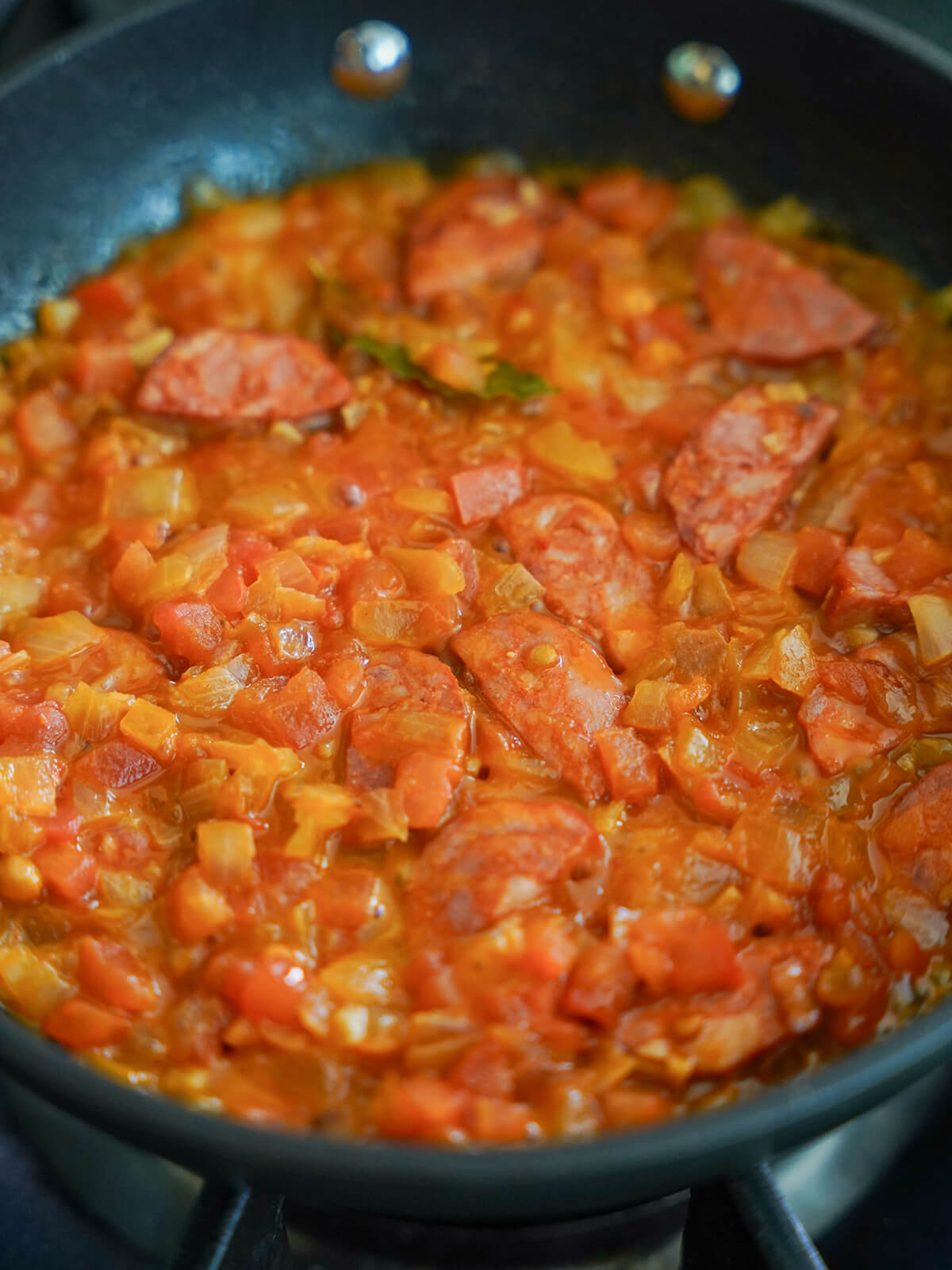
Next, get the onions nicely soft - it helps bring out their natural sweetness. This is the one bit that it's worth giving some time to. Add the wine and let it simmer to boil off the alcohol. Scrape any browning into the liquid as it all adds flavor.
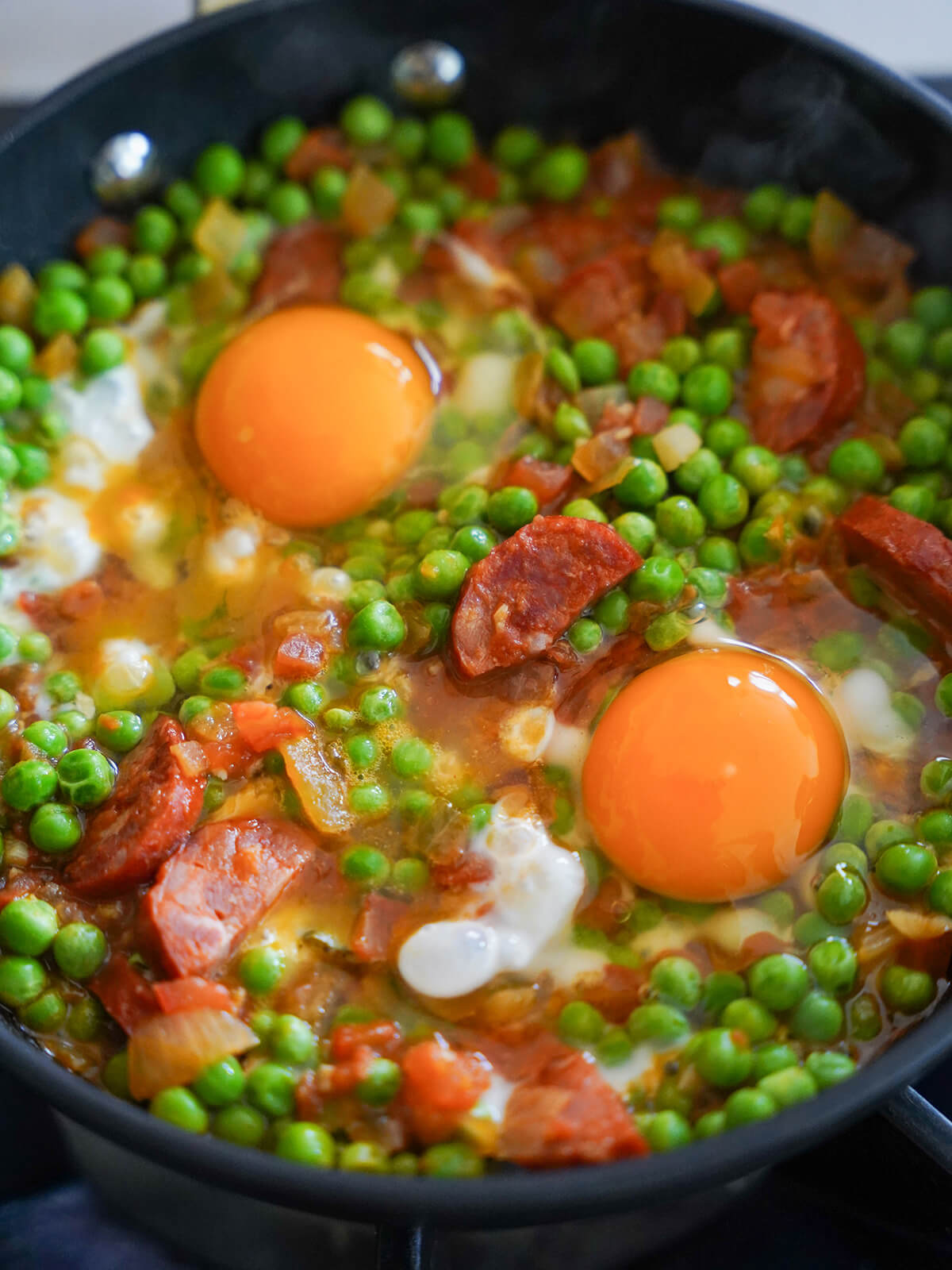
Then add the tomatoes and let them cook down a little. Add a little water or stock if you need more liquid. Once you add the peas, don't let them cook too long before you add the eggs. They don't need long, especially using frozen, but even with fresh.
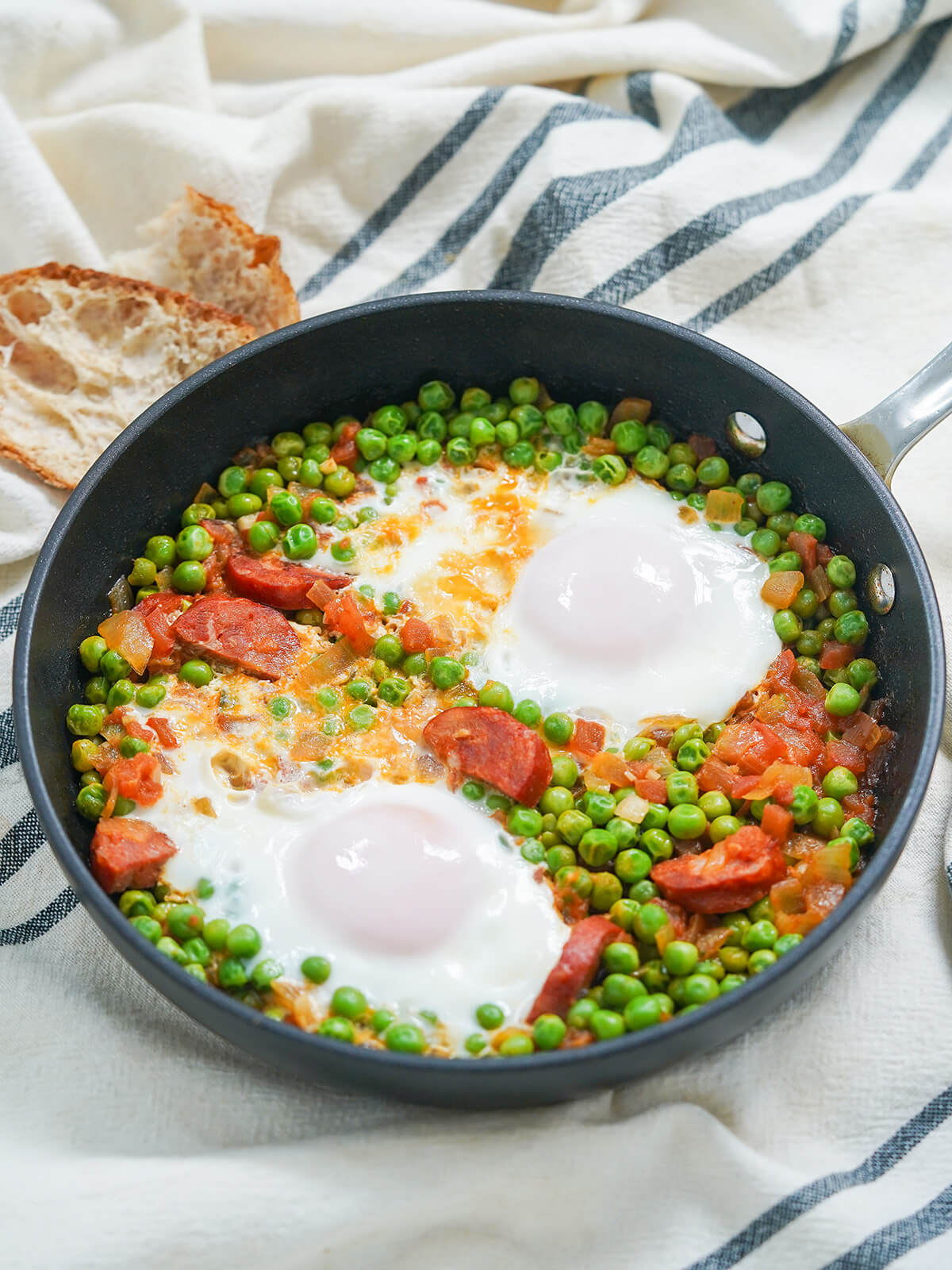
Finally, add the eggs by creating slight indents in the base mixture for them to nestle in, but without touching the bottom. At this point, you may want to cover the pot with a lid to help the eggs cook. While you can cook the eggs longer if you like, do remember they will continue to cook after you take them off the heat. So I'd always go on the slightly under-cooked side.
This Portuguese peas and eggs, ervilhas com ovos escalfados, is a wonderfully easy, comforting and tasty meal that really works for any time of day. It's bright, yet warming, filling but not heavy. A delicious mix that's well worth enjoying any excuse.
Try these other tasty egg dishes:
- Flamenco eggs, huevos a la flamenca, a tasty Spanish dish with some similarities, made with chorizo, ham, and peas with a tomato-pepper base.
- Lobster eggs Benedict, a Benedict variation made with lobster that's wonderfully tasty and decadent feeling.
- Çılbır, a delicious Turkish egg dish combining poached eggs over a savory-seasoned yogurt topped with spiced butter drizzled on top. It's a wonderful combination.
- Plus get more main dish recipes in the archives.
Portuguese peas and eggs (ervilhas com ovos escalfados)
Ingredients
- ½ onion
- 1 clove garlic or 2 if small
- 1 tomato large
- 2 oz Portuguese chourico or Spanish, if Portuguese not available
- 2 eggs (or more, if you prefer)
- ½ tablespoon olive oil or more, as needed
- ¼ cup white wine eg vinho verde
- ½ teaspoon paprika
- 1 bay leaf small (still use 1, but larger, if double recipe)
- 1 pinch salt
- 1 pinch pepper
- 1 cup peas frozen or fresh
Instructions
- Finely chop the onion and garlic. Optionally peel the tomatoes, but either way, finely chop. Slice the chourico/chorizo in slices, halved if they are large. Crack each egg into a small bowl or cup and set aside, ready to add in later.
- Warm the oil in a medium skillet/frying pan over a medium-high heat. Add onion and cook for 5 minutes or so until softening. Add the garlic and chourico/chorizo and and cook a minute or two more.
- Add the wine, allow to simmer to boil off the alcohol and reduce a little. Stir to scrape off any browning from the skillet/pan. Add the paprika and bay leaf and mix in. Then add the tomatoes, season with a little salt and pepper, and cook for a few minutes until well softened. If needed, add some water (around 2 - 4tbsp, 30-60ml) so that the sauce has some liquid to it.
- Add the peas, mix in and cook a minute at most if frozen, a couple if they are fresh. Create slight indents in the mixture for the eggs (one indent per egg) but not all the way to the bottom. Pour an egg into each indent, then cover the skillet/pan with a lid and reduce the heat as the eggs cook.
- You want the egg white to cook but the yolk to skill be slightly runny, but remember it will continue to cook slightly after you remove from the heat, so check regularly. Then remove from the heat and serve - works well with some crusty bread on the side. You can optionally top with a little chopped parsley or cilantro/coriander.
Video
Notes
Nutrition (per serving)
See some of my favorite cooking tools and ingredients in the Caroline's Cooking Amazon store.
Remember to pin for later!
Leave a Reply