
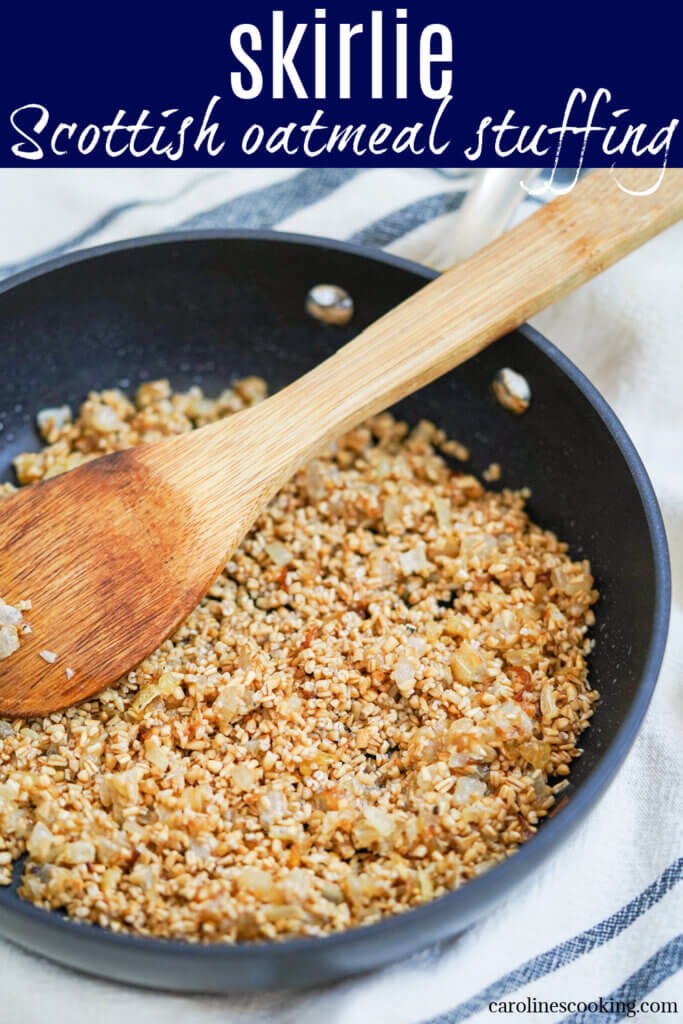
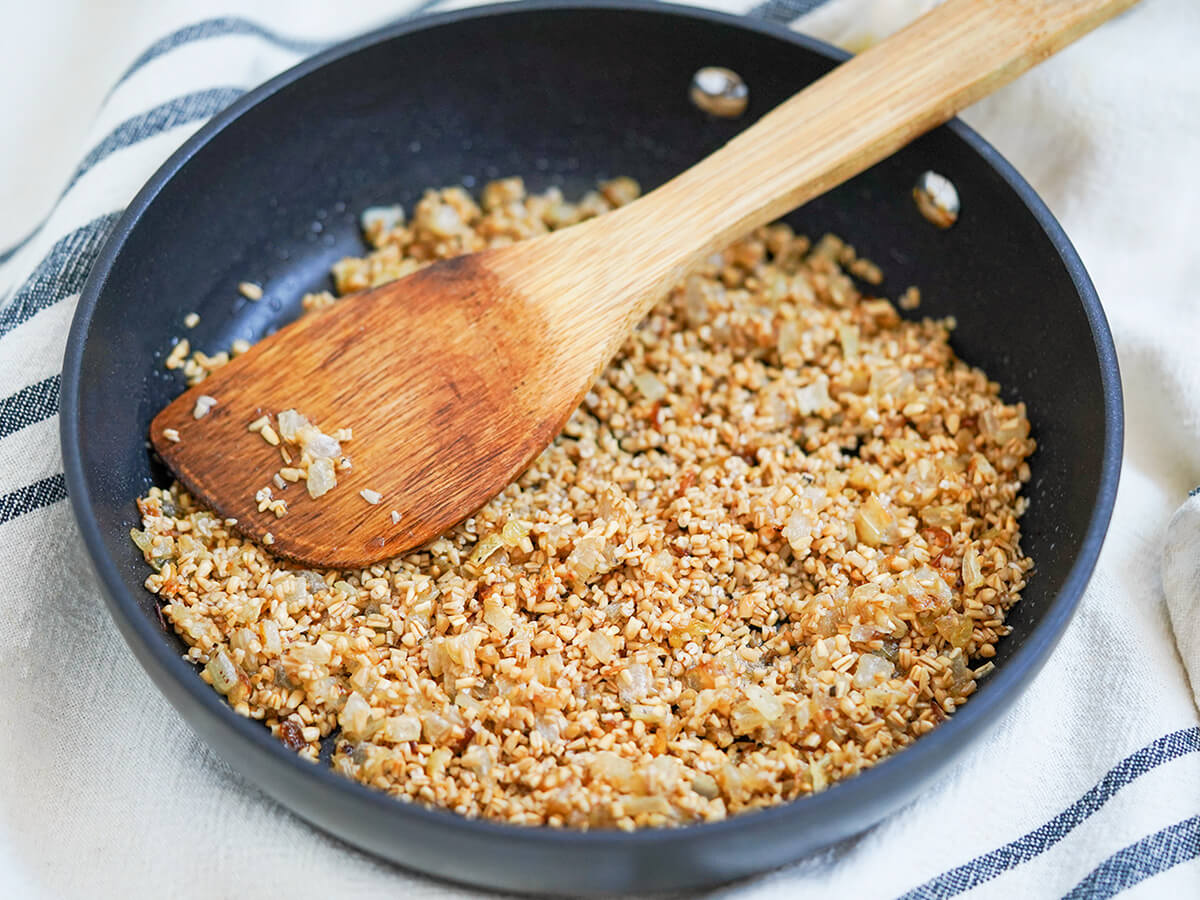
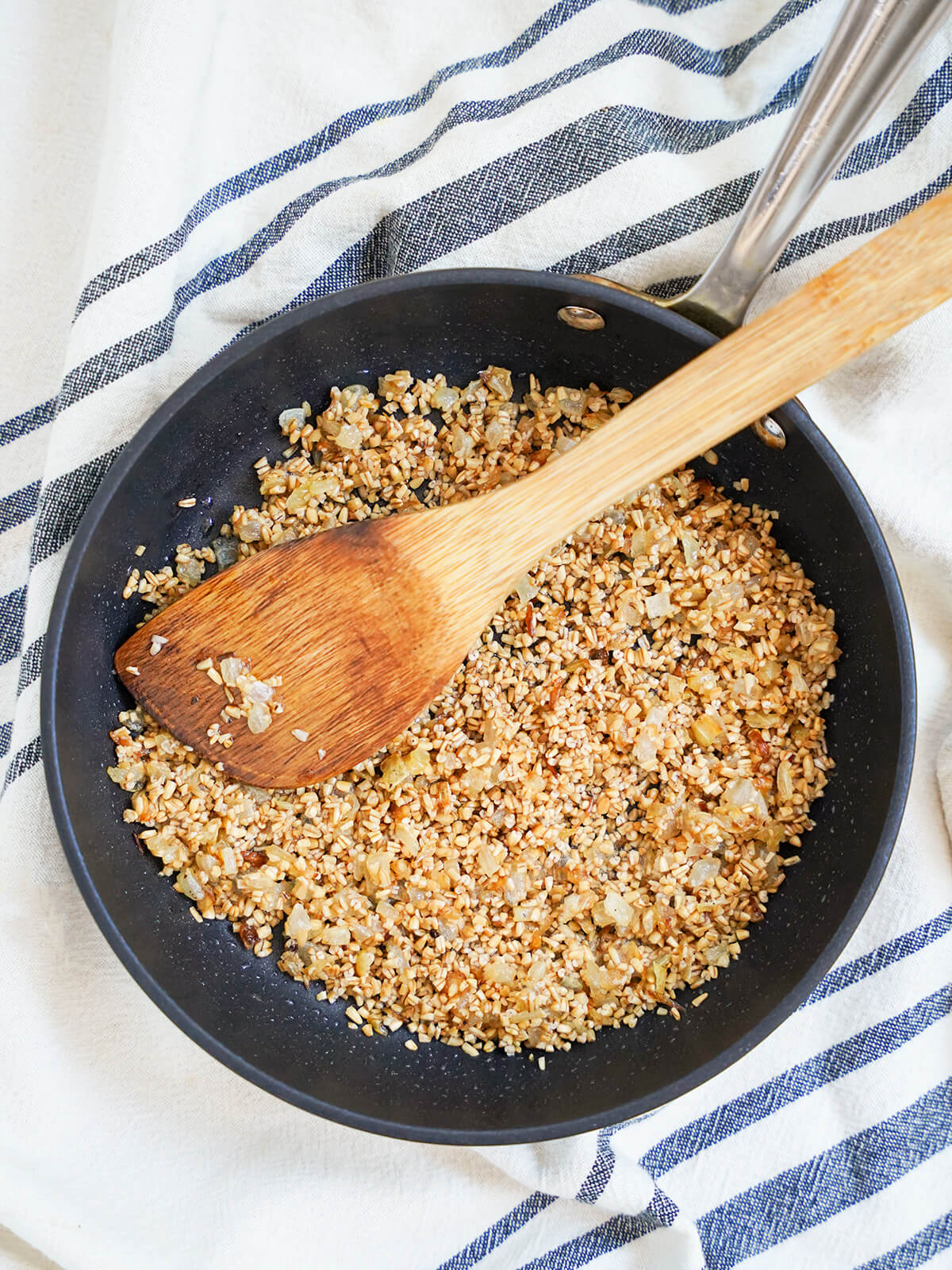
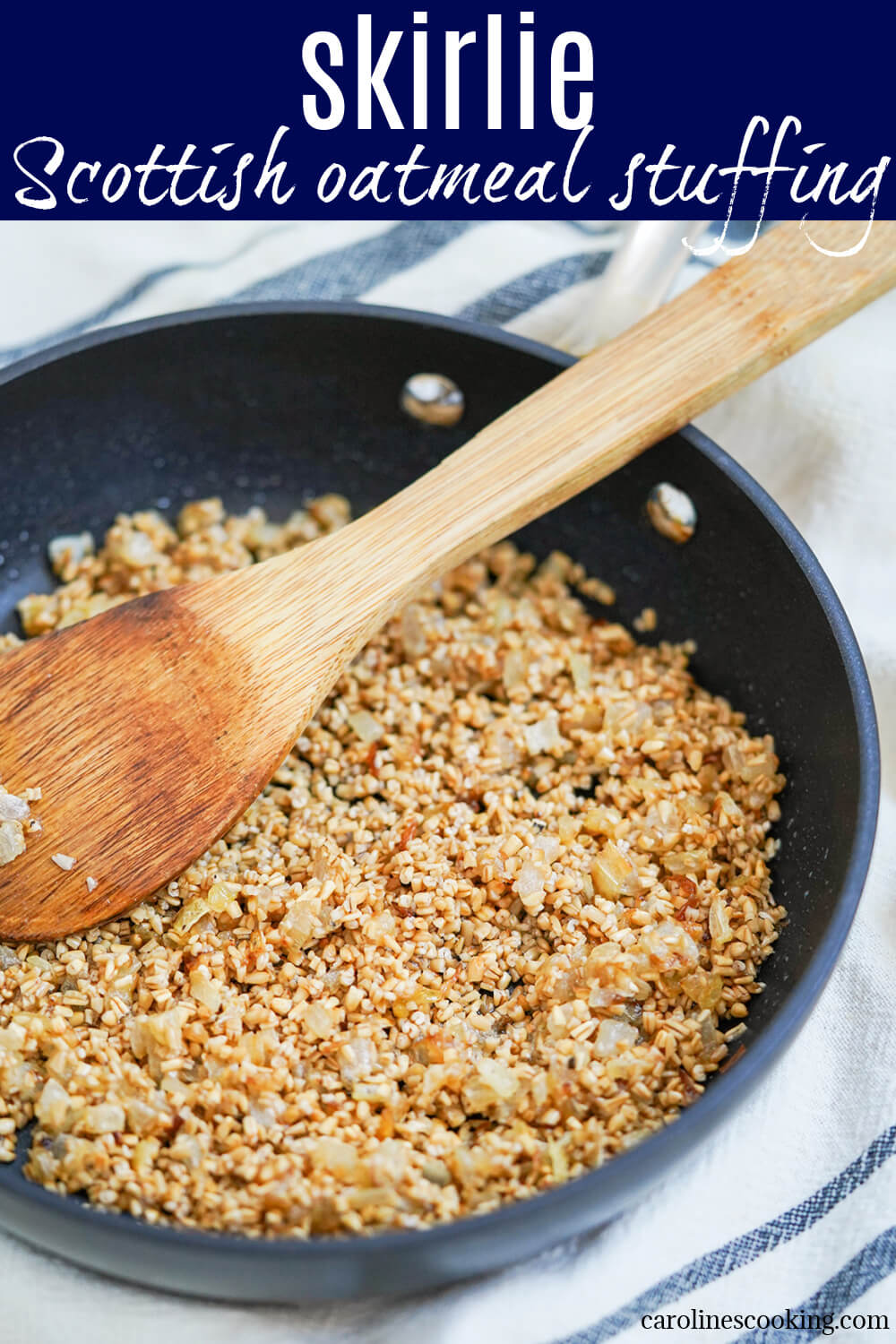
Skirlie is a really simple, traditional Scottish dish that's essentially oats and onion cooked in fat. But this nutty mix is so tasty and great to stuff chicken, mix through mashed potatoes or simply enjoy as a side. It's easy to make, hearty and comforting.
This post may contain affiliate links, where we earn from qualifying purchases. See more details in the policy page.
I don't think I ever really knew this as skirlie growing up, though that is indeed the proper name. Instead, it was simply oatmeal stuffing in our house. My mum made it relatively often to fill chicken breasts, wrapped in bacon, as a kind of cross between chicken Balmoral and my chicken with oatmeal stuffing. We also sometimes had it stuffed in a whole chicken or turkey.
It's an incredibly simple combination of ingredients, and these days sometimes seen as a bit old fashioned. However it's well worth enjoying as it's both tasty and easy (as well as being low-cost too).
Origins and meaning of skirlie
Skirlie is a traditional Scottish dish that has a long history, though the origins beyond that are unknown. But it's very much an everyday dish, using pantry staples that people would have on hand.
The name is said to come from the Scots word "skirl" that means a high-pitched sound - it can be used to talk about bagpipe noise or the wind. In this case, it's said to be the noise the ingredients make in the pan as they cook. You may see a theme with some other Scottish dishes named after sounds, like clapshot and rumbledethumps (similar to colcannon).
Oats in Scottish cooking
When you think of Scottish foods, oats are high up on the list of ingredients. They are incorporated into many traditional dishes from savory mains like haggis to desserts like cranachan. Not to mention porridge as a classic breakfast.
Oats were first introduced to Scotland by the Romans in the 1st century CE, originally to feed their horses but they soon caught on as much more. Scotland has ideal conditions to grow oats, between the acidic soil and lots of rain, both things that made growing wheat a challenge. But for oats, it led to a more flavorful grain that was soon enjoyed across all classes.
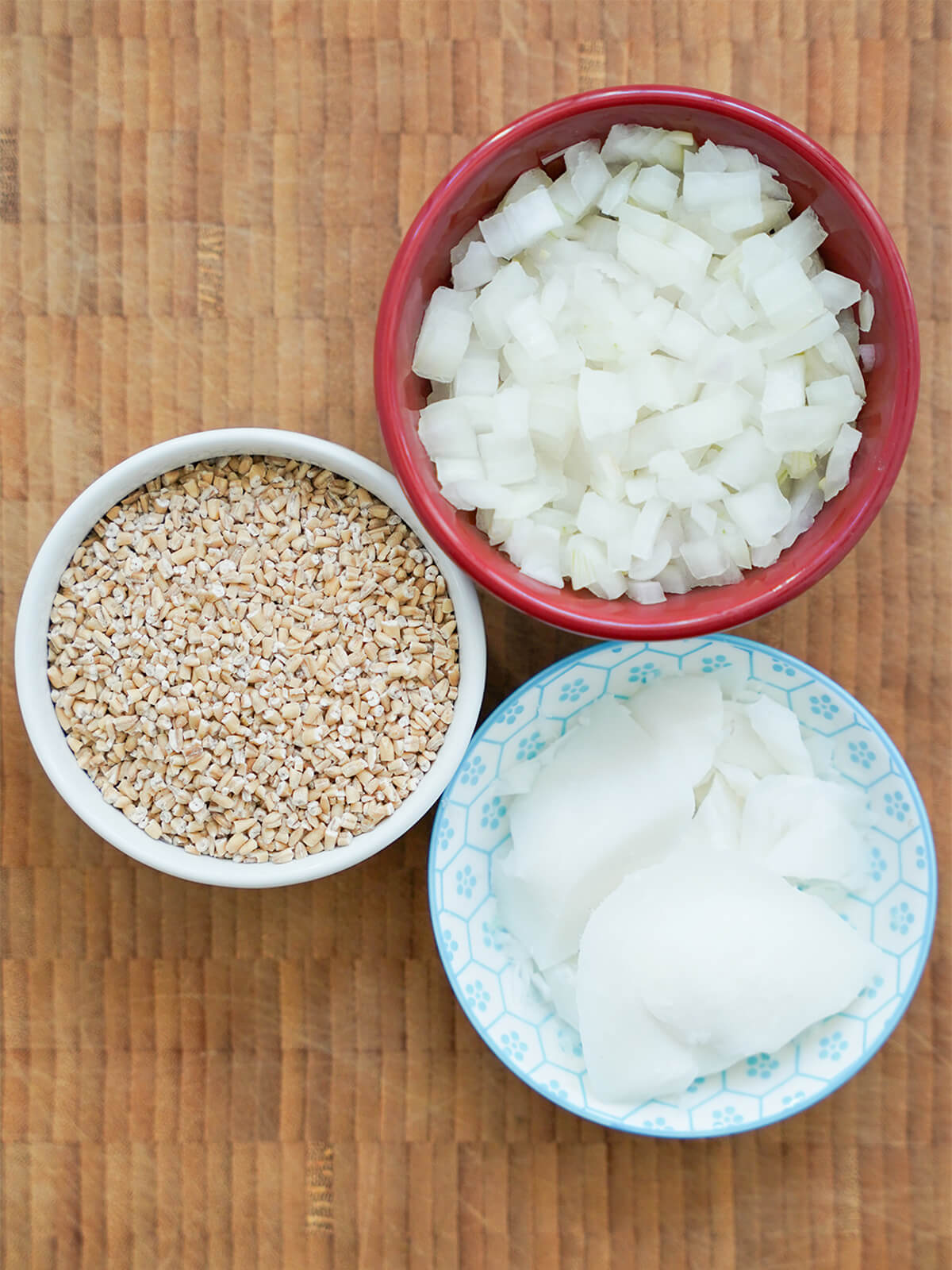
These days, oats are such a core part of Scottish cuisine, being part of a broad range of dishes. Porridge oats are maybe more common (rolled oats, or old fashioned oats in the US), but pinhead oatmeal is the traditional style, and used in many dishes, including this one. The name comes from the way the whole grains are cut, giving pinhead-sized pieces. It's essentially the same as steel-cut oats or Irish oatmeal.
Ingredient variations and substitutions
As I say, you use pinhead oatmeal/steel cut oats for this. Other forms of oats/oatmeal just don't have the right texture and lack that nuttiness which really makes the dish. So make sure you start with the right kind of oats.
The onion part is typically a white onion (you can use a sweet onion if you like) which is easy enough to find. The fat, though, is traditionally beef suet (drippings) which can be trickier to find in some places. Here at least, I can find tallow which is the rendered form and a good close alternative.
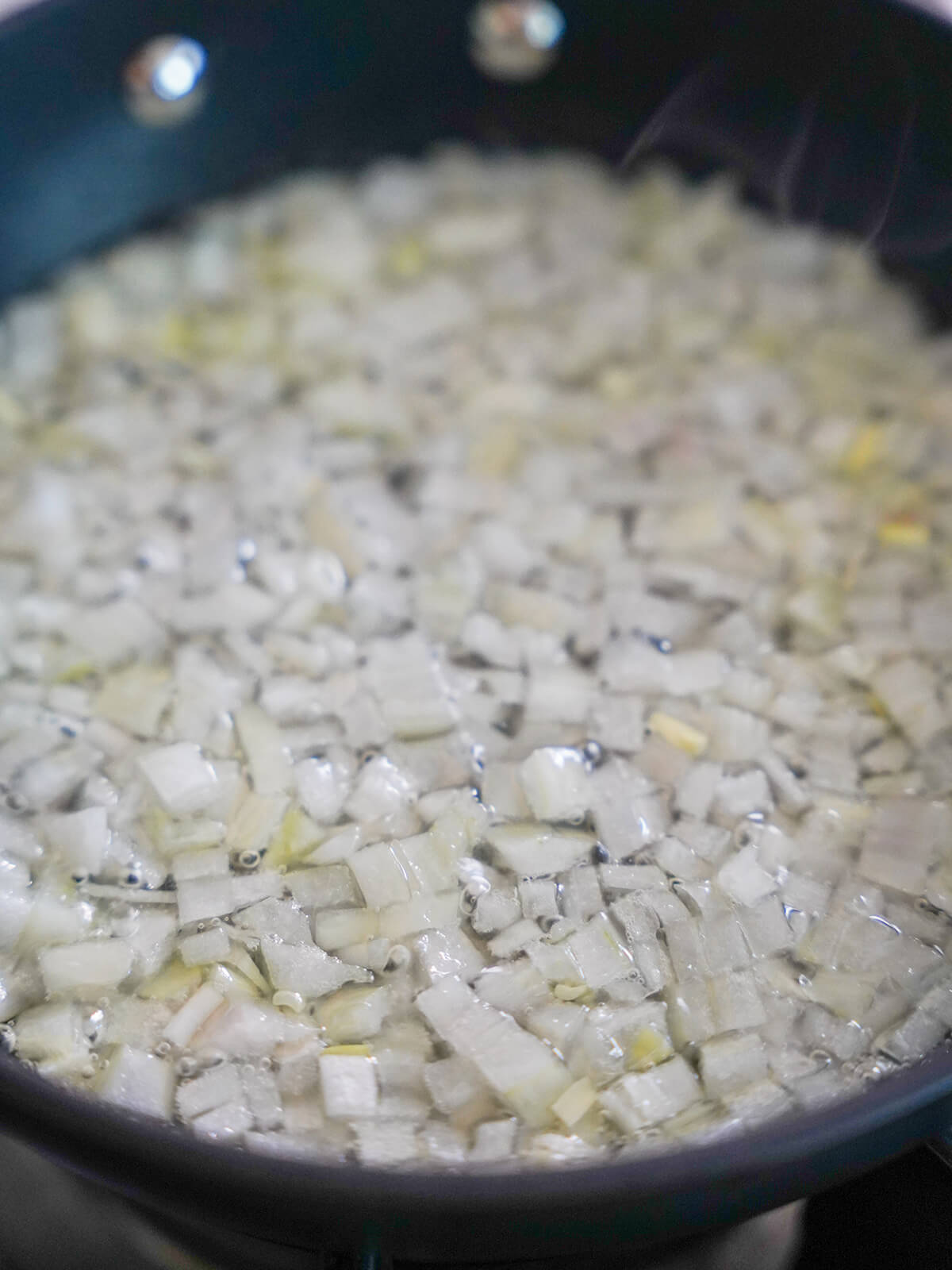
If you can't find either suet or tallow, or prefer to make the dish vegetarian, then butter or shortening are your best alternatives. They won't have quite the same depth of flavor, but you can always adjust the seasoning a little to help compensate.
Typically, you add no more than salt and pepper to season this, but some modern versions add some herbs as well. Some thyme works well, and maybe a little sage. But keep it light and simple, if you do add them.
Tips for making skirlie
This dish is pretty straightforward to make, but a couple things to note. Firstly, it will probably feel like a large amount of fat, but this is what gives the flavor and also helps the onion soften rather than brown. You can always drain excess when serving.
Secondly, use low heat and take your time. These are important to let the onions soften and become sweet, and the oats to cook and become nutty but not burn.
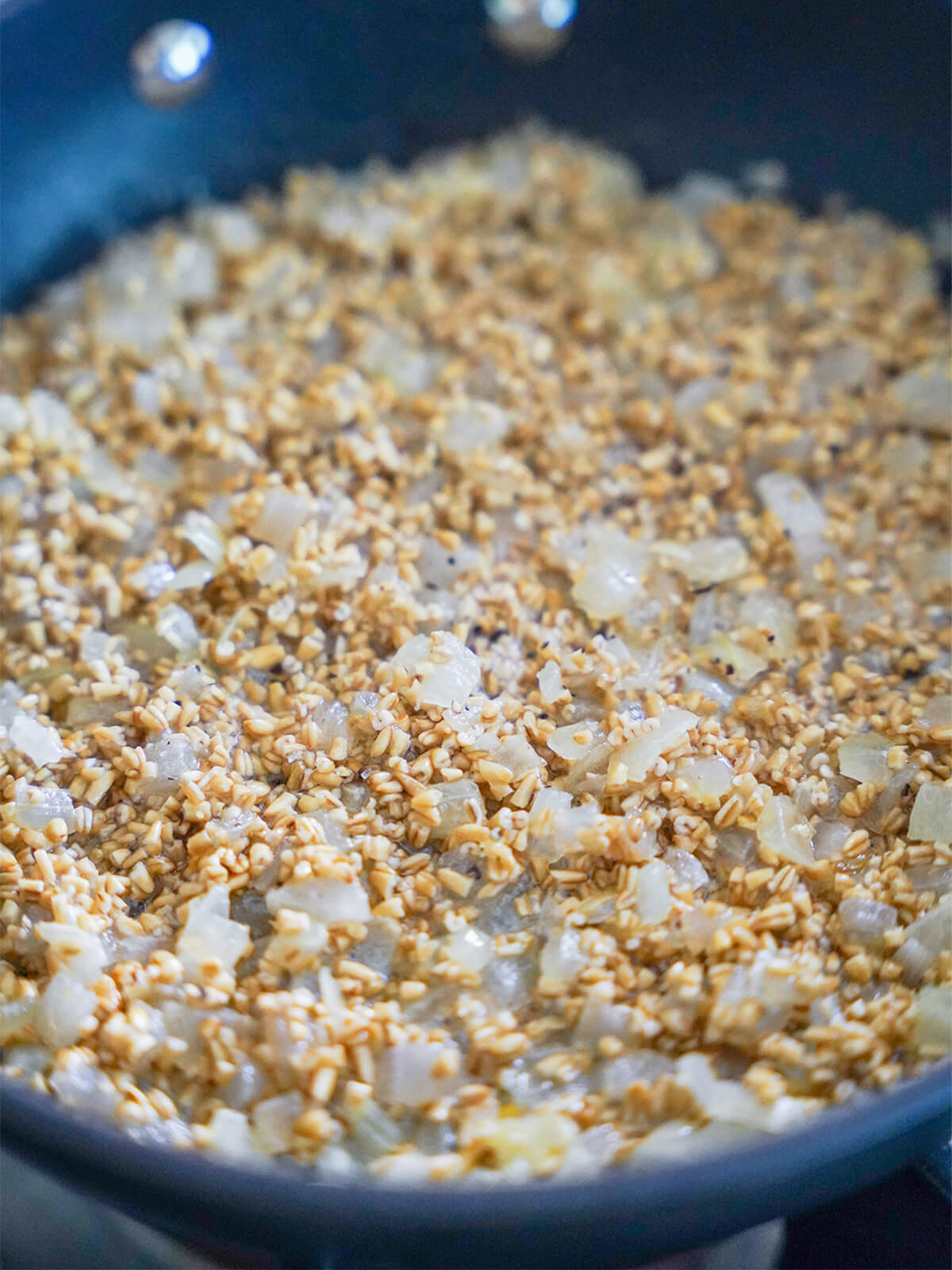
The oats should cook so that they have a nice chew to them, but if you are feeling they are not quite soft enough to your taste, you can add a small amount of water then cover and let them steam a little. But only a little - the oats should be a bit chewy, not super soft and wet like a porridge.
Skirlie is sometimes called "poor man's haggis" since one way to serve it is with mashed potato and mashed rutabaga (swede mash, "neeps"). But as I say it's also great as a stuffing for chicken (hence another nickname, Scottish stuffing). Some use it to stuff thin slices of beef as beef olives, too, or you can mix it through mashed potato to give a nice extra texture. You could even mix it in with other things as a grain salad.
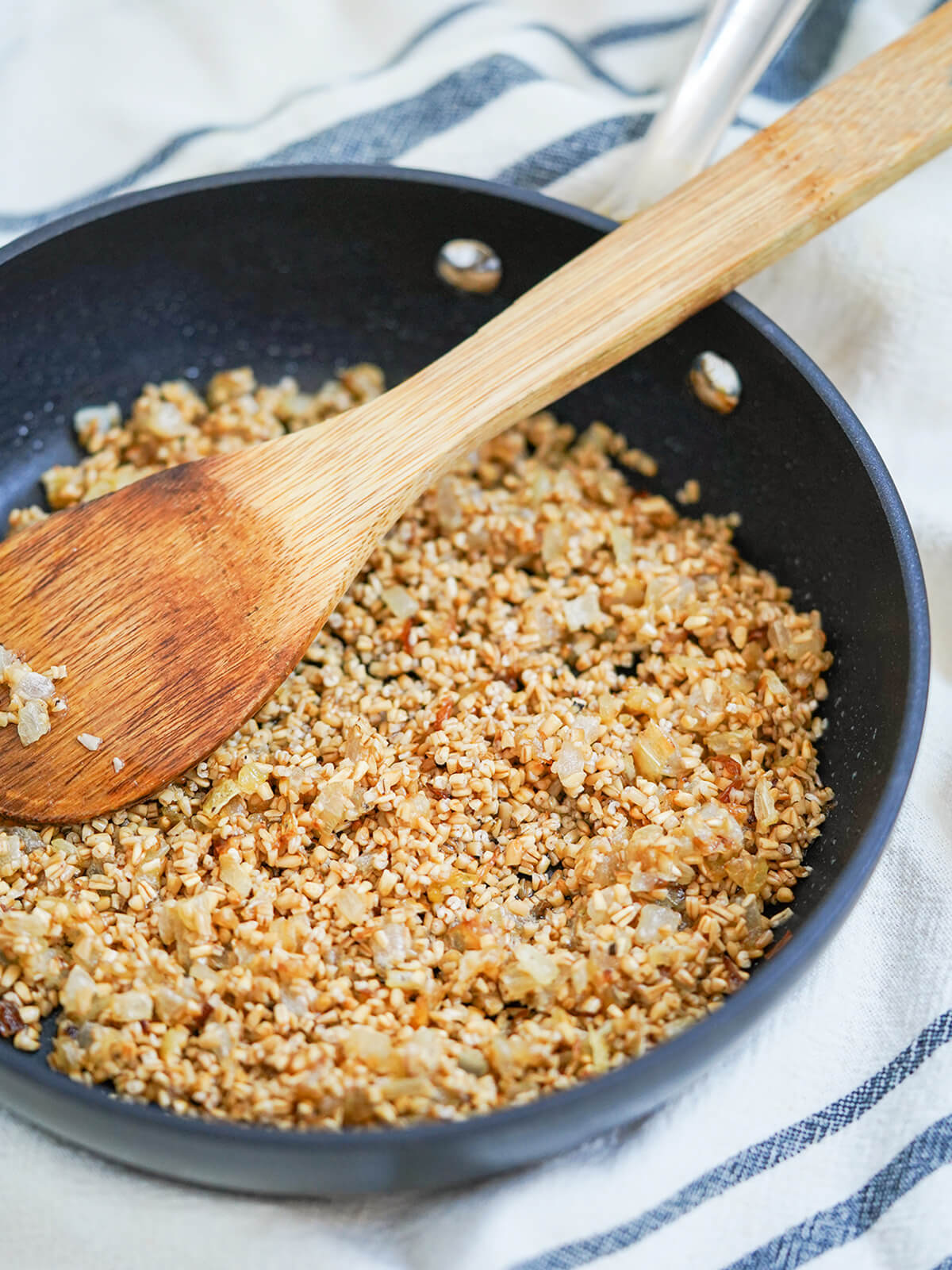
However you serve it, skirlie is a lovely, super simple Scottish dish. Whether used as an oatmeal stuffing or as a side in itself, it has a tasty, nutty flavor that's wonderfully comforting. Be sure to give it a try.
Try these other dishes with oats:
- Scottish oatcakes (simple savory crackers, perfect topped with cheese and more)
- Swiss Bircher muesli (the original overnight oats, made with apple - tasty and easy)
- Banana oatmeal (a favorite breakfast of ours, it's quick, easy and with a lovely natural sweetness)
- Plus get more British recipes (including many Scottish) and side dishes in the archives.
Skirlie (Scottish oatmeal stuffing)
Ingredients
- 3 tablespoon beef suet or tallow (see notes)
- ¾ cup onion finely diced (¾ cup is around ½ a large onion)
- ½ cup pinhead oatmeal steel cut oats
Instructions
- In a small skillet/frying pan, melt the beef suet/tallow over a medium heat then add the onion. Cook, stirring regularly, until it has softened but is not browning (if it starts to brown then reduce the heat).
- Reduce the heat to low, add the oatmeal and stir to mix. Season with a pinch of salt and pepper. Allow to cook, stirring now and then, for around 15 minutes until the oats are golden and cooked through. They will be a bit nutty and have some chew, but should taste cooked. If you want them slightly softer, add a teaspoon or two of water or stock, and cover to steam, but it shouldn't really be needed.
Video
Notes
Nutrition (per serving)
See some of my favorite cooking tools and ingredients in the Caroline's Cooking Amazon store.
Remember to pin for later!
Leave a Reply