
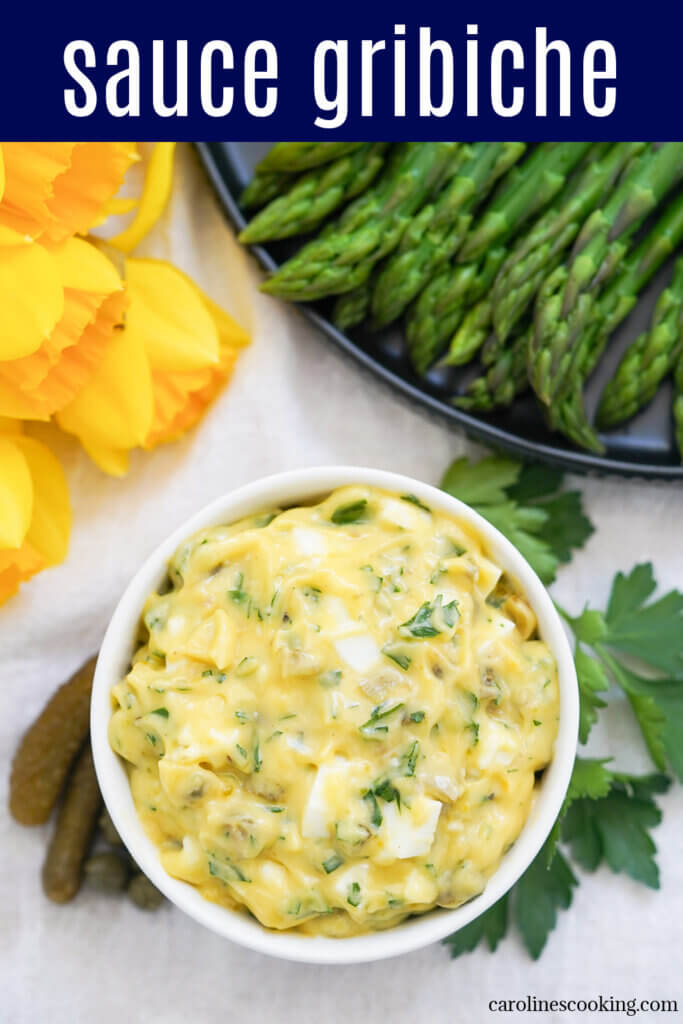
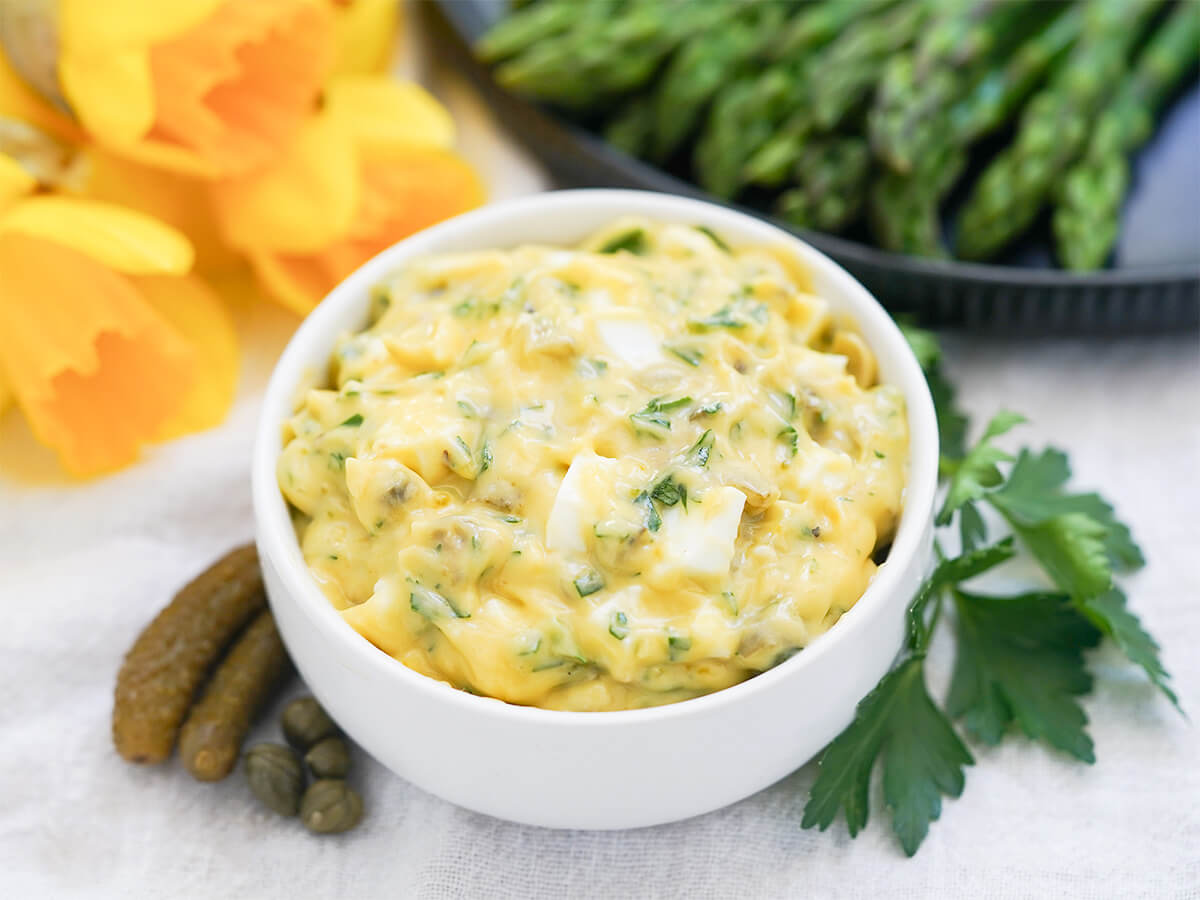
Sauce gribiche is a often defined as a cold egg sauce, but that misses all the added extras that give lots of punchy flavor. It's like a more interesting cousin of mayonnaise and great for dipping, or serving over vegetables, fish and more.
This post may contain affiliate links, where we earn from qualifying purchases. See more details in the policy page.
A simple sauce can do wonders for so many dishes. Things like chermoula sauce, arugula pesto and aji verde are great for drizzling or mixing in with so many things.
Sure, you can buy many good sauces, but as with many things, homemade often wins. They're generally fresher, with less ingredients you may not need (or want) and you can adapt them to taste. Plus, so many sauces are not as difficult as you might think. This one might have a pre-step, but it's easy and well worth making.
The French sauce families
A classic core part of French cuisine is the famous "mother sauces". Auguste Escoffier is generally credited with creating the list as part of his influential book "Le Guide Culinaire" in the early 1900s, but he really more refined it. It was Marie-Antoine Carême who first codifying sauces in the early 1800s.
These mother or foundational sauces - Béchamel, Velouté, Espagnole, Hollandaise, and Tomato - each use a small list of ingredients and different techniques to thicken them. The idea is they provide the foundation for many more sauces ("daughter" sauces) that you find in classic French cuisine, and beyond.
This French sauce, while egg-based, is a bit of an outlier, or at best a distant cousin of Hollandaise. The big thing that makes them different is Hollandaise starts with raw egg while this uses cooked.
Despite being less part of the family, that doesn't stop it from being really tasty and worth getting to know. It's bright, with a slightly punchy flavor and some tasty texture in there, too. It's probably closest to a tartare sauce or remoulade, though also that bit different.
Sauce gribiche ingredients and technique
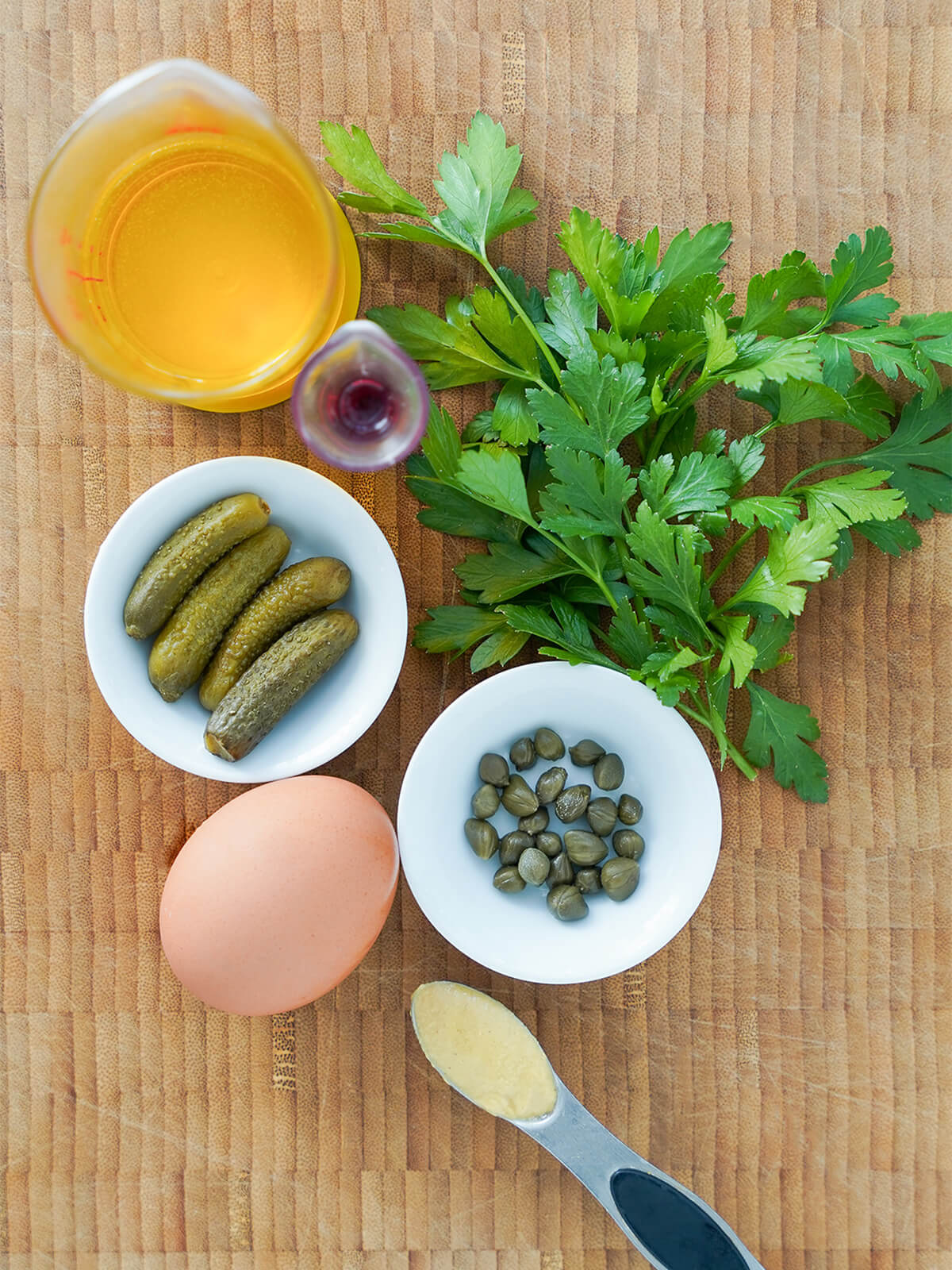
This sauce has a few core ingredients:
- Hard boiled egg - this is part of what makes this sauce unusual compared to it's "cousins" as it uses cooked egg - the yolk blended in the main sauce, and the white chopped up and mixed in at the end.
- Oil - the base liquid for the sauce. Use a good olive oil - I use extra virgin olive oil though you can use virgin as well.
- Vinegar - this adds a little sharp balance to the sauce. You can adjust the amount to taste (I have kept it on the lighter side here). Use a wine vinegar, but both white and red will work.
- Mustard - Dijon mustard adds lots of great flavor and a bit more sharpness. Some also use part grain mustard but I tend to just use Dijon.
- Cornichons - if you are not familiar, these are mini-pickles, common alongside charcuterie and France and elsewhere. They're chopped up and add texture and flavor to the sauce.
- Capers - these, too, add texture and flavor. Be sure to drain them well before using.
- Fresh herbs - you can use a few different herbs in this, and vary the amount to taste. Parsley is the most typical and I'd suggest you use at least that, and potentially also add a little tarragon or chervil.
In terms of technique, there are a couple camps on how to make this. Most would argue that it's a cold emulsion sauce (Hollandaise is also emulsion, but warm), so the oil is gradually blended into the base. However some serve this as a "loose" sauce that's more fluid. This can be good if you are using as a dressing, but it's arguably less traditional. So here I've stuck with the more traditional emulsion.
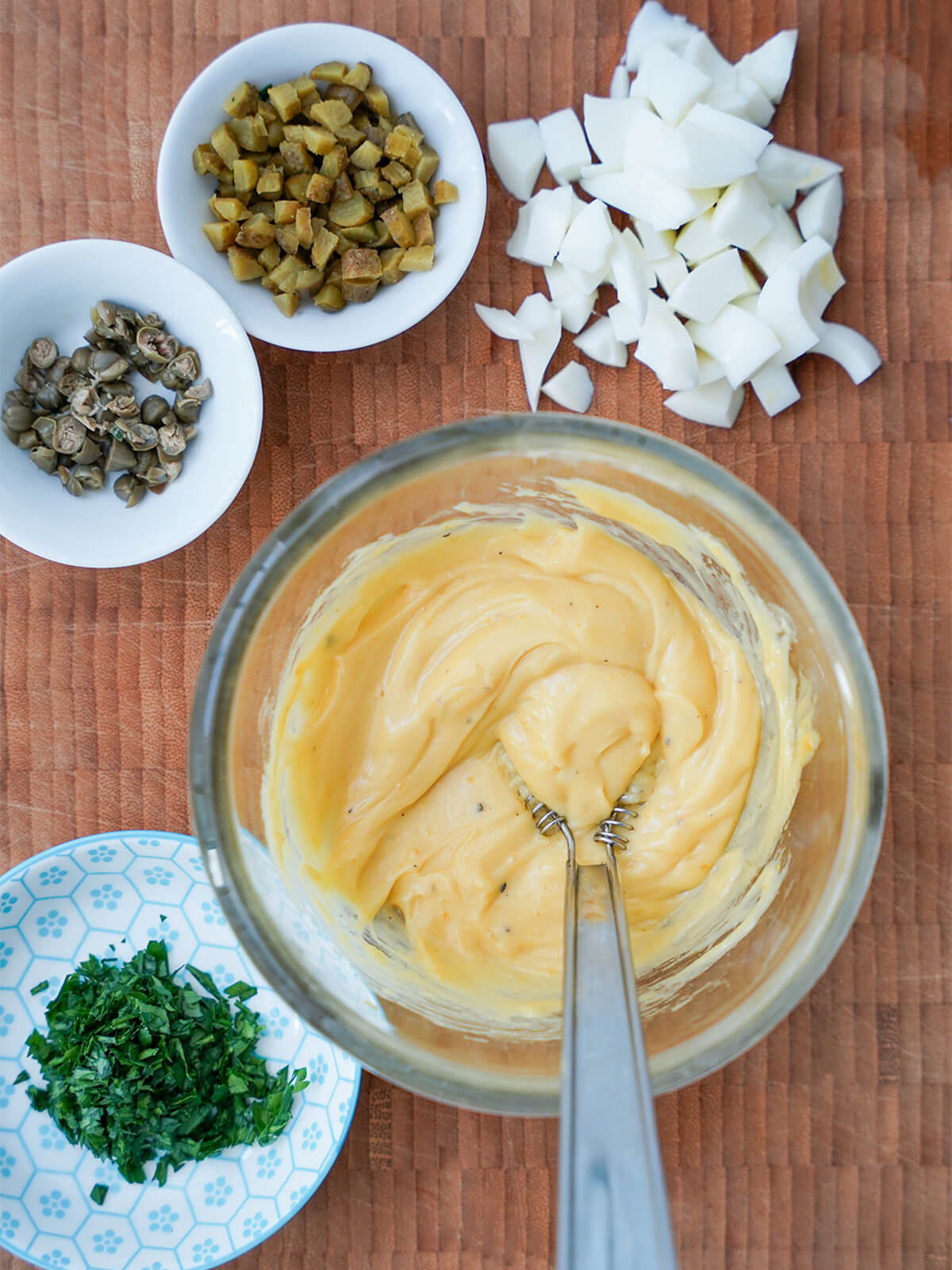
Tips for successfully blending the sauce
If the idea of making an emulsion seems daunting, don't worry, it's easier than you think! The key is to make sure you do a couple things as you go:
- Start by mixing the egg yolk, mustard and vinegar - this helps to loosen up the egg and gives you a base that will blend more easily. The mustard and yolk help the mixture emulsify as well. Make sure it's smooth, as it's harder to get lumps out later.
- Add the oil gradually - it's tempting to add lots, but the key to getting the oil to blend in and emulsify is to go slow. Add a little, mix it in, then add a little more. Repeat until you have added it all.
Once you have your smooth mayonnaise-like base, that's when you add in the chunkier additions. Exactly how big the pieces are is a little up to you, but I like them relatively small.
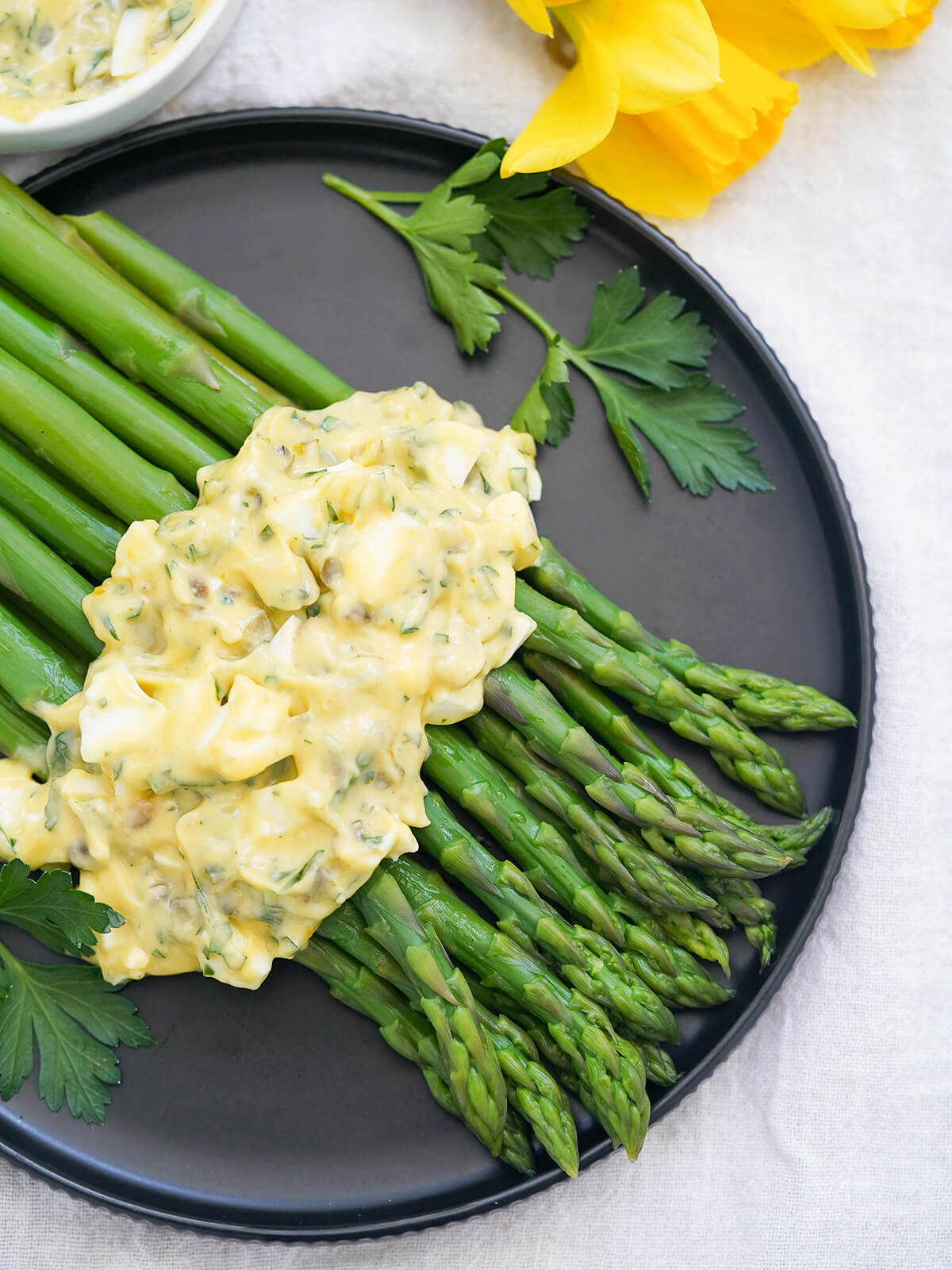
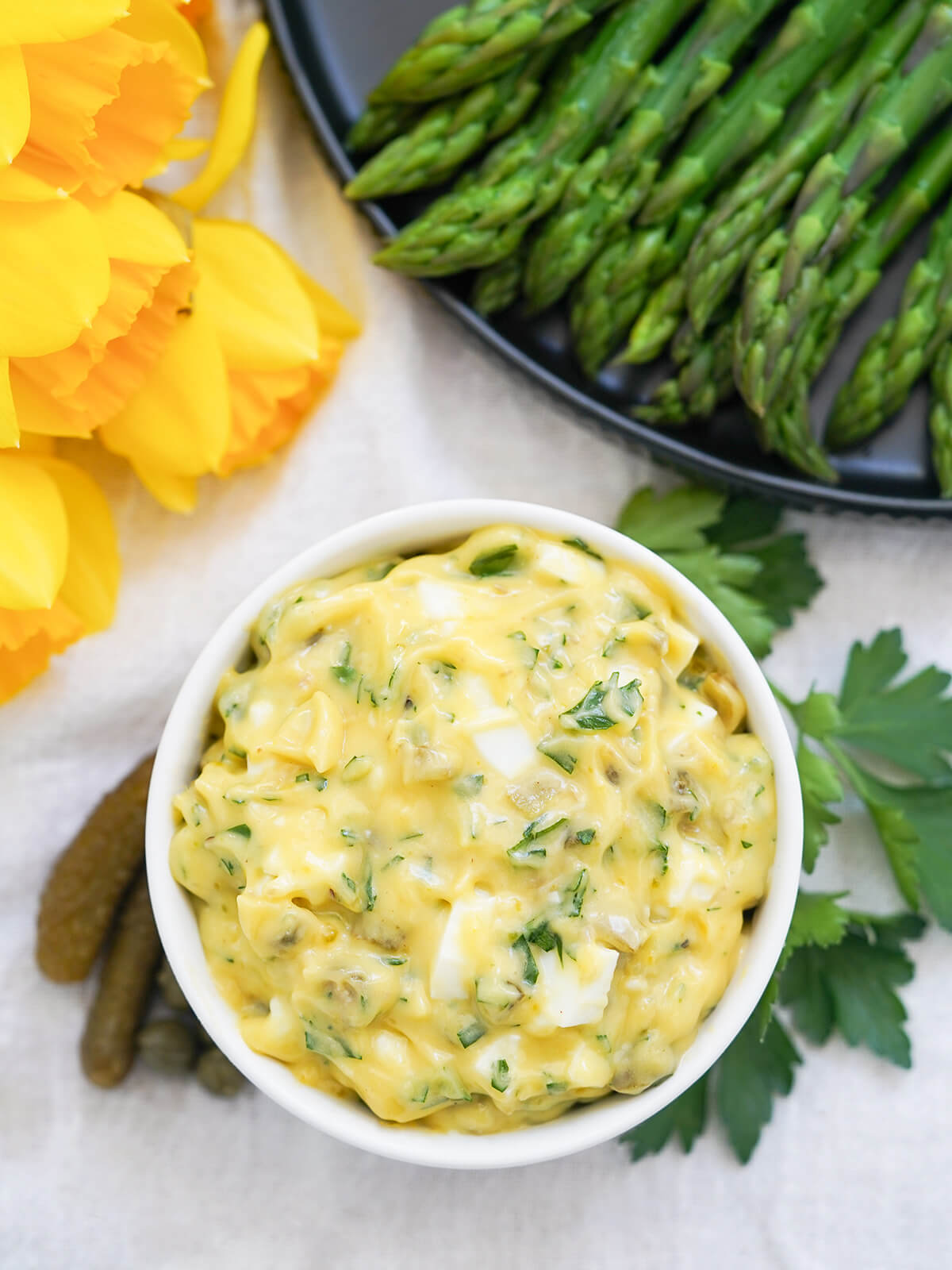
Sauce gribiche is a delicious mix of smooth base and bright, punchy flavor. For me, it fits in particularly well in spring since it pairs perfectly with asparagus, as well as lighter proteins like chicken and fish. But really, you could use it any time of year, and it's well worth enjoying.
Try these other flavorful sauces:
- Romesco sauce - a classic Catalan sauce made with nuts, peppers and tomato, it's packed with flavor and perfect with vegetables, through pasta and more.
- Walnut sauce - a lesser-known Italian sauce that transforms humble ingredients into a creamy, nutty sauce.
- Chimichurri - a vibrant herb and vinegar-based sauce that's perfect as a marinade and/or over steak (as in the linked recipe) as well as with vegetables.
- Plus get more sauces and other condiment recipes, and French recipes, in the archives.
Sauce gribiche
Ingredients
- 1 egg (can use ready hard-boiled)
- 4 cornichons approximately, or more to taste
- ½ tablespoon capers drained, or more to taste
- 1 tablespoon parsley or more to taste, or use part tarragon or a little tarragon in addition
- 1 teaspoon wine vinegar or a little more to taste
- 1 teaspoon Dijon mustard
- ⅓ cup olive oil
Instructions
- If you have a preferred method of cooking a hard-boiled egg then feel free to use that, otherwise I suggest bringing a small pot of water to a boil, add the egg cold from the fridge then set a timer for 10 minutes. Reduce the heat a little after adding the egg so it's still boiling but not too strong, so the egg doesn't jump around and potentially crack. Turn now and then to try to center the yolk. Towards the end of the cooking time, prepare a bowl with iced water, then once the timer goes, transfer the egg to the iced water. Leave to cool a few minutes.
- Meanwhile, chop the cornichons - how finely is up to you but I'd suggest at least as small as the capers, if not slightly smaller. You can roughly chop the capers or leave them, as you prefer. Chop the parsley (and tarragon, if using).
- When ready, peel the egg then cut so that you can separate off the white and remove the yolk. Roughly chop the egg white and set aside.
- Place the egg yolk in a small-medium bowl and add the vinegar and Dijon mustard. Mash or whisk well so that the yolk breaks up and doesn't have any lumps left, and everything is well combined.
- Add the oil to the yolk mixture, a small amount at a time. After each addition, whisk the oil in so that it emulsifies. Make sure you have the oil largely all combined before you add the next drizzle. Keep adding a little at a time and whisking in until all the oil is added.
- Add the chopped cornichons, capers, parsley and chopped egg white to the sauce and stir through so everything is well distributed. Use or store in a sealed container in the fridge for up to a day.
Video
Nutrition (per serving)
See some of my favorite cooking tools and ingredients in the Caroline's Cooking Amazon store.
Remeber to pin for later!
Leave a Reply