
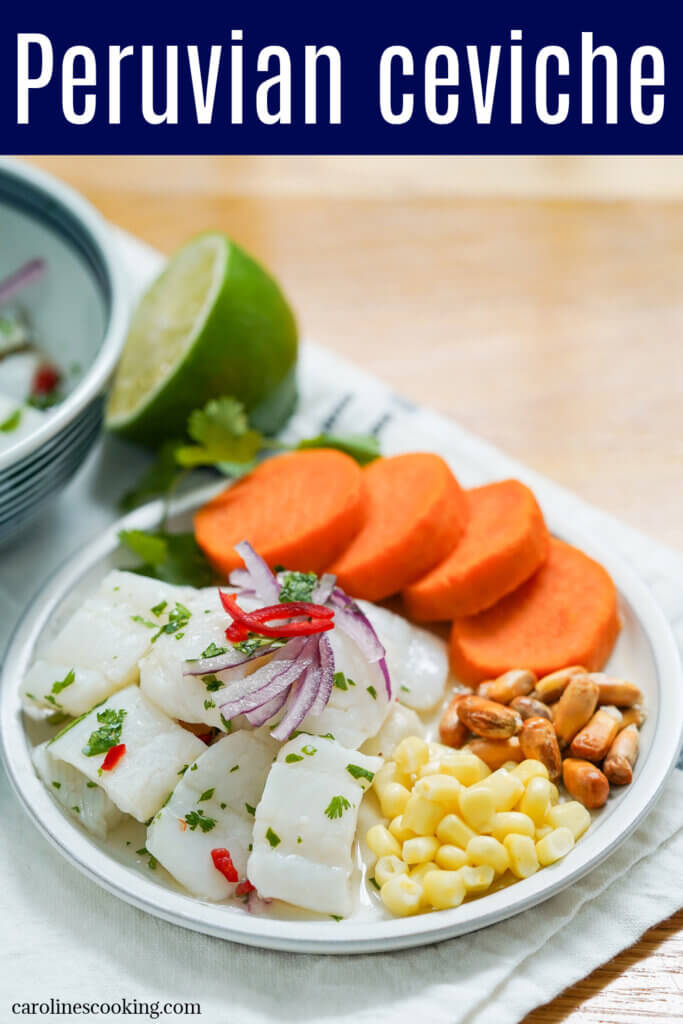
While you'll find it in many countries now, the original Peruvian ceviche is a classic well worth enjoying. The citrus-chili fish pairs so well with some simple accompaniments for a great appetizer or light lunch.
This post may contain affiliate links, where we earn from qualifying purchases. See more details in the policy page.
While you will find ceviche in many Latin American countries these days, and beyond, Peru is where it's originally from. If you ever make it to Peru, I highly recommend having it at least once while there, but it's also a dish you can easily recreate at home.
Ceviche has evolved as it has spread globally, like the shrimp ceviche tostadas that are more Mexican in style with added vegetables. But in Peru, it's usually very simple. This let's the fish shine in this light and tasty dish.
What is ceviche?
Ceviche is essentially fish or seafood marinated in citrus juice. In Peru, alongside citrus you typically use chili, salt and usually onion and cilantro. Elsewhere, as I say, you may find other additions.
I say marinade, but typically you only let the fish rest in the citrus juice for a relatively short period of time - it's long enough to gently denature the fish but not break down the texture so much.
The exact origins of ceviche are not clear, with some believing it dates back to pre-Incan times, though with some variation from the modern dish. These days it's particularly popular on the coast of Peru, using fresh fish straight from the ocean. But you will also find trout ceviche in the Andes mountains using river trout that are common there.
What type of fish is best for ceviche?
You can use a few different types of fish to make ceviche, depending on what you have available. You want something that isn't too loose in texture, so it doesn't just fall apart, but not so dense the citrus can't penetrate relatively easily.
For a classic coastal-style ceviche, you typically use white fish. Common choices include bass, sole or flounder, with halibut or mahi-mahi being common alternatives when making it elsewhere. As mentioned, in the mountains of Peru you will find trout ceviche, which is another option, and salmon would also work. Other fish are also used in the Amazon region.
The most important thing is the freshness, since you are not cooking the fish. The citrus does de-nature but doesn't kill off all potential bacteria. So you want to use high quality, sushi-grade fish (which is often flash-frozen to reduce risk).
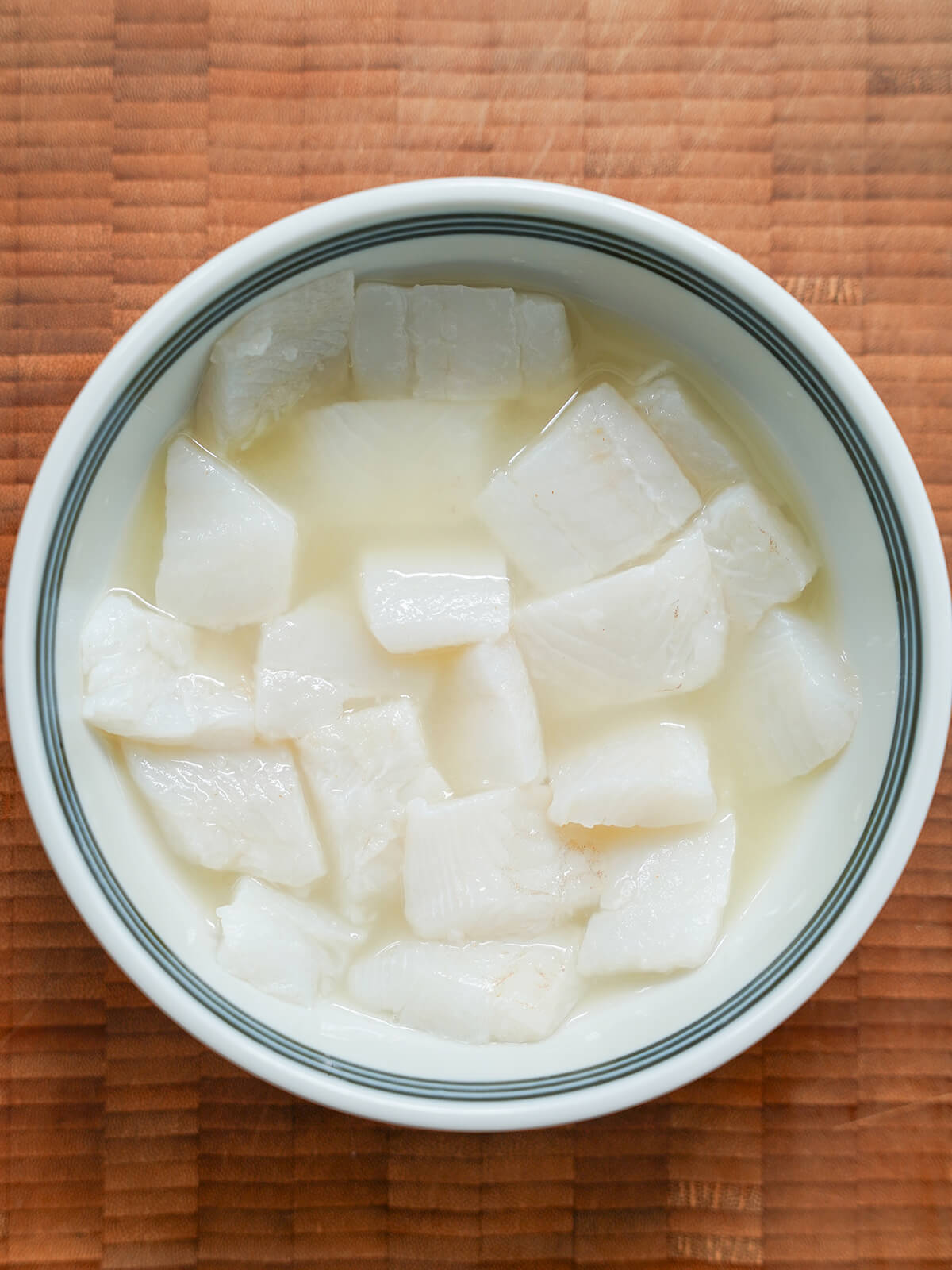
Tips for preparing ceviche
Ceviche is pretty easy to prepare, once you have your ingredients, but a couple tips to help it turn out it's best:
- Use really fresh ingredients - as well as the fish, you want fresh lime and chili.
- Make sure you remove all skin, bones and any sinewy or fatty areas of the fish. Anything that's not the core fish flesh can be really noticeable after marinading.
- Cut the fish in even-sized chunks - this helps them all "cook" evenly in the citrus.
- Keep the fish cold, so refrigerate while marinating and serve promptly once ready.
The marinading time for ceviche is relatively short, but just long enough for the fish to be changing color and take on the citrus and chili flavors. The limes used in Peru are most like the small key limes - if you can get those, great, but otherwise you may want to use a little lemon in with the lime.
Here I've used the super simple lime marinade, but you will also find another variation that marinades the fish in "leche de tigre" ("tiger's milk"). It can be made with leftover marinade or else uses a little fish, lime and chili to make a slightly milky, stronger mixture that can also be enjoyed on it's own. The way below, however, is the simplest and easiest, plus just as delicious.
Classic ceviche sides
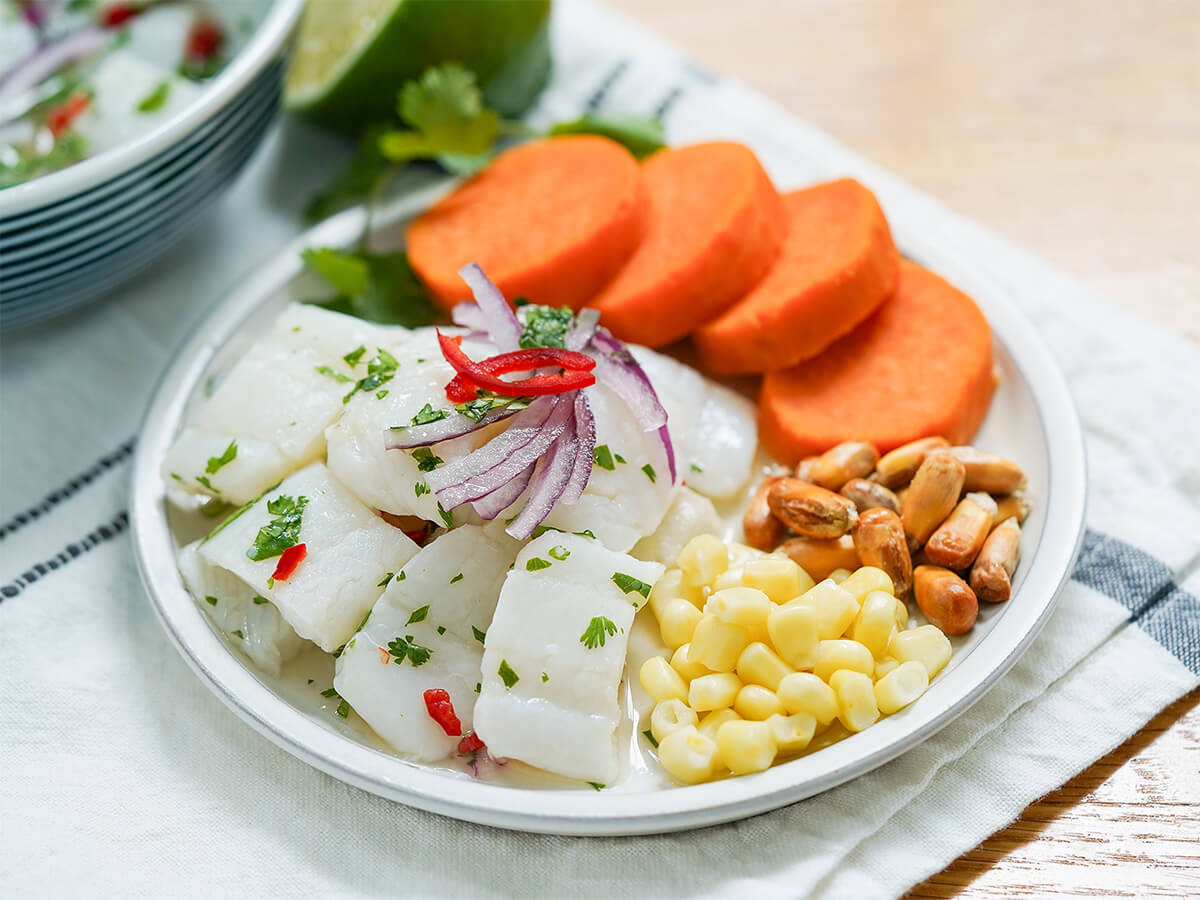
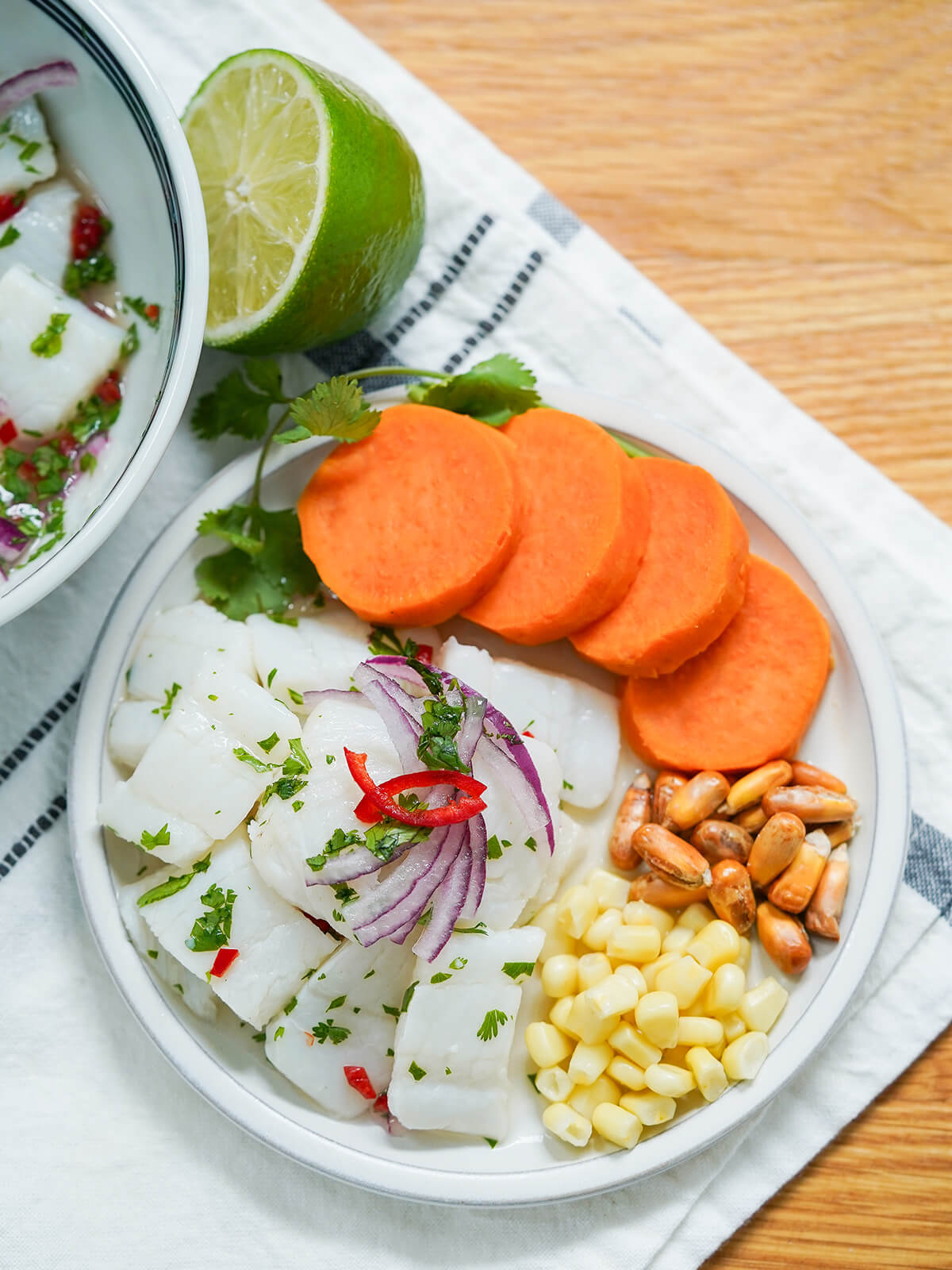
While you'll find some variation in different places, on the coast in the Lima area in particular, the classic ceviche sides are cooked (usually boiled or steamed) sweet potato, cooked corn and crispy fried corn kernels called cancha. You might also have some plantain chips on the side, too.
The cooked corn is typically the large white Peruvian corn that's that bit more savory and meaty in texture. Unfortunately, I can't seem to find it here so use what I have available. Cancha is not something as easily found either, but you can at least get that online. It makes a great snack, too, so it's worth getting!
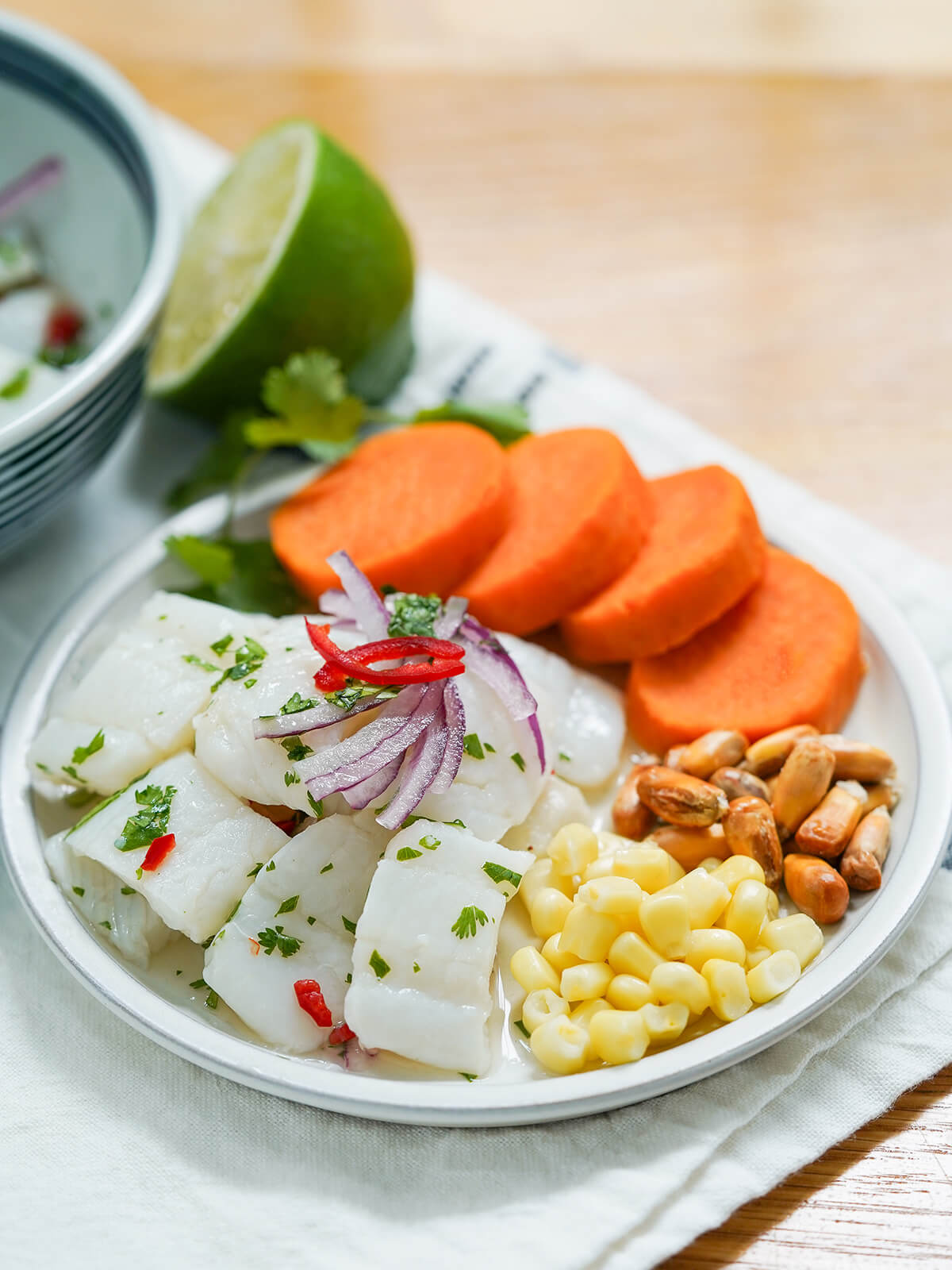
Classic Peruvian ceviche is a wonderfully simple dish that's fresh, light and delicious. With the traditional sides, you have a wonderful mix of textures that make this a fantastic appetizer or light lunch. A taste of Peru that's well worth making at home.
Try these other raw seafood dishes:
- Fish crudo - a wonderfully simple dish with a touch of citrus flavor.
- Salmon tartare - cut in a small dice and mixed with simple seasonings, this fish take on the classic beef dish is elegant, light and tasty.
- Tiradito - this Japanese-Peruvian dish combines sashimi with a chili-lime sauce.
- Plus get more appetizer recipes and Peruvian recipes in the archives.
Peruvian ceviche
Ingredients
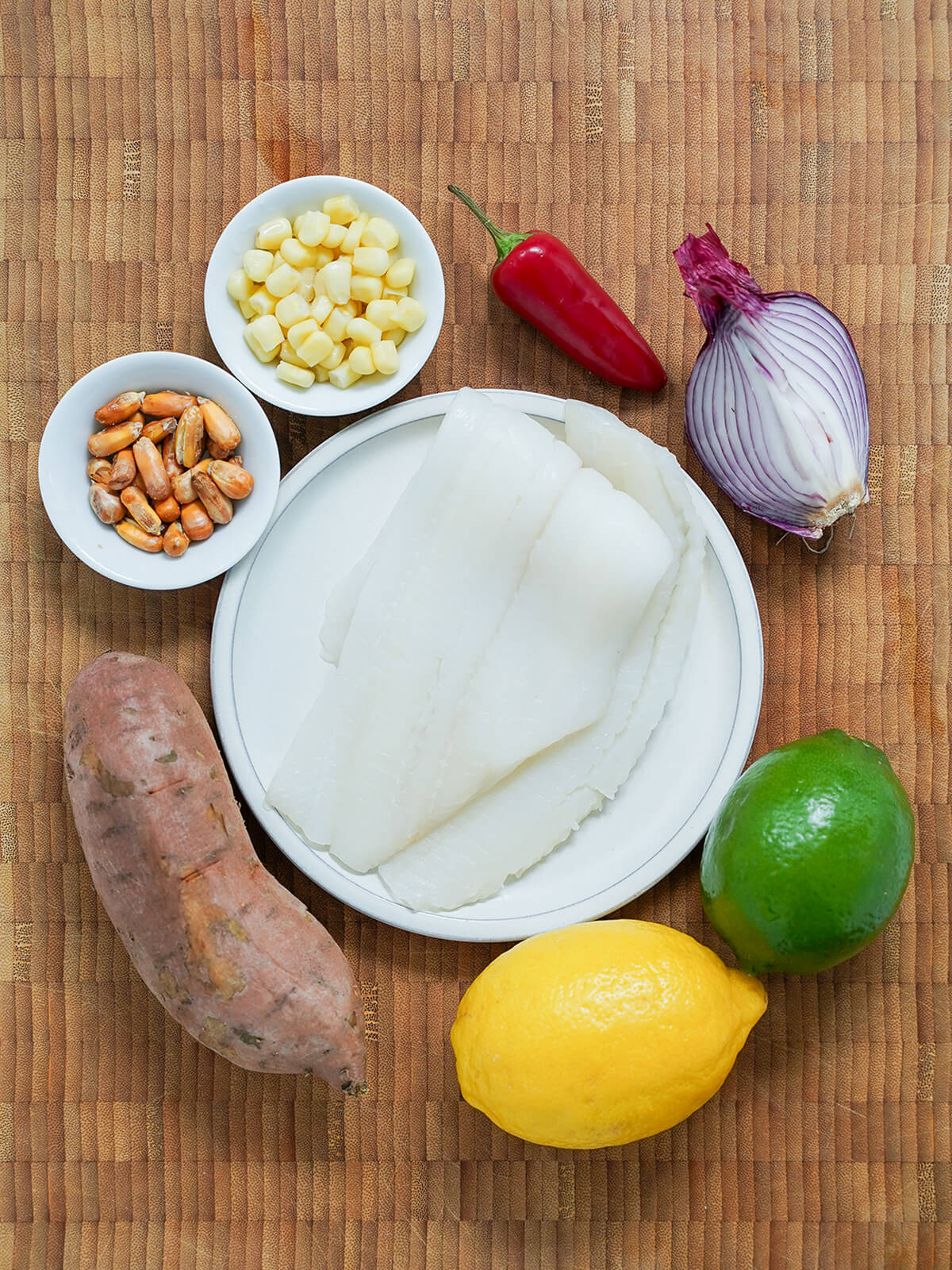
- ½ lb white sea fish eg flounder, bass
- 3 tablespoon lime juice see notes
- 1 tablespoon lemon juice
- ¼ red onion approximately
- 1 red chili
- 2 tablespoon finely chopped cilantro coriander, approximately
- 1 pinch salt approximately, or a little more to taste
To serve
- 1 sweet potato cooked - traditionally steamed
- 3 tablespoon cooked corn approximately; if possible, the large kernel white Peruvian corn
- 3 tablespoon maiz chulpe approximately (crunchy corn kernels)
Instructions
- Remove any skin, bones and tough membrane from the fish and dice into evenly-sized pieces, roughly 1 - 1.5in (2.5 - 3cm). Place the fish in a bowl and add the lime and lemon juices. Stir gently so the fish is all coated and press down so they are largely under the liquid. Refrigerate for around 20 minutes to marinade as you prepare other ingredients.
- Thinly slice the red onion and place in a small bowl with iced water - this helps reduce the sharpness. Finely chop the chili and cilantro and set aside. Peel the sweet potato and cut into semi-thick rounds. Divide them between two plates or shallow bowls.
- After the fish has rested, drain the onion from the iced water and add most of the onion (keep a little for garnish), cilantro, chili and salt to the bowl with the fish and mix. Divide the fish between the two bowls/plates and drizzle over some of the lime juice mixture. Garnish the fish with the remaining onion. Add some of the corn and maiz chulpe to the side of each plate/bowl and serve.
Video
Notes
Nutrition (per serving)
See some of my favorite cooking tools and ingredients in the Caroline's Cooking Amazon store.
Remember to pin for later!
Leave a Reply