
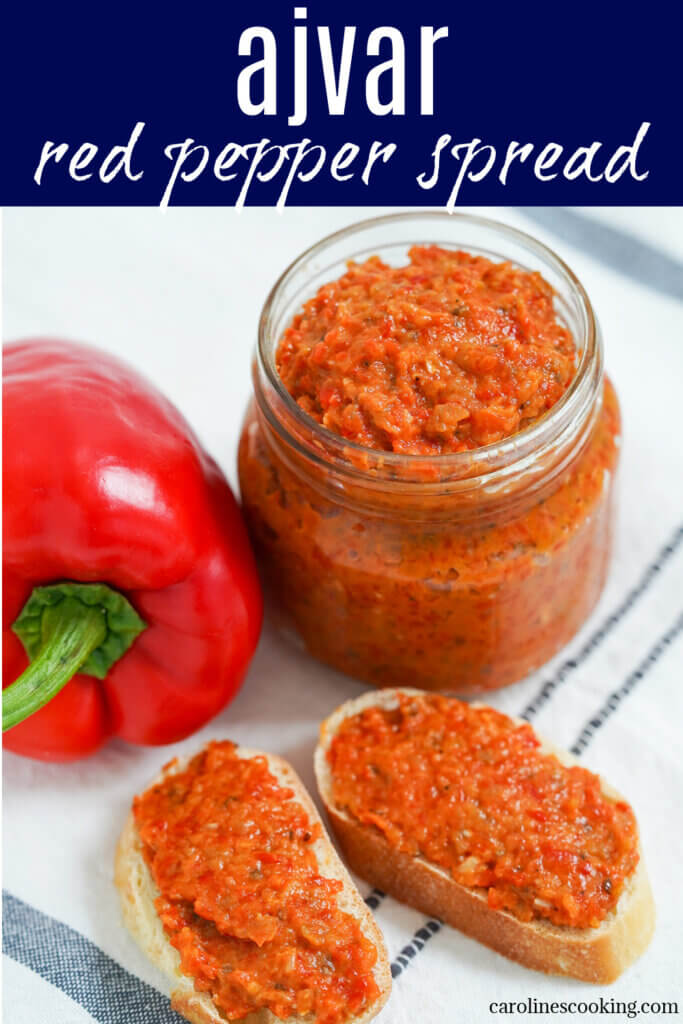
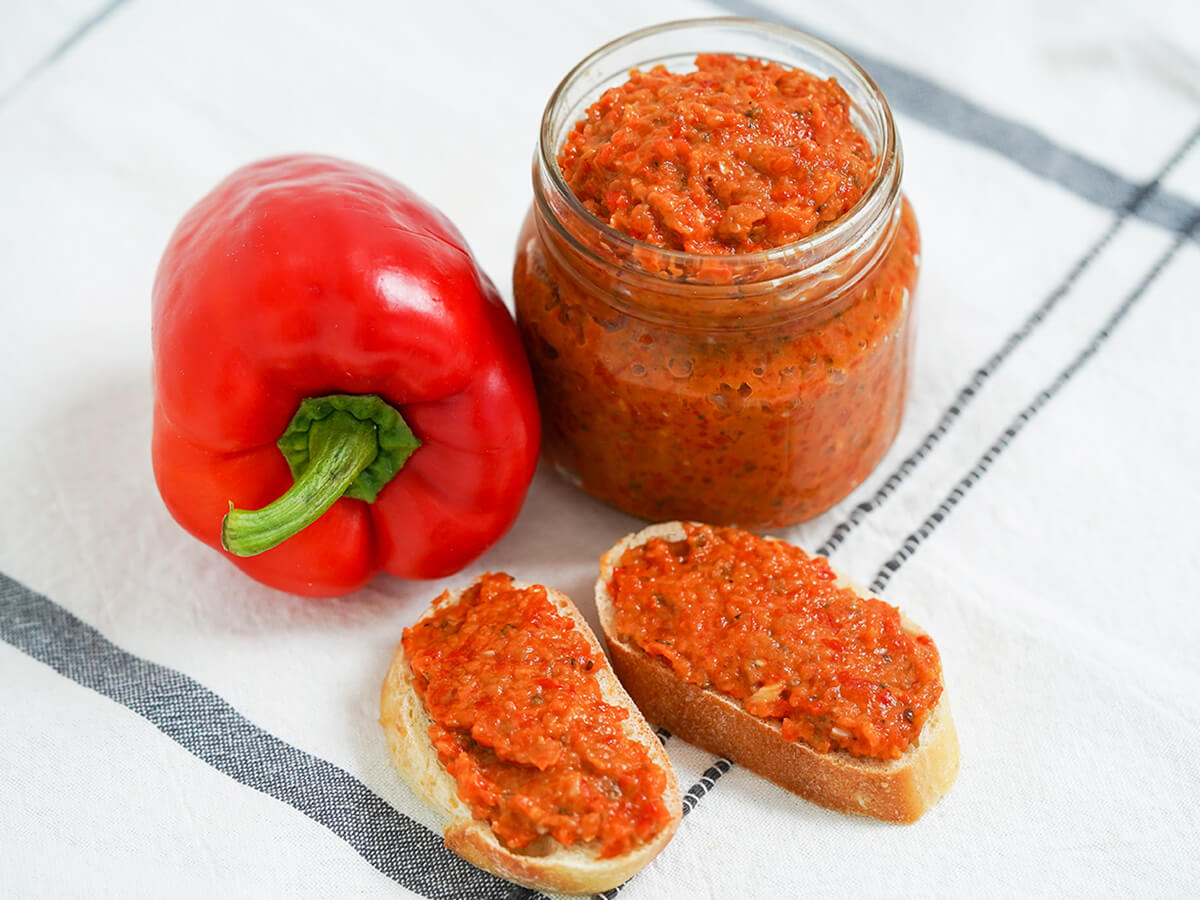
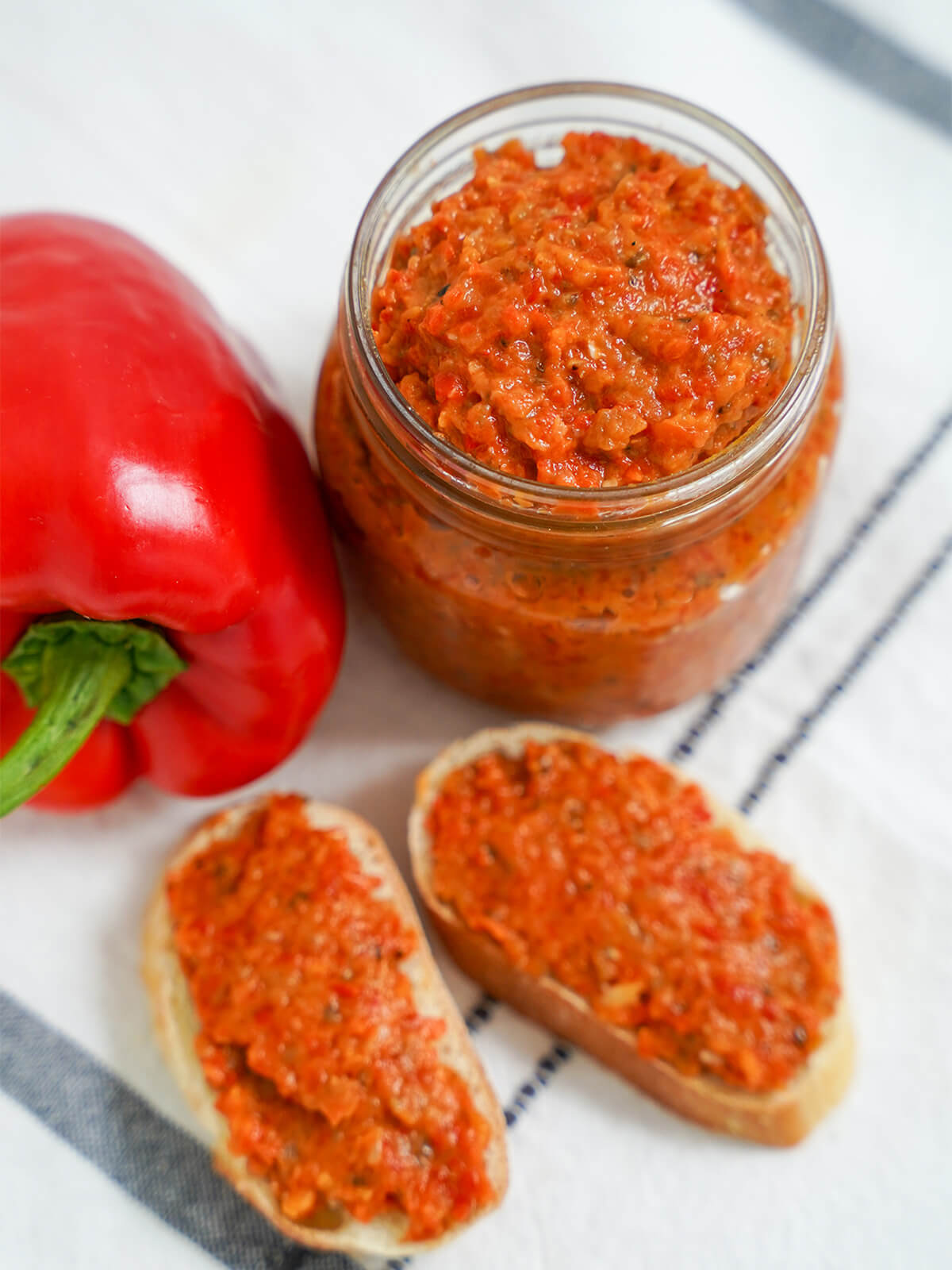
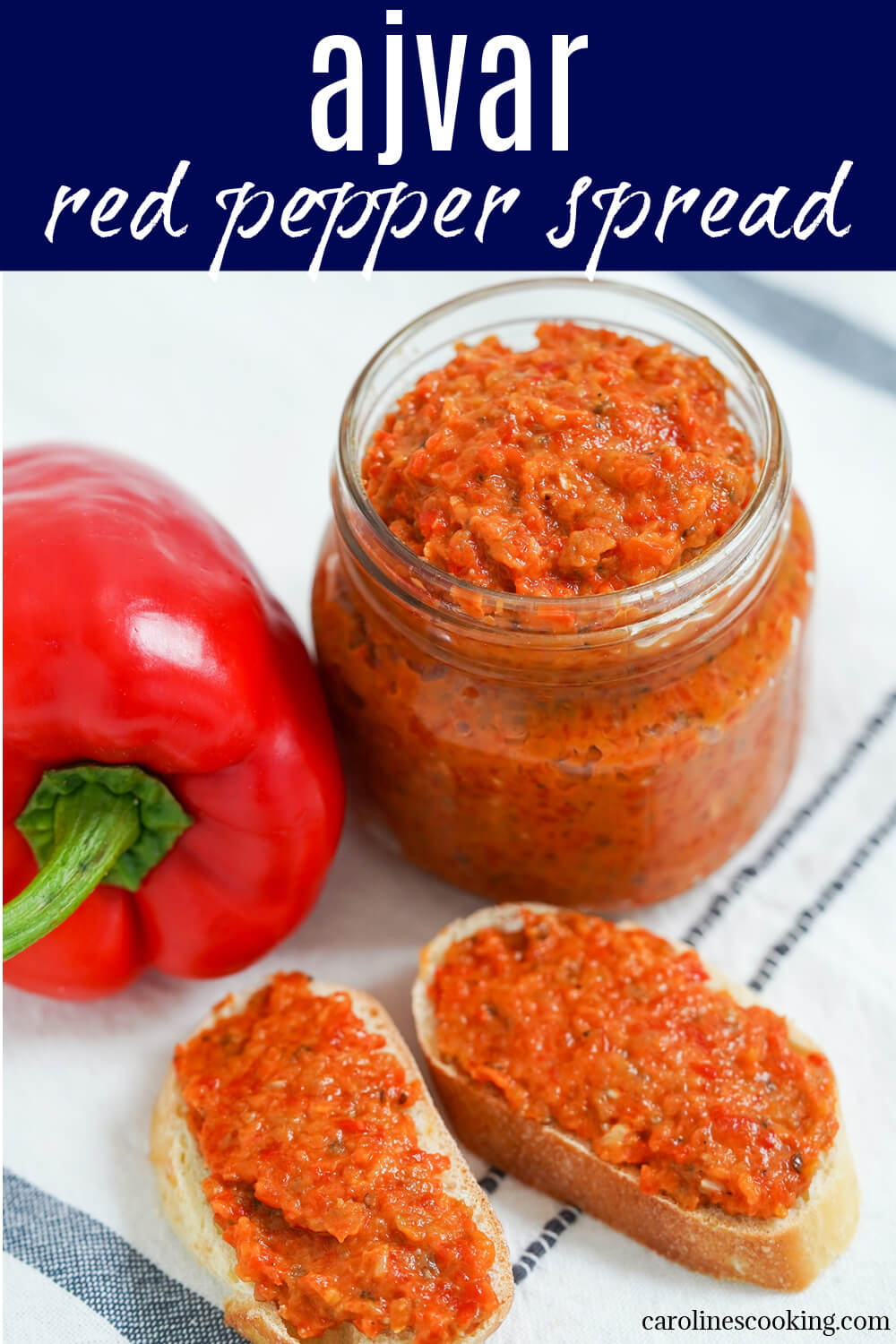
Ajvar is a brightly colored and flavored roasted red pepper spread from the Balkans. It's a staple on appetizer platters and perfect on bread, grilled meats and more.
This post may contain affiliate links, where we earn from qualifying purchases. See more details in the policy page.
There's something special about sauces and spreads that are both packed with flavor and versatile in how you use them. Things like pesto, romesco and chermoula are great examples and all condiments we enjoy.
Ajvar might be newer to us, but it, too, fits in that mould - while maybe not as quick as a pesto, it's still easy to make and has lots of vibrant flavor. It's perfect for dipping, spreading and just finding an excuse to enjoy. It's a regional favorite for good reason.
Ajvar history and meaning
The name "ajvar" comes from the Turkish "havyar" meaning "caviar". The Turkish origin of the name is in part as it apparently evolved during the time the region was under the Ottoman empire. They brought sweet red Roga peppers which are a key ingredient.
The name also fits in the sense it is often considered to have a luxurious mouthfeel like caviar. In fact, it was apparently marketed as Serbian caviar after the domestic sturgeon caviar from the Danube grew scarce in the 19th century.
This spread was initially a great way of preserving the harvest, but has become a well loved staple, used at almost any meal of the day. For many, making ajvar is a seasonal ritual after the harvest. Often families and neighbors will roast large batches of peppers over open flame to then make lots of ajvar together.
Making ajvar at home
You'll find a few variations in how to make this, but most use broadly a core set of ingredients including peppers, oil, garlic and usually eggplant/aubergine. Some would argue you just use peppers but the eggplant adds a nice creamy texture and adds to the rounded flavor. Many also add a little vinegar.
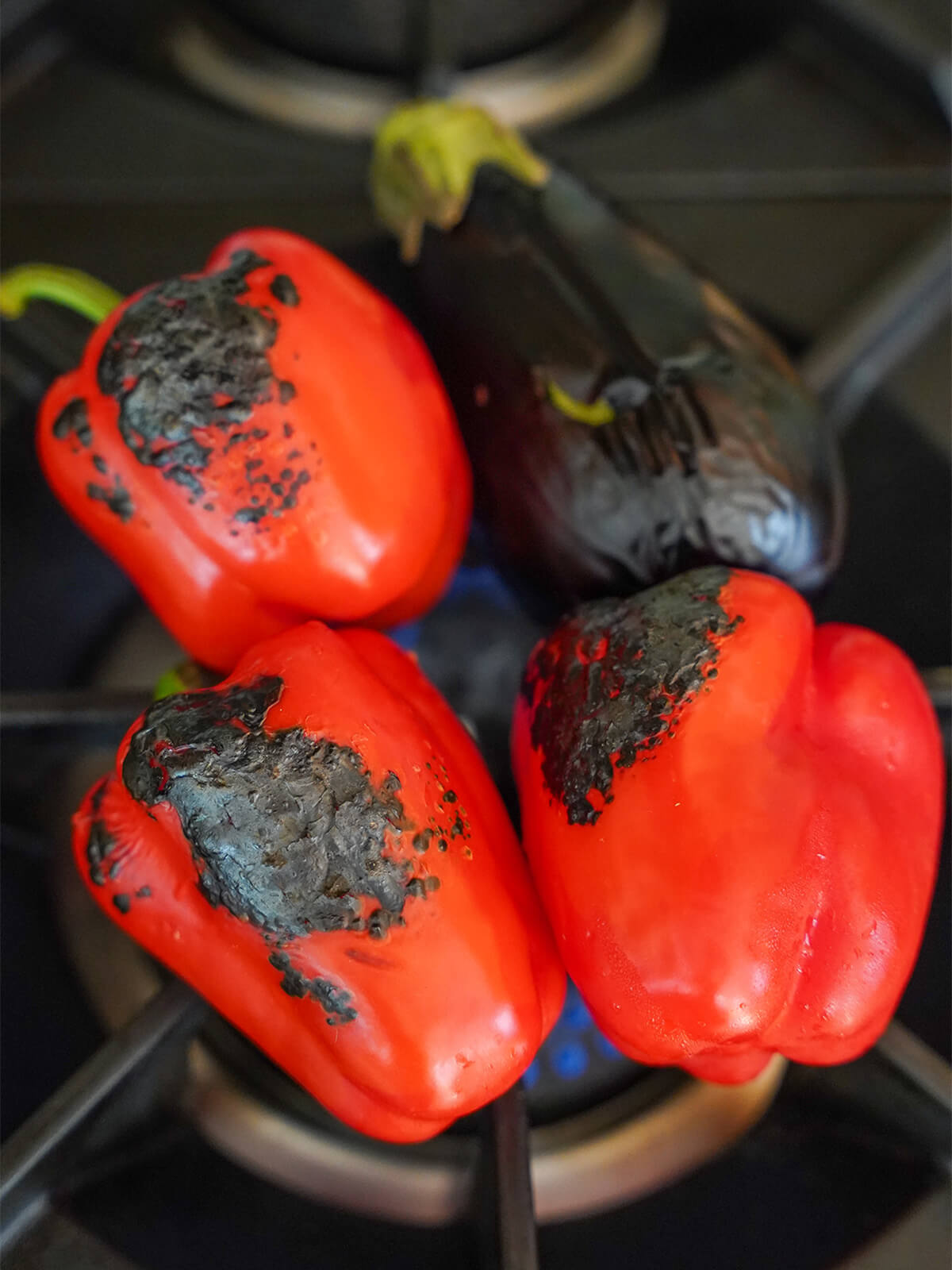
Ideally, if you can, it's best to roast the peppers and eggplant over an open flame to get a lovely smokey flavor. However if you don't have a grill to do so, you can also use either use a gas burner. Alternatively, a little less messy and likely safer, cook the vegetables under a broiler/overhead grill or roast in the oven.
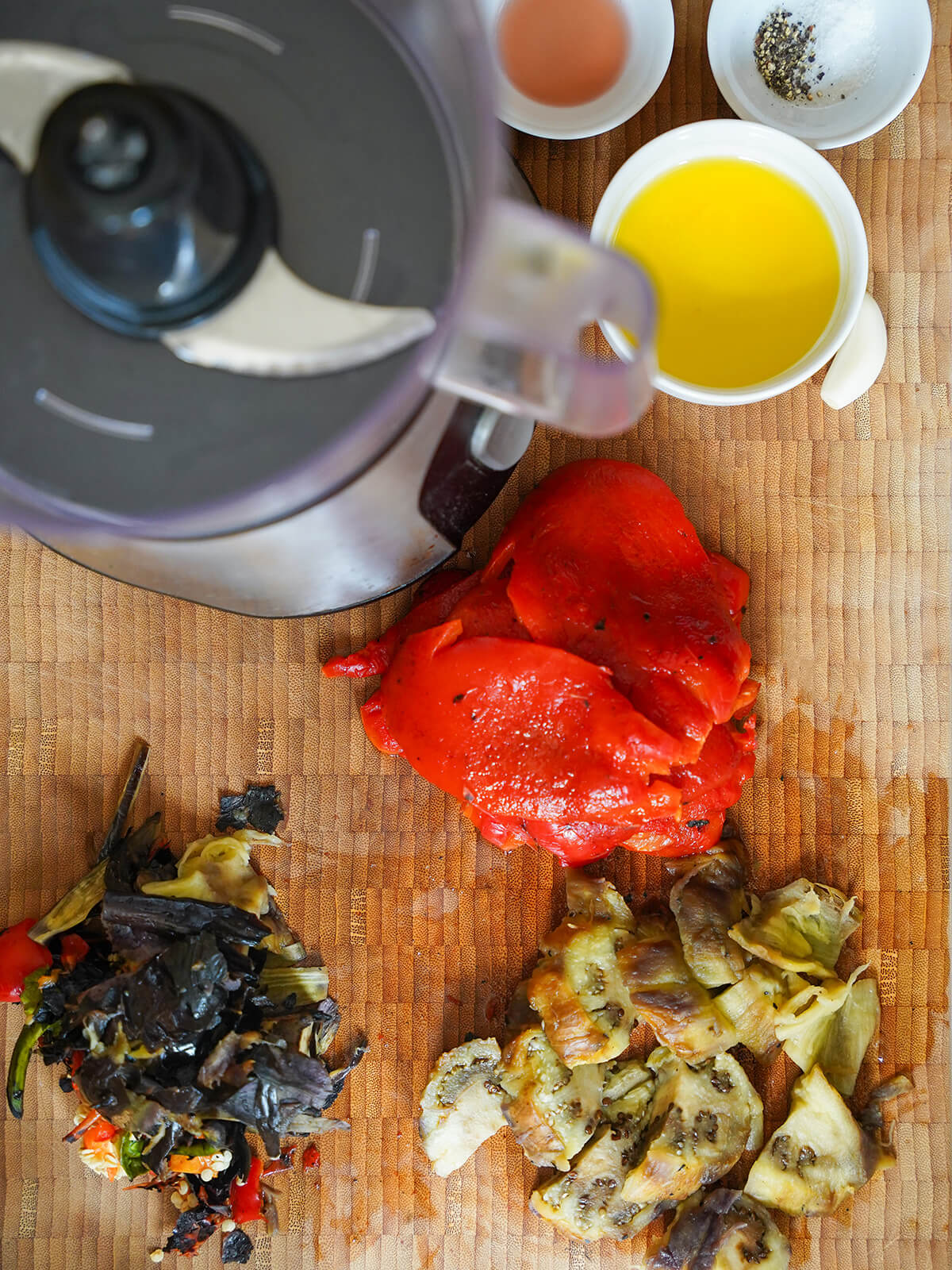
The key thing is to get the peppers and eggplant/aubergine sufficiently charred so the flesh inside is nicely soft. Then you let the vegetables sweat as they cool, which helps the skin to slide off easily.
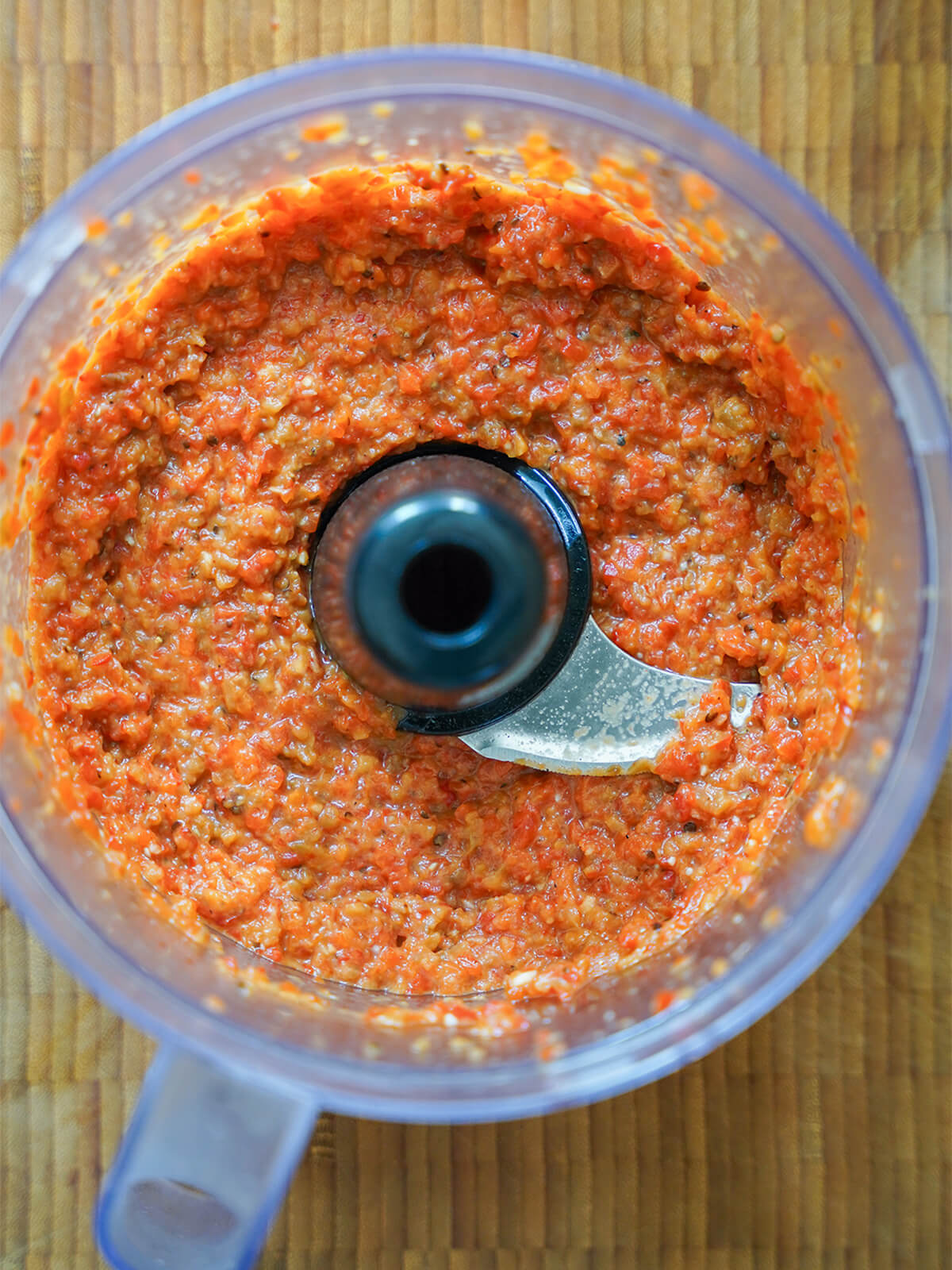
Peel the skins off and remove any stem and seeds. Then pulse all the ingredients in a food processor to break up and combine. Exactly how smooth you make it is a little up to you, but generally you want a bit of texture. That's part of why a food processor is better than a blender.
Next, transfer the mixture to a pot and cook it down to reduce the liquid. It also helps the flavors intensify. Then, let it cool before transferring to jars until needed.
Uses for ajvar
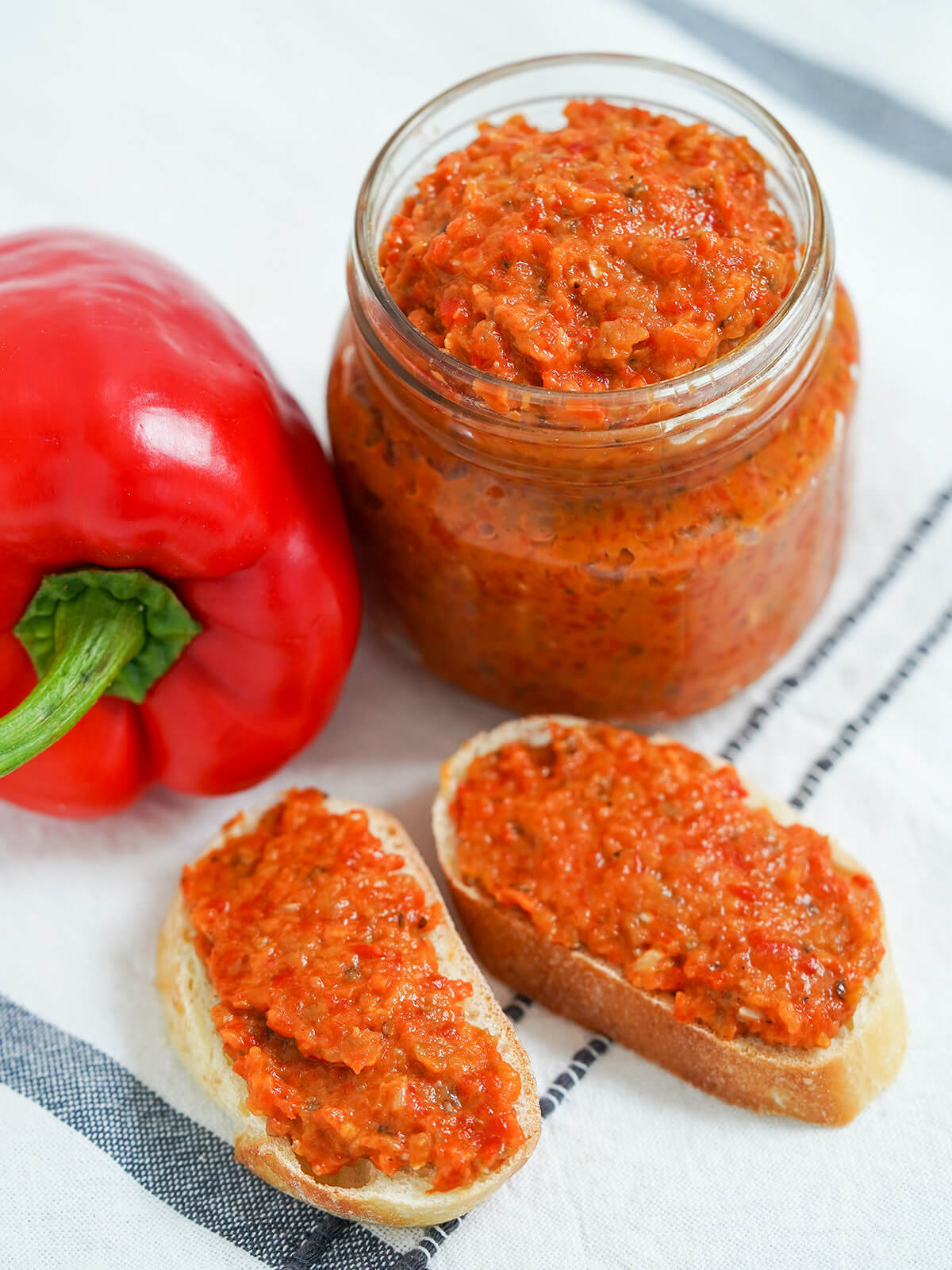
You can use this much like many other similar dips/spreads - it's great to spread on bread as a snack, or as a tasty base layer as you make sandwiches. It's a common pairing for cevapi, a type of kebab/meatball in the region, and works well with other meaty mains, especially things like grilled chicken, steak and sausages.
You could also use it to dip veggies in and while far from traditional, I can see it being tasty mixed into pasta, too.
Ajvar is a tasty dip or spread that's as bright in flavor as it's vibrant color. It's easy to make and a great way to make the most of some humble veggies beyond side dishes.
Try these other tasty condiments:
- Muhamarra (with some similarities, this dip/spread is made with red peppers and walnuts and full of tasty flavor)
- Tapenade (a wonderfully easy olive-based spread that's versatile and delicious)
- Romesco sauce (one of my favorites, this traditional style takes a little more time, but it's still easy and full of wonderful flavor as a result)
- Plus get more sauce, jam and condiment recipes in the archives.
Ajvar (red pepper dip/spread)
Ingredients
- 7 oz eggplant aubergine (1 small)
- 1 lb red peppers around 2 - 3
- 2 cloves garlic or 1 if large
- 2 tablespoon olive oil or sunflower oil
- 1 tablespoon red wine vinegar or white wine vinegar
- ½ teaspoon salt or a little more, to taste
- ¼ teaspoon black pepper or a little more, to taste
Instructions
- If possible, cook the eggplant and red peppers on a grill/barbecue, turning now and then until the skin on all the vegetables has blackened on all sides and the vegetables are tender. If you can't grill them, you can get a similar effect by cooking over a gas flame on the stove, carefully turning regularly. Alternatively, place on a baking sheet and bake around 15 minutes at 425F/220C, finishing under the broiler/overhead grill as needed. If cooking in oven, and if risk of sticking to grill, lightly brush with olive oil before cooking.
- Allow the cooked eggplant and peppers to cool a minute then place in a freezer bag and close/fold over and allow to stem as they cool. Leave them around 10 minutes. Then, peel off and discard the skin on all the vegetables and remove the stem from the eggplant and core along with all the seeds from the peppers. You may find liquid has collected in the peppers - just pour this off as you go.
- Place the eggplant and pepper flesh in a food processor/blender and add the rest of the ingredients - peeled garlic, olive oil, vinegar, salt and pepper). Pulse a few times until fairly smooth. Try it and adjust seasoning to taste.
- Transfer the mixture to a small pot/pan and warm to a simmer. Continue to cook on a low heat for around 20 minutes to allow the mixture to dry slightly so there's no obvious liquidy texture. Allow the mixture to cool then transfer to a jar and store in the fridge until needed (can be stored around 3 - 5 days).
Video
Notes
Nutrition (per serving)
Remember to pin for later!
Leave a Reply