
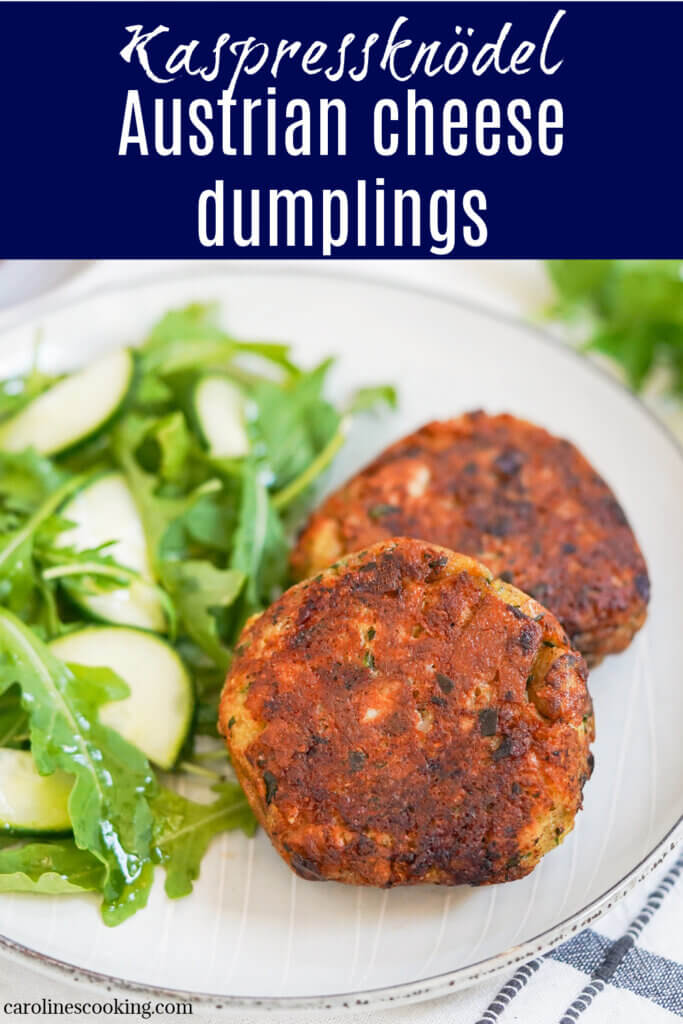
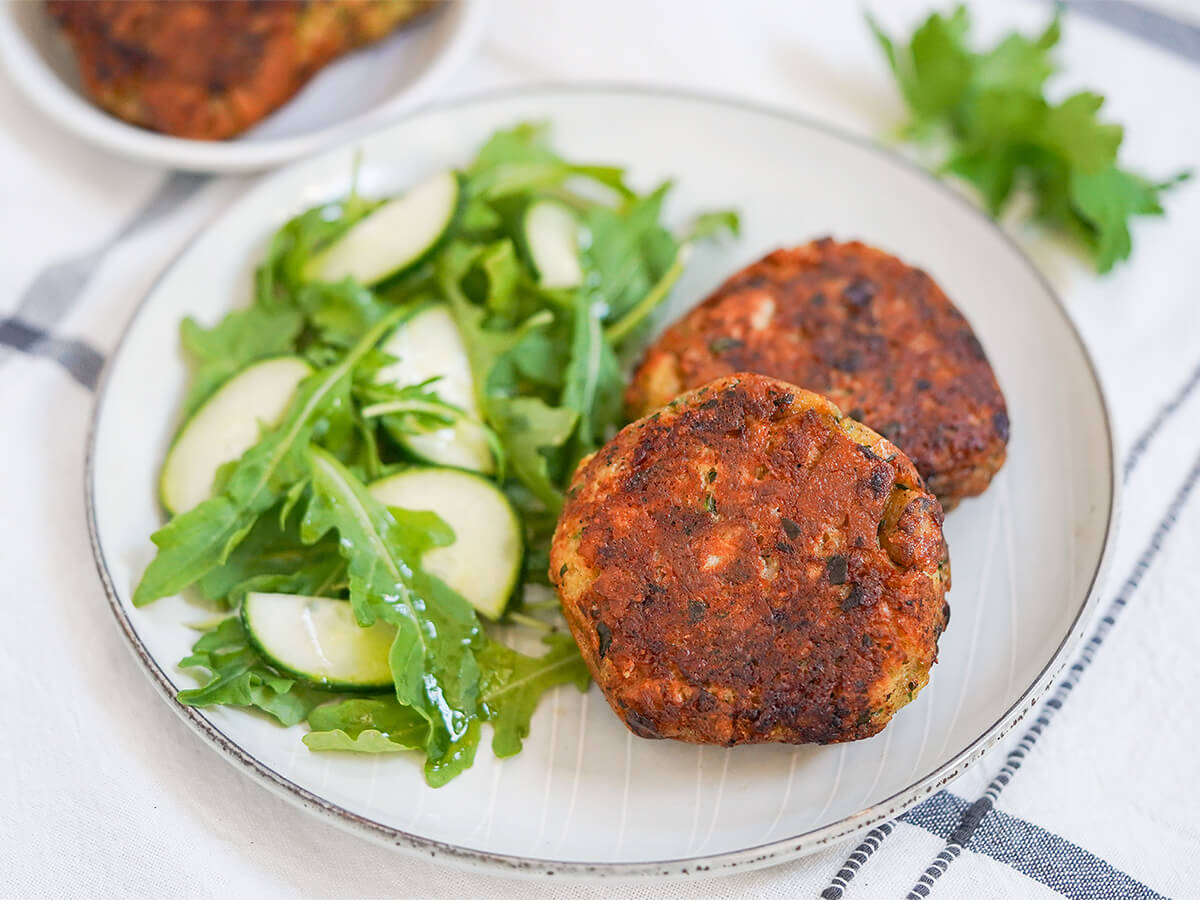
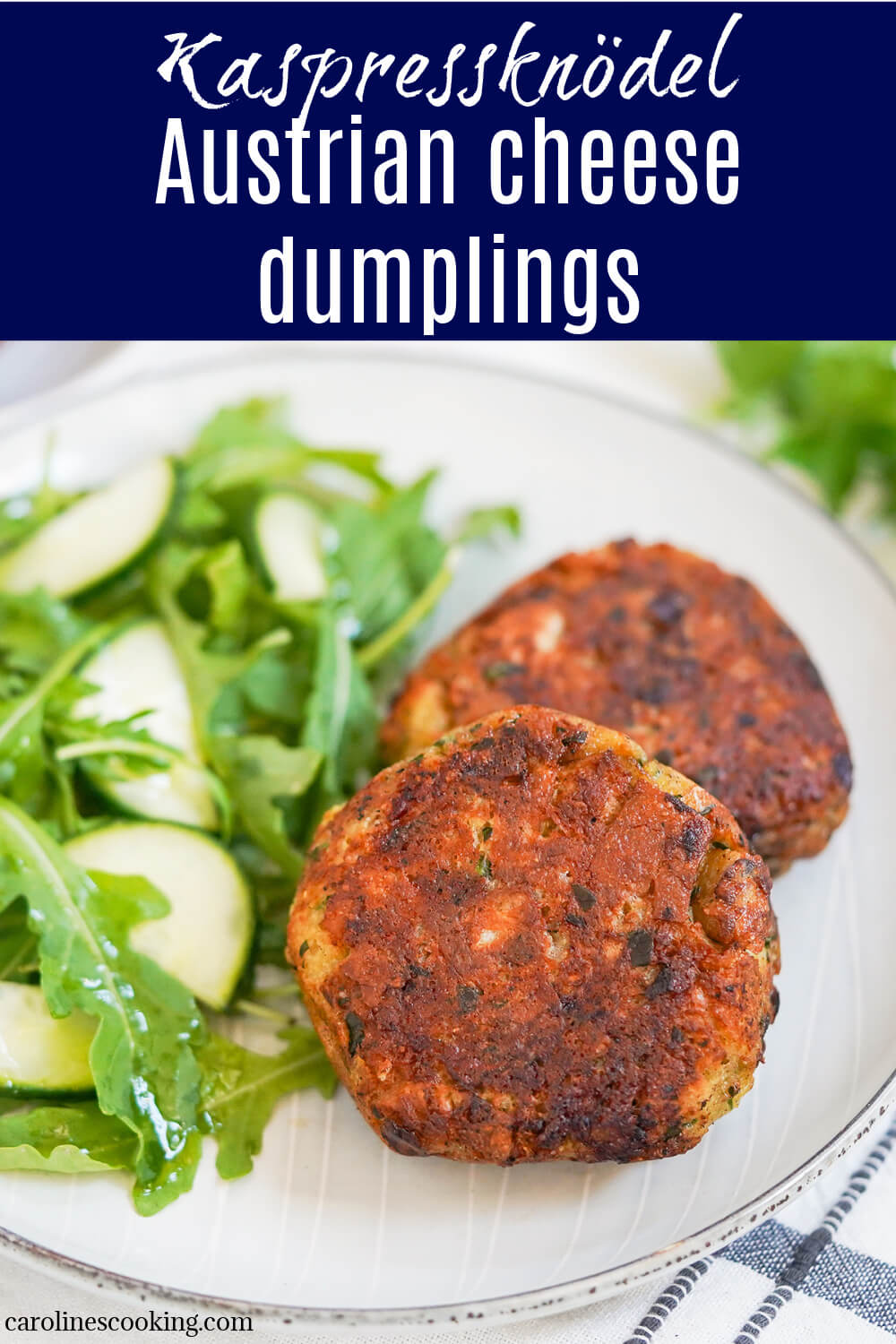
Kaspressknödel are a traditional Austrian dumpling made with bread and cheese, fried until gently crisp. They're great as a side, as a main with salad or as a hearty toppping for soup. Delicious any way you choose.
This post may contain affiliate links, where we earn from qualifying purchases. See more details in the policy page.
I mentioned when I shared my Germknödel recipe a while back that despite spending a lot of time in Germany and Austria as a child, I didn't have dumplings very often, despite them being frequently on the menu.
While I don't like to blame my mum unnecessarily, in this instance, it would be fair. I suspect she'd had some not so great examples at some point so she tended to steer me away. But over time, without the same background myself, curiosity took over. And I'm so glad it did, as some like this are definitely worth discovering.
Kaspressknödel meaning and origins
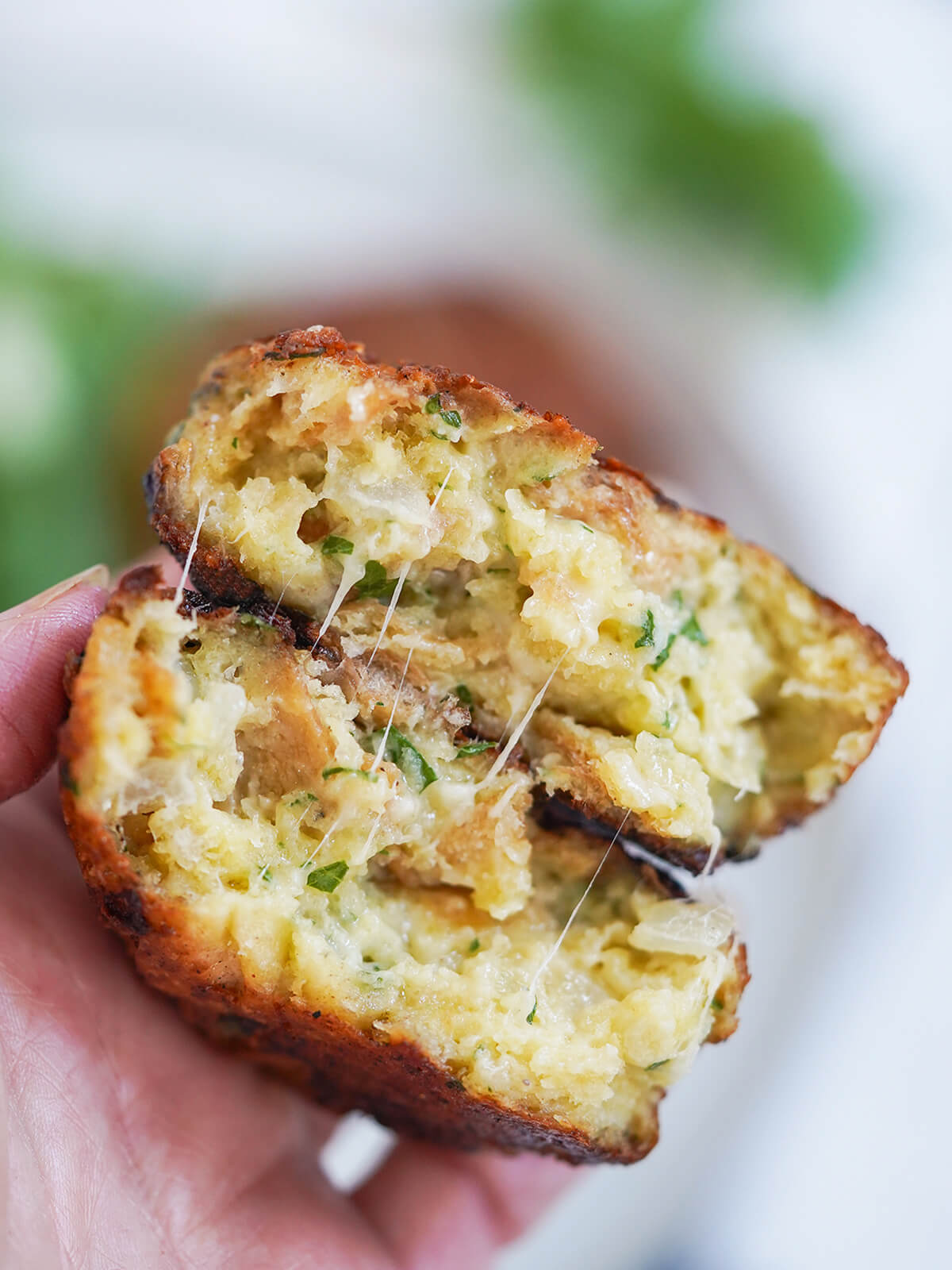
The name is made up of a few parts which basically tells you exactly what the dish is. "Kas" is dialect for "Käse" which is German for cheese. "Knödel" means dumpling, in a fairly broad sense, particularly in Southern Germany and Austria (they are often called Klöße further North). Then "press" refers to the fact they are pressed flat rather than left as round balls. So the name roughly translates as "flattened cheese dumplings".
The dish comes from the Western part of Austria, in particular Tyrol and Salzburg. It's very much a frugal mountain dish - hearty and created as a way to use up leftover bread. The ingredients are all common and easy to find, at least locally (I'll talk a little more on the cheese in a minute).
I haven't found any details on quite when it originated, but that's not uncommon for what's often considered peasant cooking. But these days it's something you'll find at home and in restaurants in Western Austria, and sometimes in the likes of Vienna, too.
Cheese dumpling ingredients
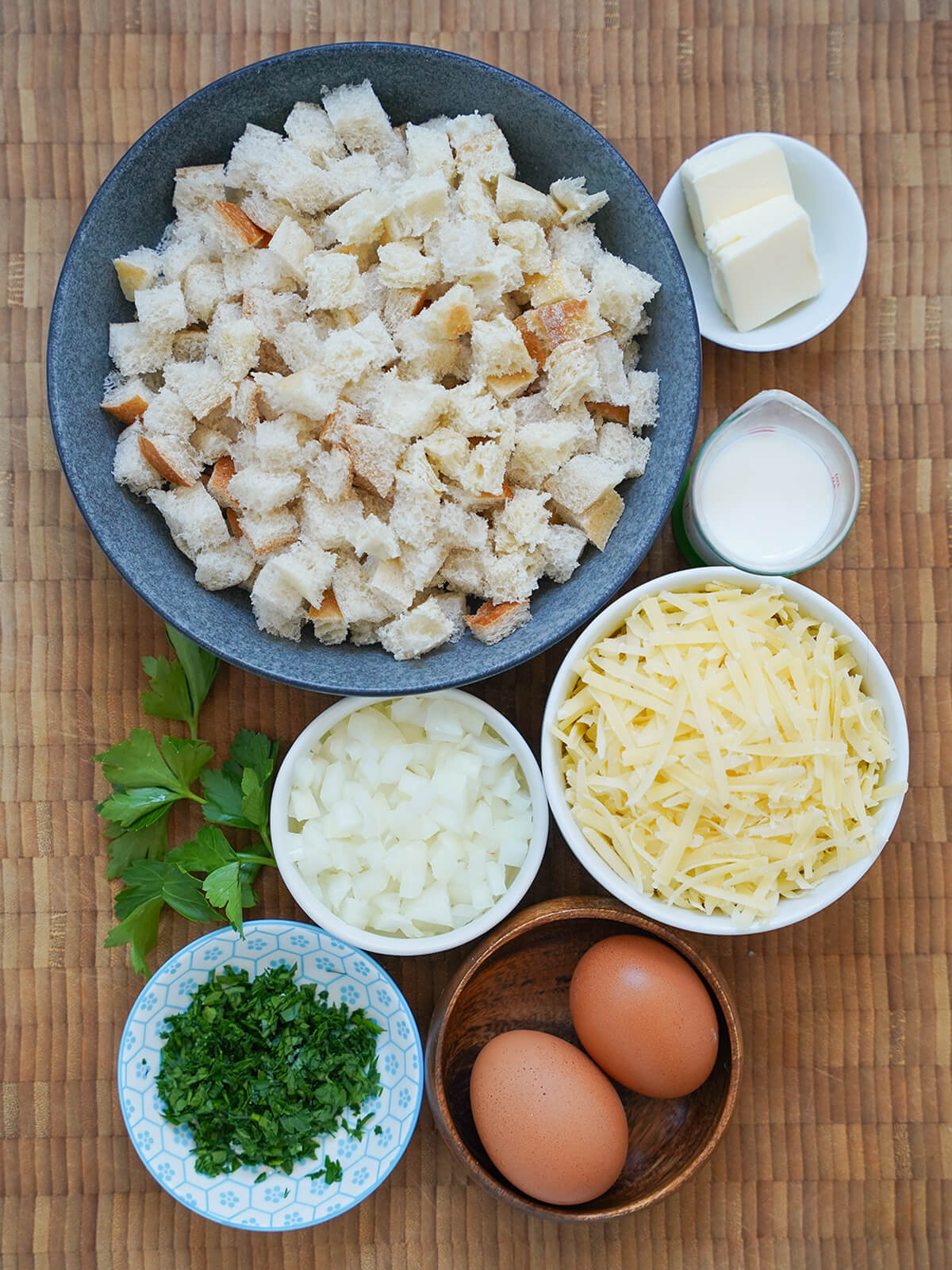
As I say, you only need a relatively short list of ingredients for these:
- Bread - you most typically make these with semi-stale Kaisersemmeln (Kaiser rolls) but other bread rolls or part of a loaf of bread will also work. White bread is best, ideally with a thin crust and not too dense so it doesn't become gummy.
- Cheese - traditionally you use either Graukäse (grey cheese) or Bergkäse (mountain cheese) for these, or a blend. Since these more local Austrian cheeses are not that easy to get elsewhere, I'd suggest semi-hard, Alpine-style cheeses like Gruyere or Emmental work well instead.
- Eggs - these act as a binder to keep all the ingredients together, and also adds to the texture and flavor.
- Milk - you just need a little to help moisten the bread and help it break down a bit before you form the dumplings.
- Onion - this adds a little aromatic flavor to the dumplings.
- Butter - you use this to cook the onion in, adding flavor. You also often cook the dumplings in butter, though some use oil.
- Parsley - this adds a nice gentle herby flavor, without being too dominant.
- Salt and pepper, and optionally nutmeg - just a little of each to season the mixture.
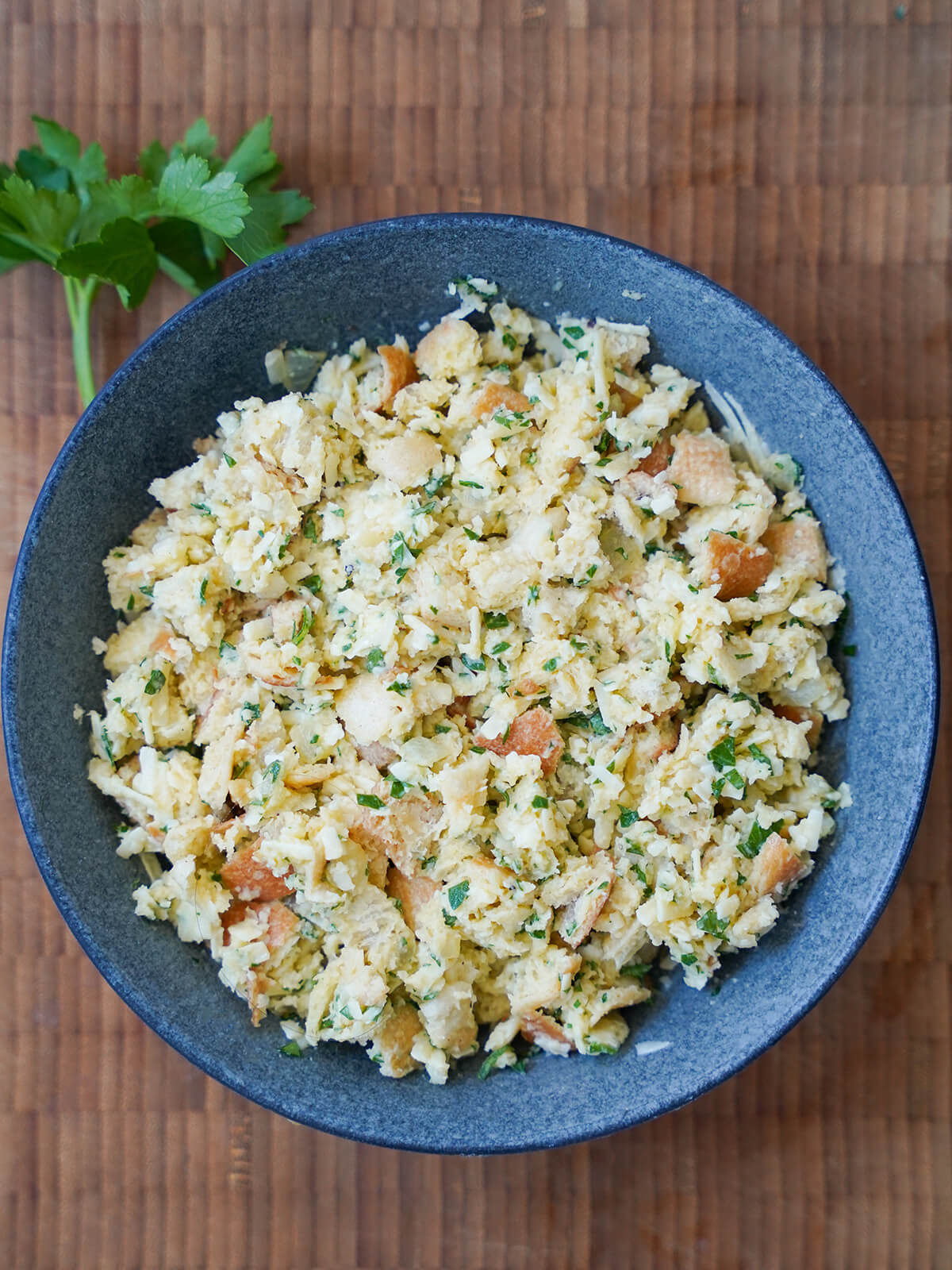
Here I used part sub rolls, and some semolina bread as that's what I had and it worked well. I can also see sourdough or ciabatta working well, trimming off any tougher, thicker crusts as needed. In terms of cheese, I used Gruyere which gives a lovely flavor and is just melty enough, too.
Steps and Tips for making Kaspressknödel
These are easy to make with just a few steps, though a couple tips are worth keeping in mind.
First, dice the bread, trimming off any hard, thick crusts. The bread should be stale to help it absorb the liquid without going into gummy and mushy. If you only have fresh bread, you can get close by spreading out the diced bread to dry out a bit for an hour or so before making the dumplings.
Coarsely grate the cheese, chop the parsley and gently beat the eggs. You can add some of the milk to help loosen them up, too. While you can, in theory, just add the eggs directly in when you mix everything together, I find pre-beating helps to avoid getting any thick strings of egg white. Also, you want to avoid over-mixing, so this helps avoid mixing more just to break up the eggs.
Then, soften the onion in butter - you want to use enough butter and keep the heat medium so it becomes soft without burning. A little brown on the edges is fine, but no more - you just want to bring out the mellow sweetness.
Next, mix all the ingredients together by hand, holding back any leftover butter from the onions. Using your hands is best so you can mix and gently squeeze to help the bread soak in the liquids a bit. Leave the mixture around 20 minutes to become relatively evenly moist and absorb the flavors.
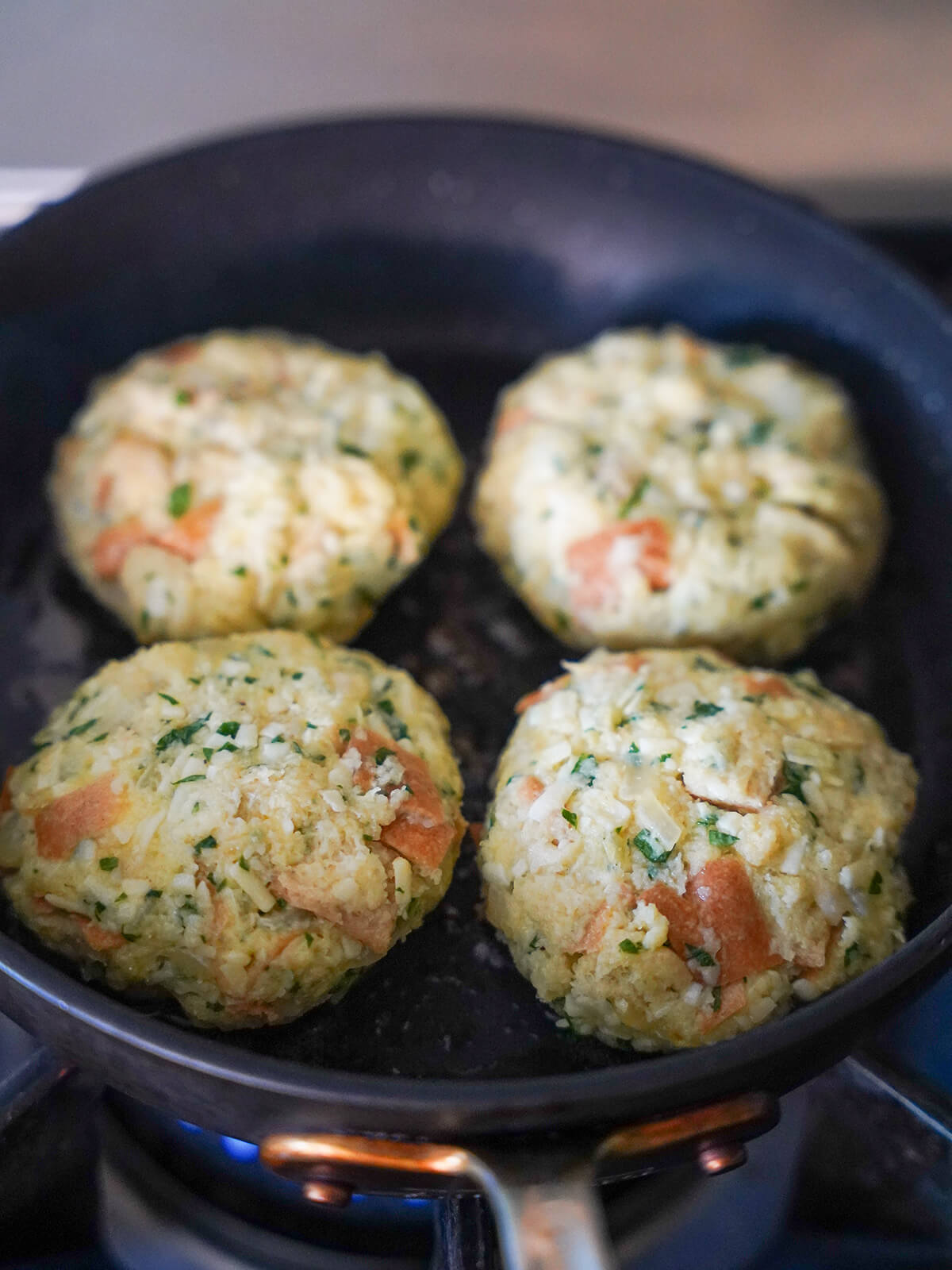
Check the consistency before forming the dumplings. It should feel soft and gently moist but not runny. If it feels dry, add a touch more milk, or if very wet, add a little flour. If it's sticking to your hands, try dampening your hands. Divide the mixture and form flattened balls, pressing them together and shaping in your hands.
Re-heat the leftover butter, adding a little more if needed, then fry the dumplings a few minutes on each side. You want them to become golden and crisp. Some use more oil/butter, but I prefer to use slightly less (saves wasting) then cook a little on the edges to help seal those, too. Do as you prefer.
Serving and storing
You can serve these in a few different ways, depending on what you prefer and have. They're great as a main course, served either with some salad to balance them out or with some vegetables and maybe sauerkraut.
You can also serve them in soup - most typically this is in a beef broth/stock, but you could use vegetable to keep it vegetarian. You often add in some chopped chives, in many ways similar to German pancake soup.
These also work as an appetizer, just serving smaller portions and with les on the side. They're also pretty snackable, too, especially if you make them even smaller than I suggest here.
If you have leftover, store them in an airtight container in the fridge - they will keep around 3 days. To re-heat, either fry them a little again or warm in a low oven (around 350F/175C). You can also freeze them, I'd suggest after frying (but cooled) rather than uncooked. Freeze them first by spacing out on a plate or baking sheet then transferring to a freezer bag or container once frozen, to help avoid them sticking.
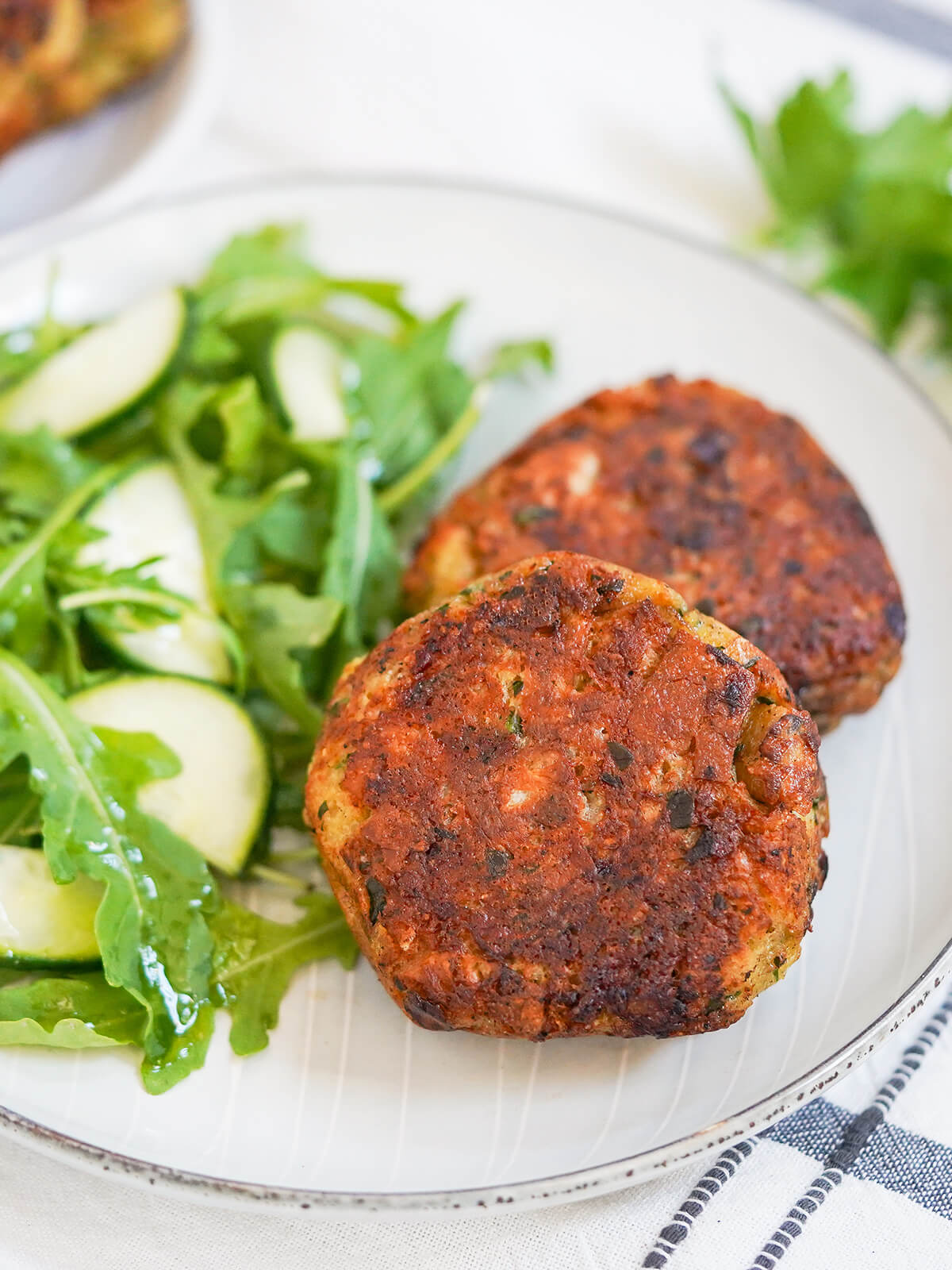
Kaspressknödel, Austrian cheese dumplings, are more than just a way to use up leftover bread, they're a wonderfully comforting and tasty bite that's delicious in soup, as a snack or made into a meal with sides. They're hearty, flavorful, and well worth having leftover bread on purpose for.
Try these other comforting leftovers dishes:
- Chashu chahan - Japanese fried rice, using both leftover rice and chashu pork.
- Pastilla - a tasty Moroccan savory pie that's great made with leftover chicken.
- Tacu tacu - Peruvian rice and bean cake designed to use up leftovers of both.
- Spanish migas - another great way with leftover bread, cooked up with chorizo and peppers.
- Plus get more Nordic recipes and main dishes in the archives.
Kaspressknödel (Austrian cheese dumplings)
Ingredients
- 4 ½ oz white bread rolls day old, Kaiser rolls or other roll/bread
- ½ cup onion ½ cup is approximately ½ small onion
- 2 tablespoon chopped parsley chopped relatively fine
- 3 ½ oz Gruyere cheese traditionally Bergkäse or Graukäse but Gruyere/Emmental work well
- 2 ½ tablespoon butter or a little more, as needed
- 2 eggs
- ¼ cup milk
- 1 pinch salt or a little more, as you prefer
- 1 pinch pepper or a little more, as you prefer
Instructions
- Dice the bread relatively small, trimming off any hard, thick crusts. Dice the onion relatively finely and finely chop the parsley. Coarsely grate the cheese.
- Warm around ¾ of the butter in a small skillet/frying pan over a medium heat then add the onion. Cook for around 3 minutes or so until the onion is translucent and soft, but take care not to brown (a little on the edges is OK but no more). Remove from the heat.
- Lightly beat the egg to break up the yolk and the white, adding part of the milk if you like to loosen it. Add all the ingredients to a bowl - the bread, cheese, parsley, egg, milk, onions and salt and pepper. You can optionally add a pinch of nutmeg, too. Hold back the excess butter as you add the onions, leaving it in the skillet for later. I prefer to use a wide, shallower bowl to make a little easier to get your hands in for mixing.
- Mix the ingredients together with your hands so everything is well distributed, and squeeze gently to help the bread take in the moisture. Leave for around 20 minutes to let the flavors mingle and the bread to soften evenly.
- After resting, mix again slightly then divide into four and press each mound into a flattened ball (if you prefer them smaller, you can divide more, as suits). Mould and press together with your hands.
- Warm any butter you held back along with the remaining butter in the skillet over a medium-high heat. Once melted and gently bubbling, add the dumplings. Cook for a few minutes each side until golden. I prefer to keep the butter relatively shallow then after cooking the two main sides, gently browning around the side edges as well. Alternatively, you could use more butter to brown up the sides more.
- Once crisp and golden all over, serve warm as you prefer, eg with salad, vegetables or in soup.
Notes
Nutrition (per serving)
See some of my favorite cooking tools and ingredients in the Caroline's Cooking Amazon store.
Remember to pin for later!
Leave a Reply