
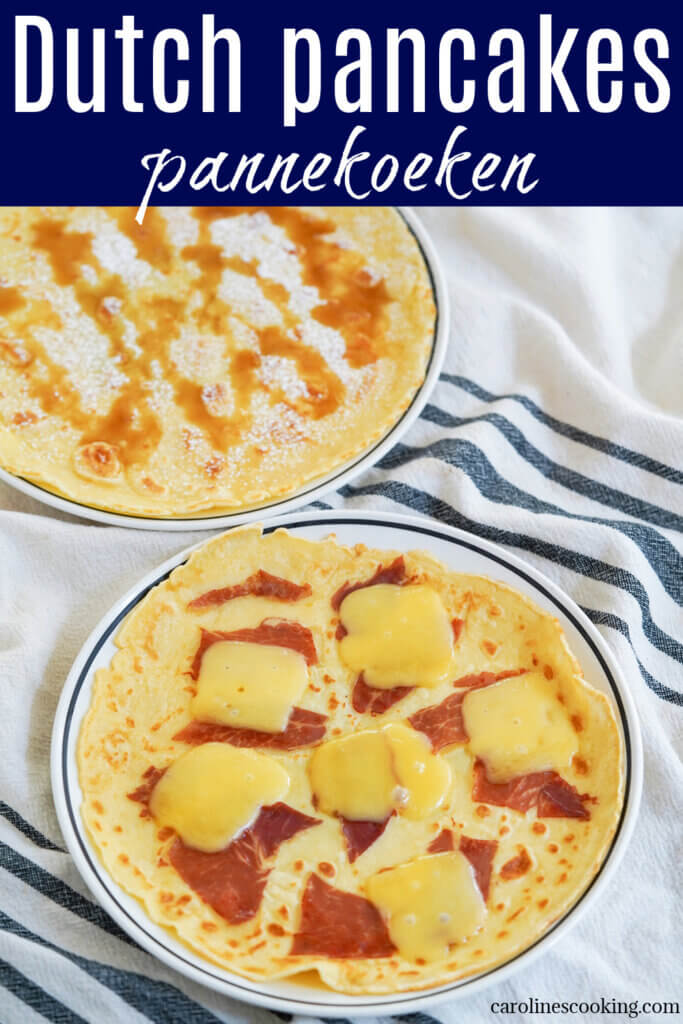
These Dutch-style pancakes, pannekoeken, are thin, wide pancakes that can be enjoyed with both sweet and savory toppings. They're easy to make and perfect for breakfast or made into a meal.
This post may contain affiliate links, where we earn from qualifying purchases. See more details in the policy page.
I've always been a pancake fan. There's something about them that's just so comforting, no matter what style you make. Maybe it's partly that they make something tasty out of so little, plus the fact I have memories of eating lots of British pancakes on Shrove Tuesday every year as a child. But I don't think I've met one I don't enjoy.
While I and my kids have some firm favorites, I am always open to new styles. The Netherlands is home to two main different styles of pancakes that we enjoyed there - small poffertjes made in a special pan (similar to Danish aebleskiver) and these larger pannekoeken. We loved both and so I've finally got round to sharing a recipe for at least one of them.
Are Dutch pancakes the same as Dutch baby pancakes?
The short answer is no. Dutch baby pancakes is the name given in the US for what is essentially German pancakes. "Dutch" is actually from "Deutsch" ie German and was a common corruption of the word into English.
In fact the Pennsylvania Dutch are actually of German descent. The name was a broader term for being of Germanic descent, since the country as it is now didn't exist then. The name Dutch baby pancake was coined in the early 1900s in a Seattle cafe where they served smaller-sized (hence "baby") German-style pancakes (Pfannkuchen), baked in the oven.
These Dutch pancakes, pannekoeken, are different in style. They're cooked on the stove and are wide and thin, but not as thin as a crepe. The batter isn't sweetened so they work well with both sweet and savory toppings. They're such a beloved dish in the Netherlands you'll find restaurants dedicated to them (pannekoekenhuis) with options for everyone.
Tips for making Dutch pancakes
These are easy to make but a few things that help them turn out their best:
- Let the batter rest before using to help the flour hydrate. It leads to lighter, smoother pancakes.
- Use a cast iron or nonstick pan and add butter before each pancake to avoid sticking (and for flavor). You'll need a little more butter with cast iron than nonstick.
- Start with a higher heat then reduce before cooking - this helps the skillet/frying pan be less likely to have the pancakes stick.
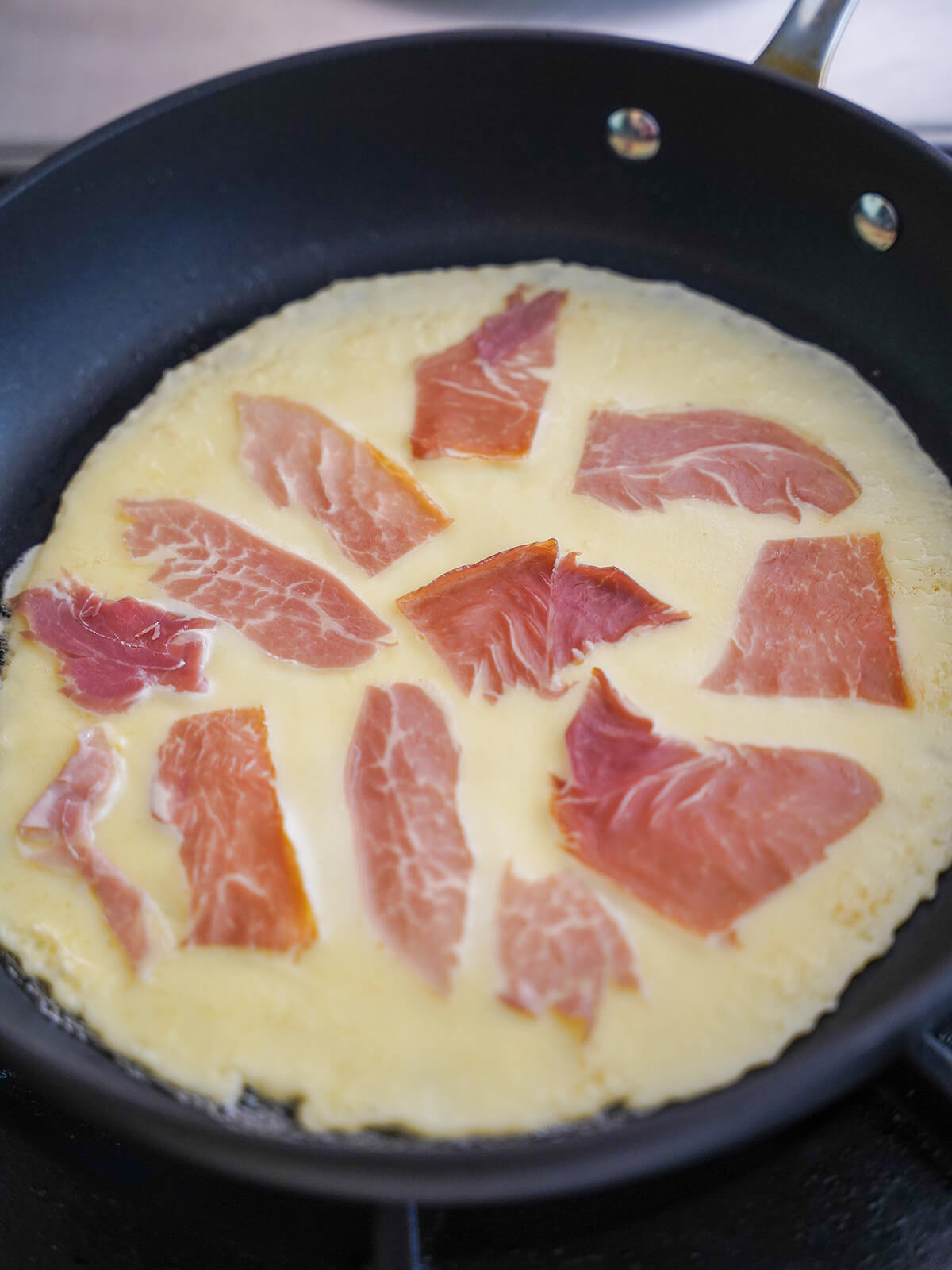
- If you are adding toppings that need pre-cooking eg bacon or apple, cook these first before adding the batter on top. Other toppings you can add at the end.
- Wait until the top of the pancake is dry before flipping over - if you try too early they are more likely to break up.
As you cook the pancakes, you can either serve as you go or stack them up, covered with a clean cloth to keep them warm.
Toppings to try
These are highly flexible in how you serve them, but some classic Dutch toppings to try include:
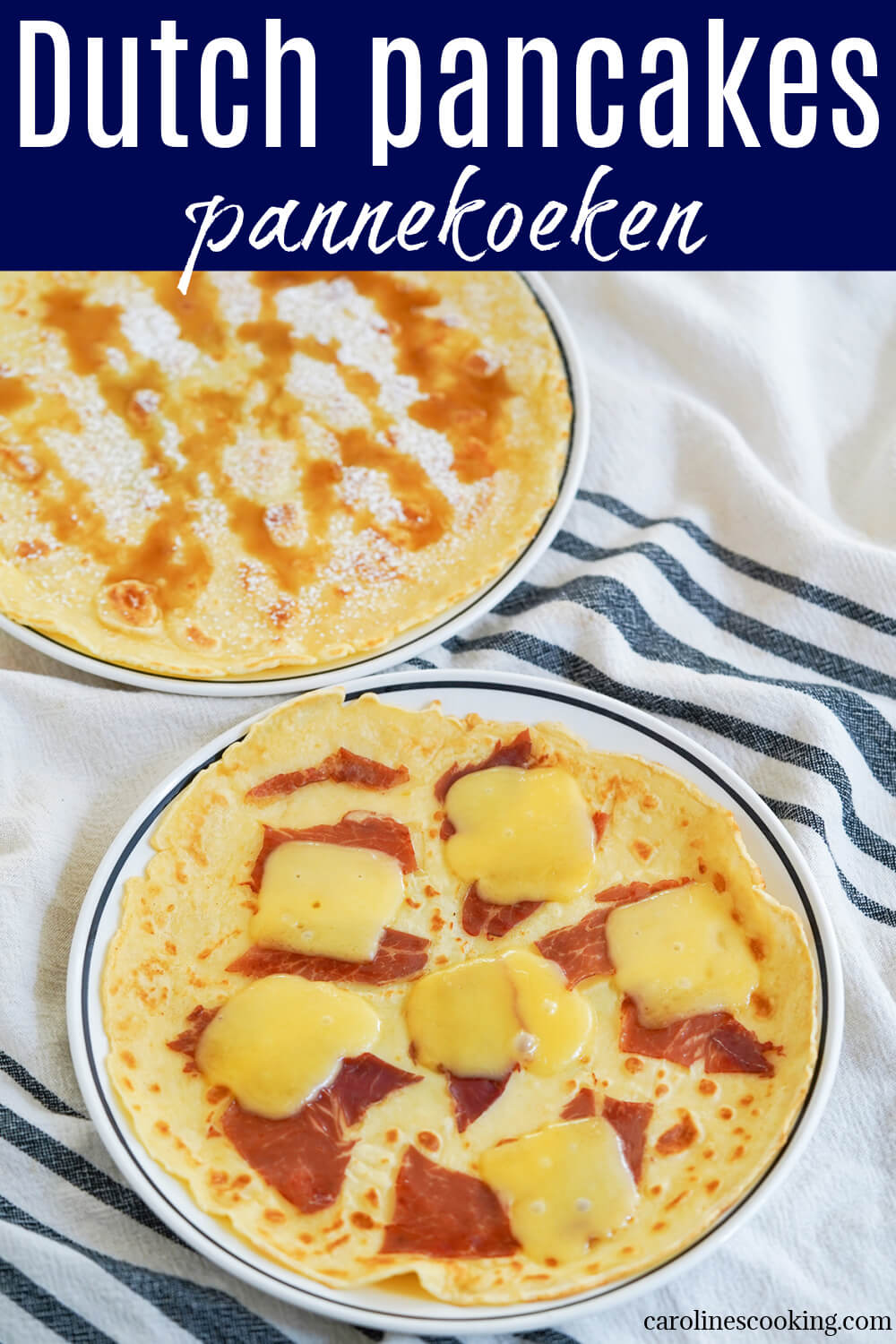
- "Stroop", or Dutch syrup - this comes in a range of variations, including apple syrup made from apple juice. Our favorite had a great rich, molasses-y flavor.
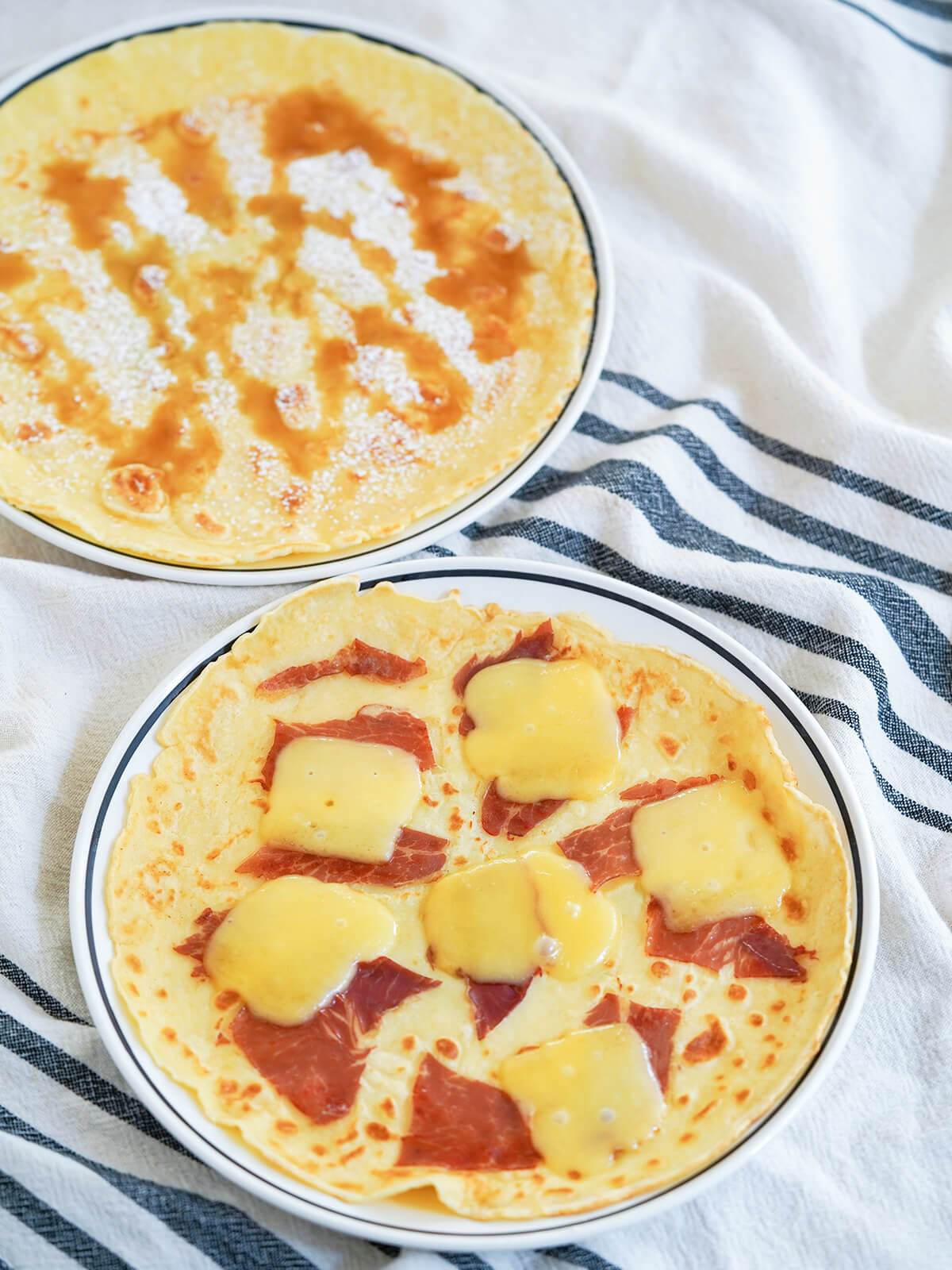
- Bacon and syrup - a classic sweet-savory combination. You can also use speck, which is like smoked prosciutto (and doesn't need pre-cooking).
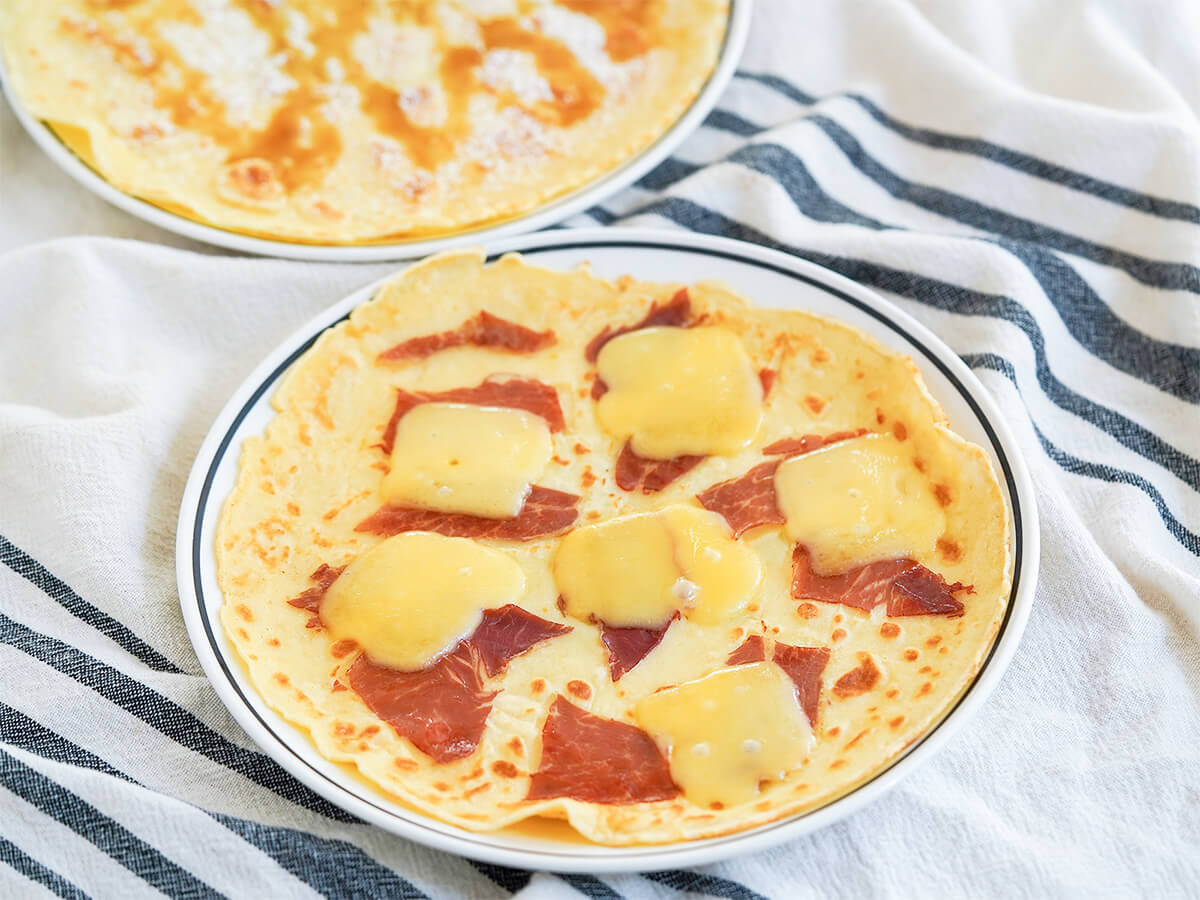
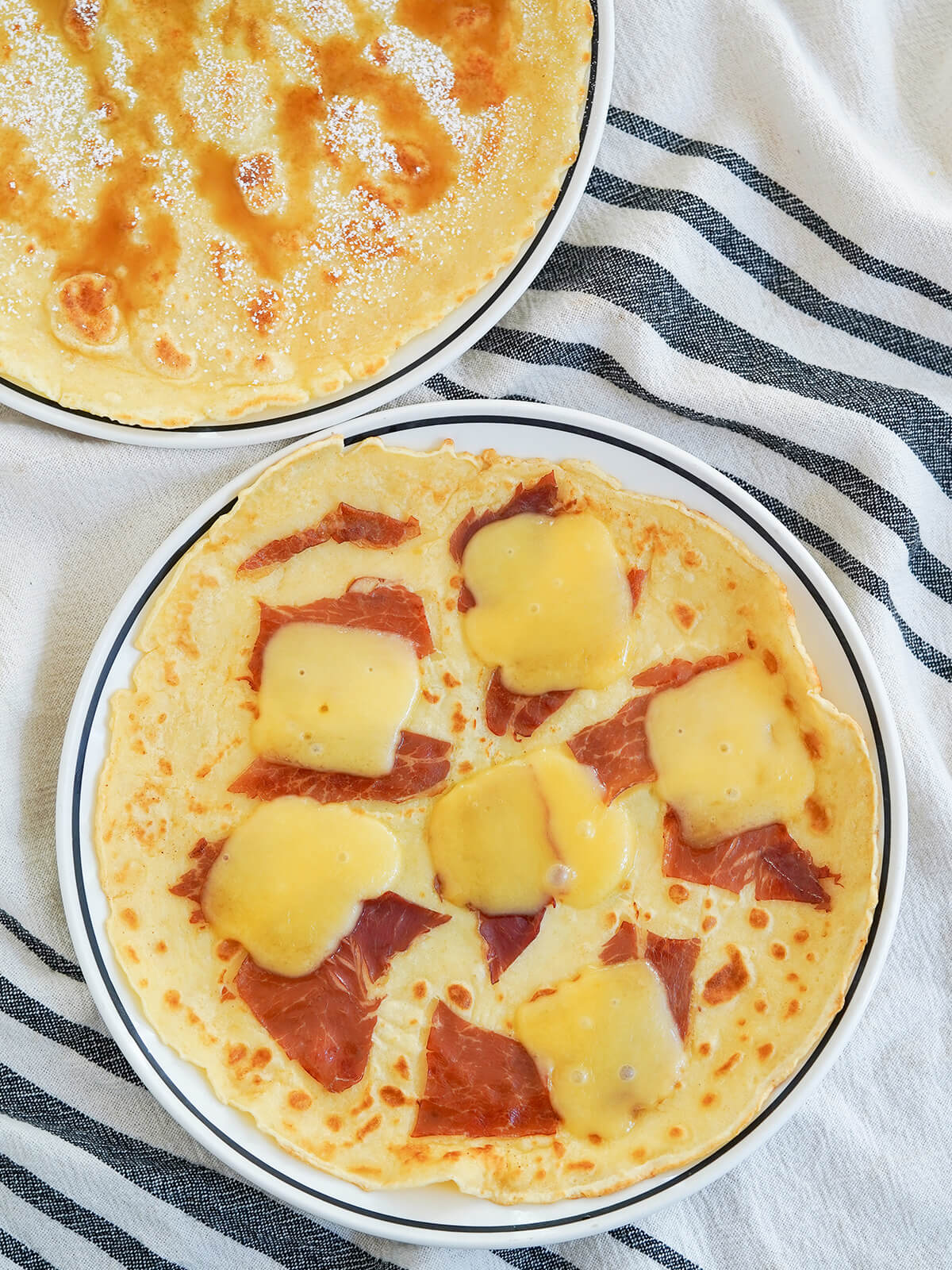
- Bacon or ham and cheese - gouda is the most common, but you can use others. Add slices while in the pan so the cheese melts on top.
- Apple - you can either add pre-cooked caramelized apples after cooking, or add slices into the batter. If the latter, you're best to cook the slices a little in butter first then add pancake batter over the top, but make sure the slices are very thin.
- Strawberries or other seasonal fruit, added on top at the end (especially good with a dollop of cream and some powdered sugar over the top!).
- Peanut butter - another popular simple topping.
If using bacon (with or without syrup), you can either cook the bacon in the pan first and add batter on top, so it's cooked in, or cook separately and add on top. as you prefer. You can also try other toppings like jam, nutella, or chocolate sprinkles.
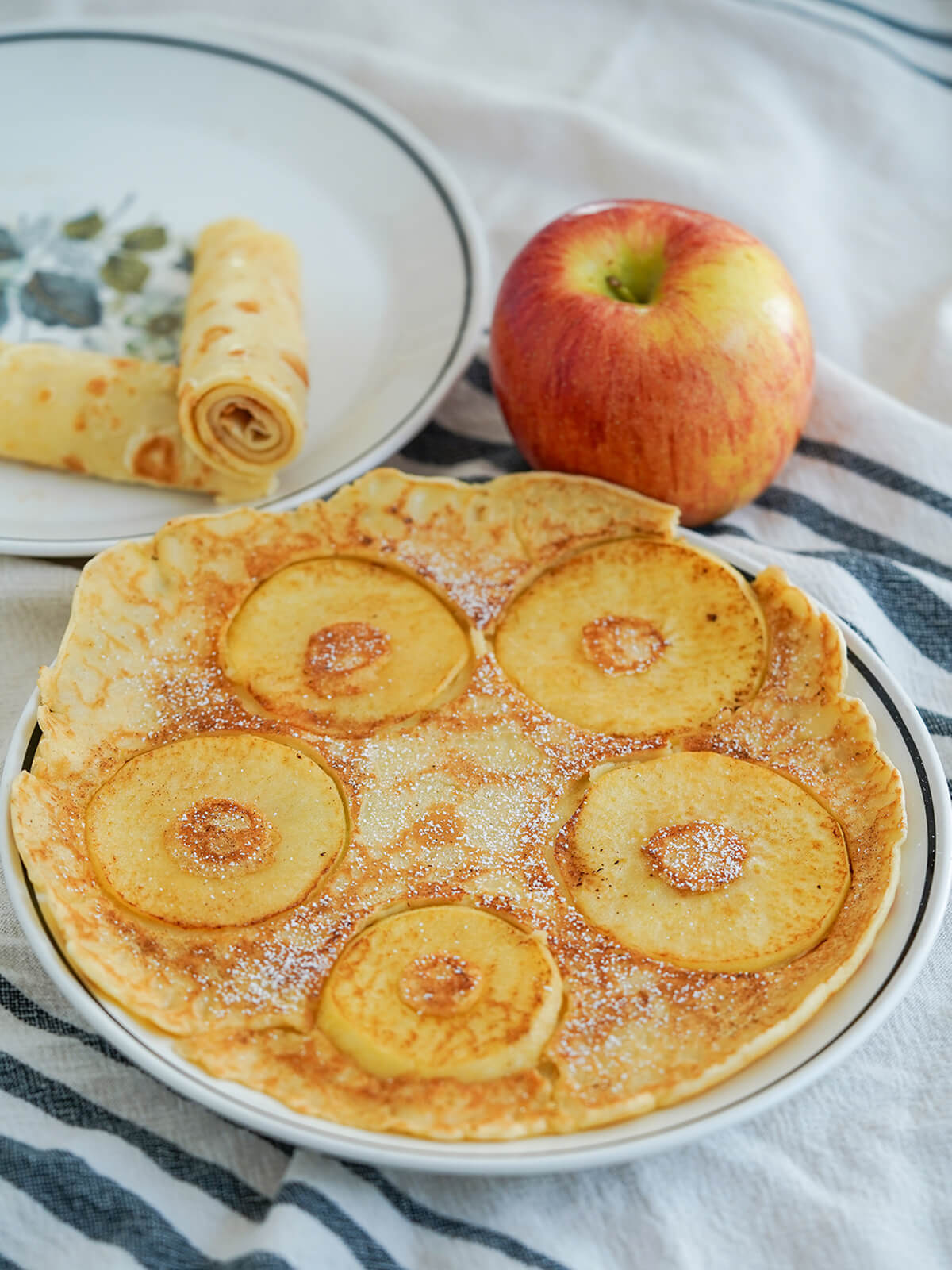
To eat them, you typically roll the pancakes up and either just bite from the roll or cut into strips. Either way, using your hands is perfectly acceptable (your home, your rules!). Work your way from savory to sweet toppings to make them into a full meal, if you like, too.
Dutch pancakes, pannekoeken, are wonderfully simple pancakes but so easy to enjoy. They're a blank canvas to a whole range of sweet and savory toppings perfect for breakfast and beyond. So be sure to enjoy some soon.
Try these other tasty pancakes from around the world:
- Kaiserschmarrn - Austrian fluffy pancakes that are torn into strips and so tasty.
- Syrniki - Ukrainian/Russian cheese pancakes that are super soft and tender.
- Cong you bing, Chinese scallion pancakes - tasty savory pancakes with crisp, flaky layers. Perfect for dipping in soy or other sauces.
- Plus get more breakfast recipes in the archives.
Pannekoeken, Dutch pancakes
Ingredients
- ⅞ cup all purpose flour plain flour (⅞ cup is ¾ plus 2 tbsp)
- 1 pinch salt
- 1 cup whole milk
- 1 eggs (large)
- 4 teaspoon butter for cooking (approx)
- toppings of choice (see below and above)
Instructions
- Sift together the flour and salt into a bowl. Add the egg and part of the milk and whisk well to give a smooth batter. Mix in the rest of the milk until smooth and even. The batter will be relatiely thin. Set aside for around 15 - 20 minutes.
- Warm a 12in (30cm) wide skillet/frying pan (recommend nonstick or cast iron) over a medium-high heat. Melt around 1 teaspoon of butter and swirl around the pan to give an even thin, layer.
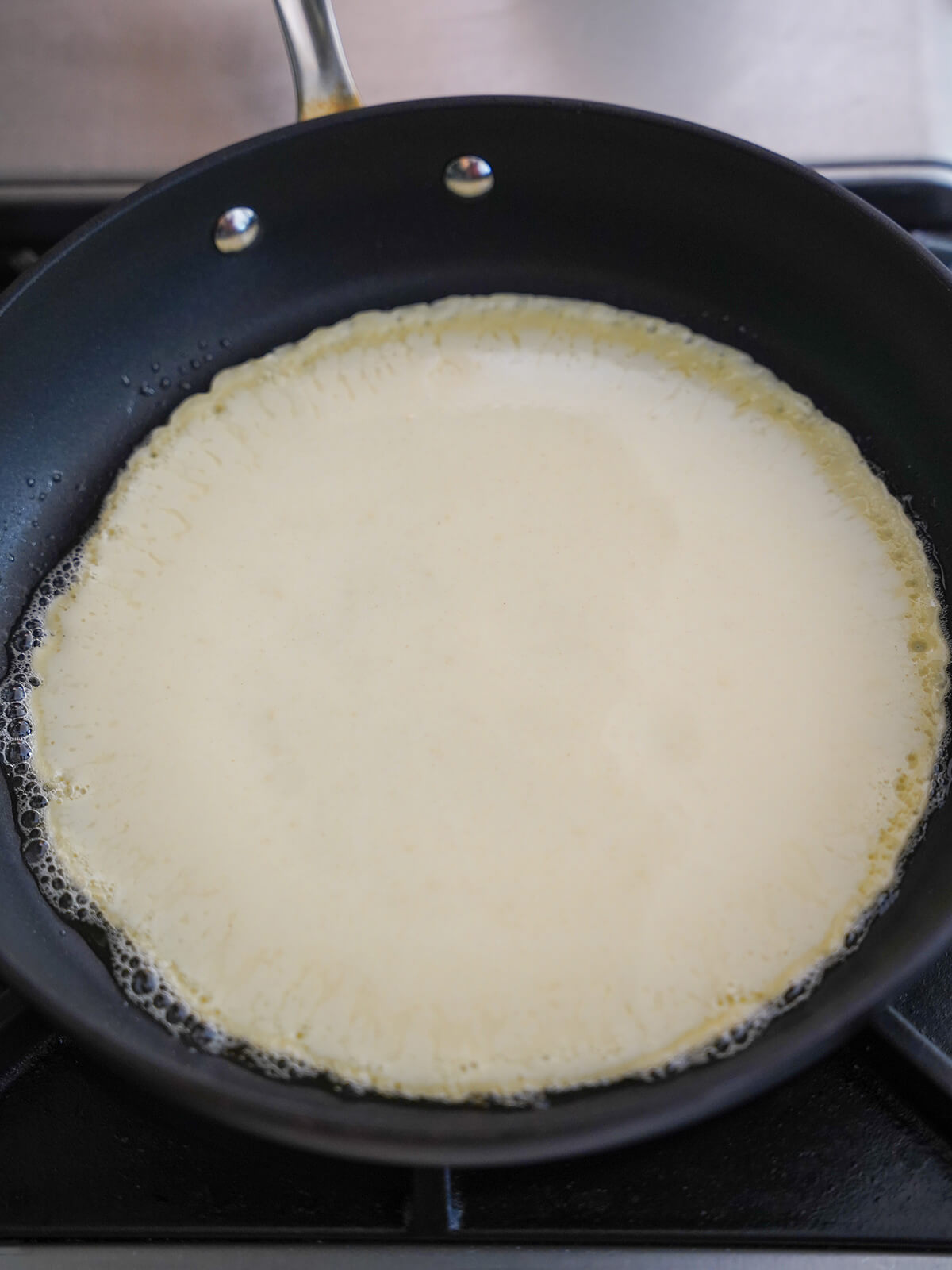
- Reduce the heat slightly and add somewhere between ⅓ and ½ cup (around 100ml) of the pancake batter to the pan. Tilt the pan slightly after you have added the batter and swirl a little so the batter spreads out to the edges.
- Let the pancake cook a couple minutes until the top is dry - if you lift up an edge it should be gently brown. Loosen the pancake with a spatula to ensure it is not sticking, then flip the pancake over and cook a minute or two more on the other side. Remove the pancake from the pan once the other side gets a few brown spots and keep warm while you cook the rest.
Topping-specific instructions
- If adding speck/ham and cheese to the pancake - slice or tear up around 1 - 2 slices of speck, prosciutto or ham into smallish pieces. Cut around 5 thin slices of gouda. To cook, after adding the pancake batter, add pieces of speck/ham into the batter while it is still wet so they hold in place. Then, after cooking on the second side, flip the pancake back over so the speck is on top then add the slices of cheese. Cover with a lid to help the cheese melt and cook a minute more on low heat until cheese is melted. (If using only one or other then skip the part you are not adding)
- If adding apple into the pancake - cut around 5 very thin slices of apple and remove core and skin. Add slightly more butter than usual and cook the apple slices a minute or two either side to soften before then adding the batter over the top. Then, cook as usual, though you may need an extra spatula to help turn as they will be more delicate.
- For other toppings (eg syrup, slices of strawberry, caramelized apples, cinnamon sugar) - add the toppings when cooking the second side or once served onto plate.
Notes
Nutrition (per serving)
See some of my favorite cooking tools and ingredients in the Caroline's Cooking Amazon store.
Remember to pin for later!
Leave a Reply