
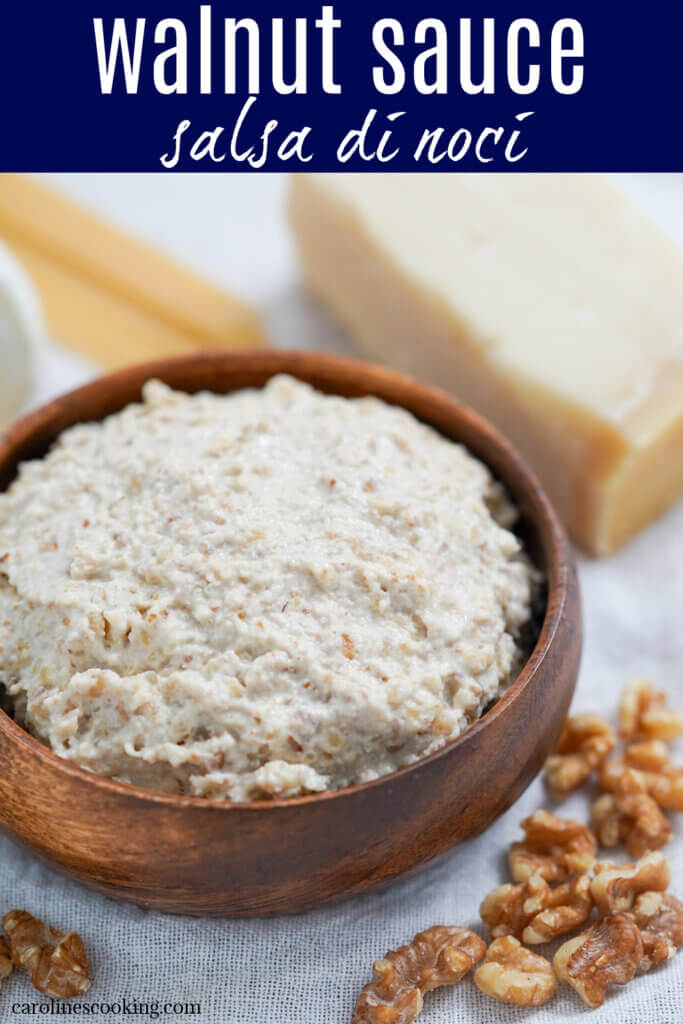
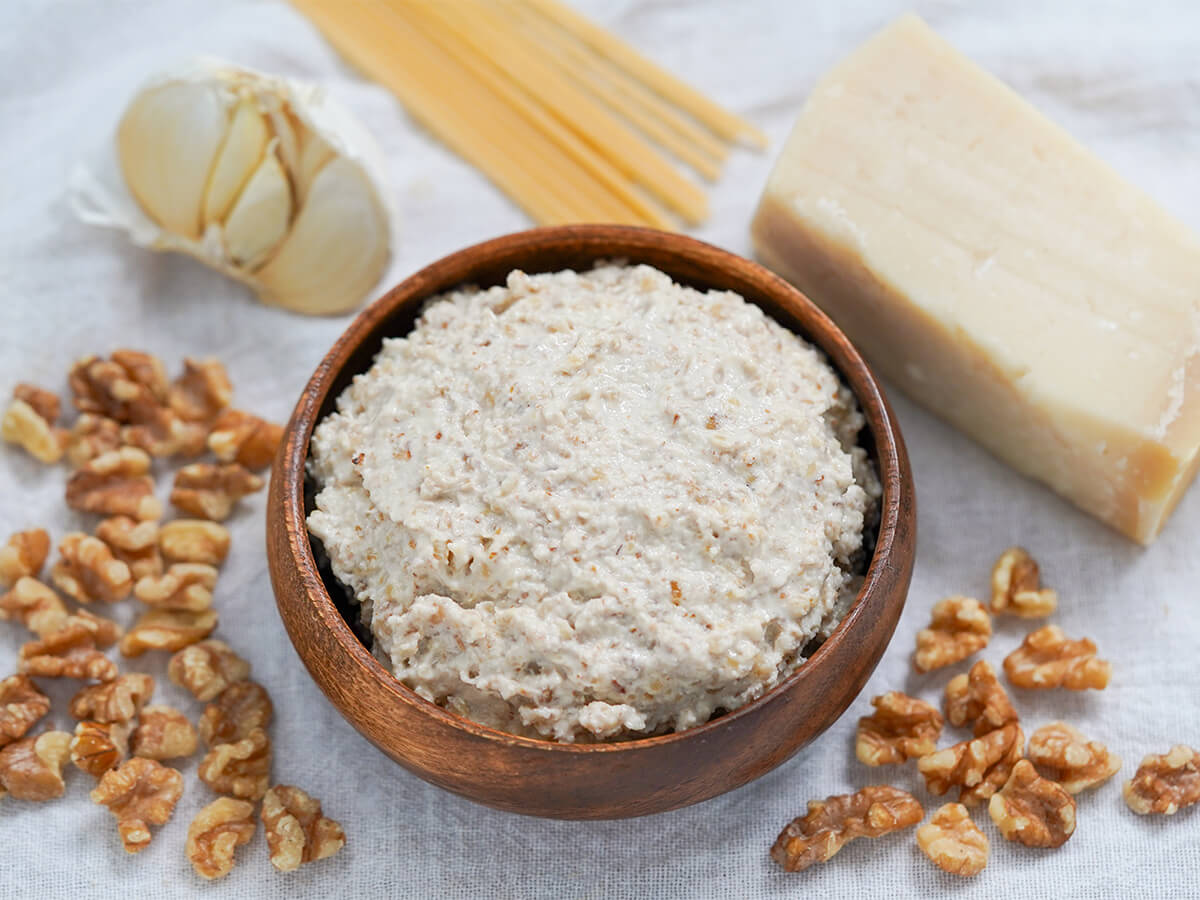
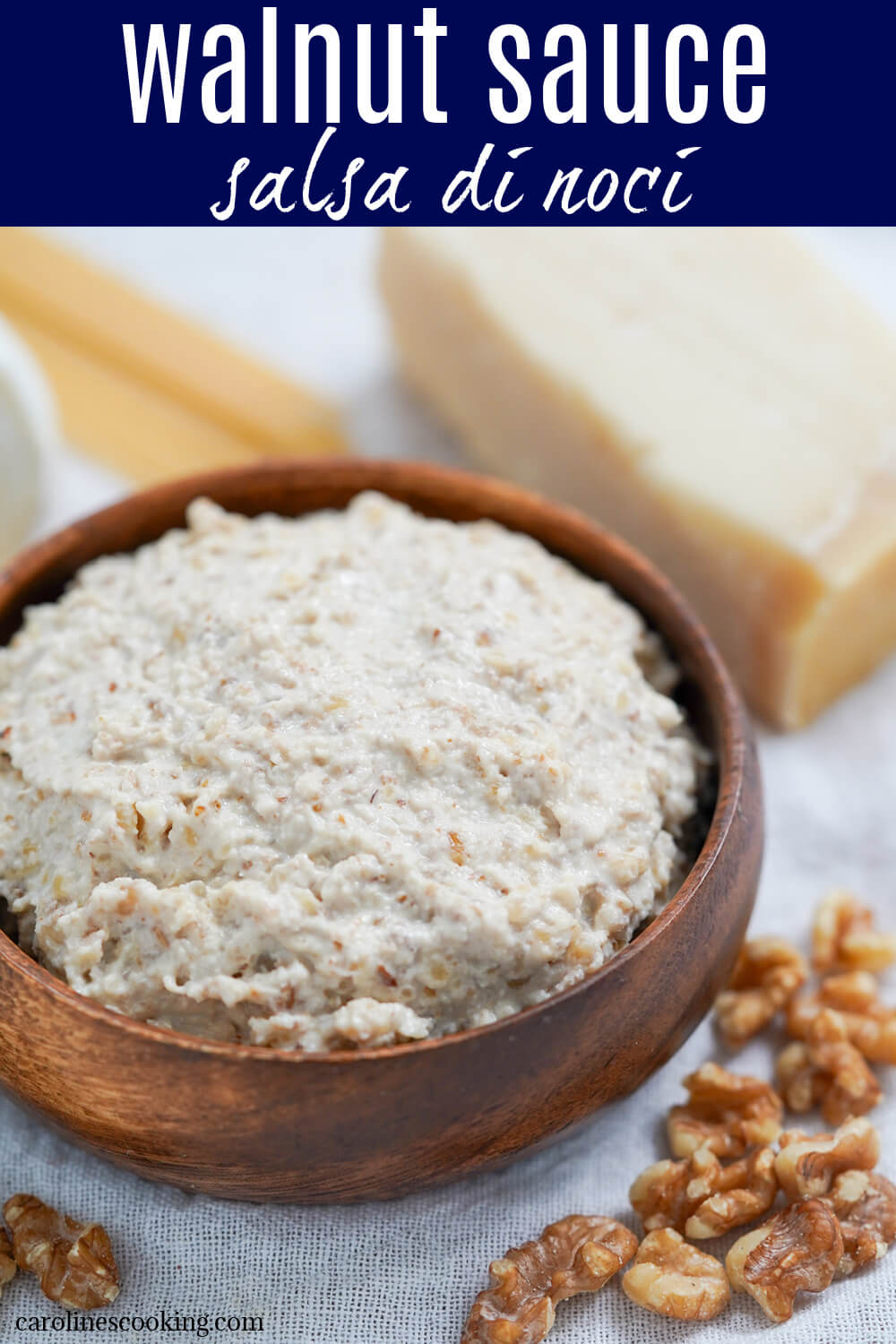
Walnut sauce, salsa di noci, is a lesser-known Italian sauce that's easy to make and surprisingly creamy and flavorful given the humble ingredients. Delicious with a range of pastas and gnocchi.
This post may contain affiliate links, where we earn from qualifying purchases. See more details in the policy page.
I first came across this sauce thanks to a stall at our local farmers market in London many years ago. There was an Italian couple who sold their own homemade sauces, most of them made with ingredients they picked up while they were back in Italy each summer. The flavors were fantastically vibrant, we tried quite a few.
While these days I always make my own pestos, in particular arugula pesto, those were some I made an exception for. And it was a great way to try some different ones I was less familiar with. This salsa di noci was one of them and I knew it was one I needed to make at home, too.
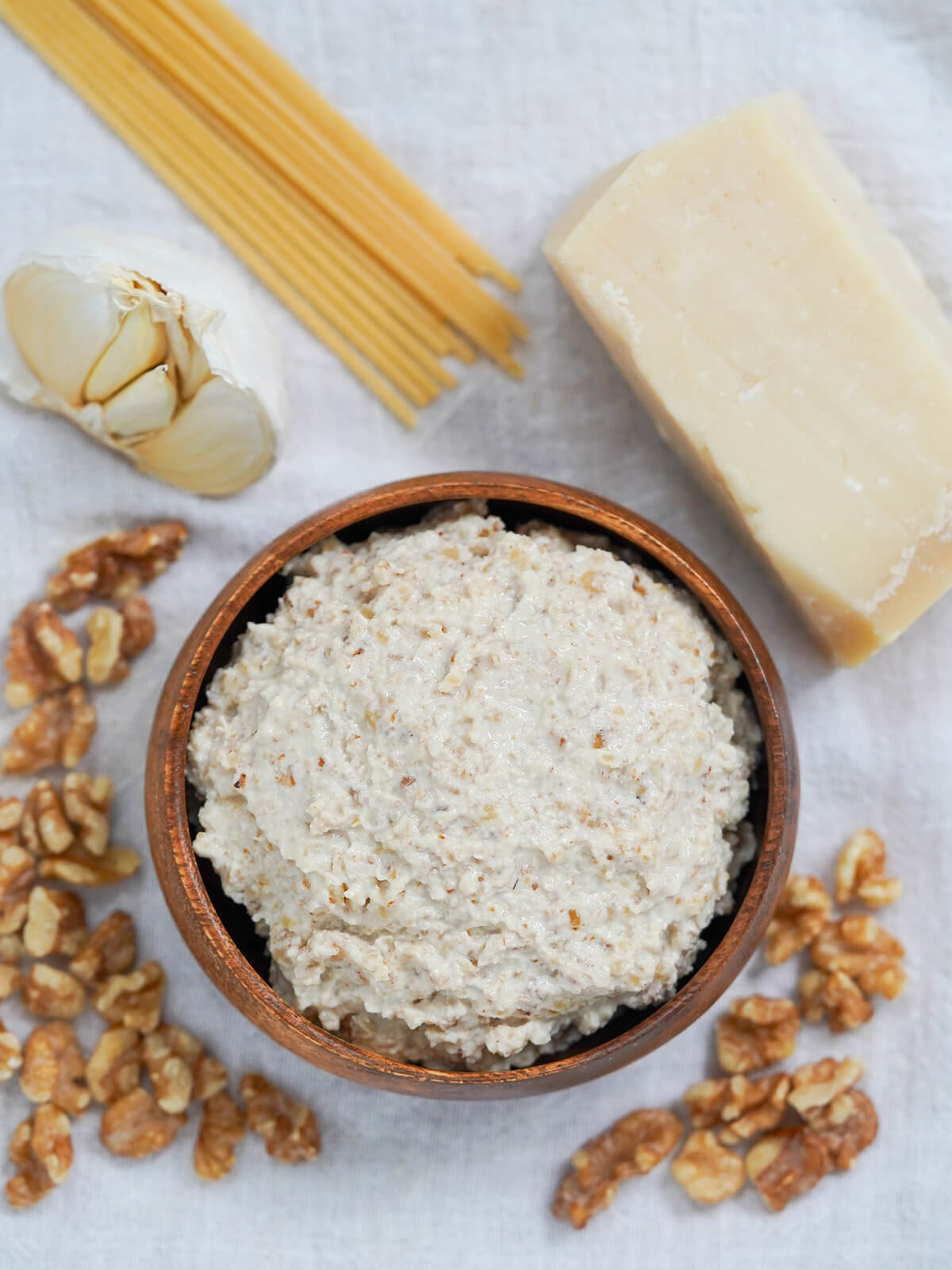
This sauce is made with such a short list of ingredients that on the face of it don't seem like they add up to much. Yet the result is wonderfully creamy, rich and flavorful. And best of all, it's wonderfully easy to make.
Where is walnut sauce from?
Walnut sauce - "salsa di noci" - is from the Genoa area of Liguria in Italy, also known as the Italian Riviera. It's actually where my husband studied for a month so he knew of the sauce when we first tried it. But it's generally surprisingly unknown, unlike the other sauce export from the region, pesto genovese (ie the classic basil pesto).
Genoa was an important port town in the Middle Ages and early modern era, and as a result, many ingredients and techniques came into the area from the broader region. Apparently the idea of using crushed seeds on pasta dates back to at least the 14th century, and this sauce emerged from that, likely pre-dating the better known pesto.
Ligurian walnut sauce combined ingredients sourced from further afield - the walnuts - with more local ones - the olive oil and cheese. Over time, the sauce evolved to use slightly different ingredients to get a more balanced flavor and texture, such as using bread and milk rather than the original vinegar.

Salsa di noci ingredients
This sauce uses only a small list of everyday ingredients, each adding something to the final sauce:
- Walnuts - these are the core to the sauce, giving lots of nutty flavor and adding structure. Traditionally, and if you can, you blanch them to remove the brown inner skin, both as it can be more bitter and to give a paler color. But it can still work well without this step.
- Garlic - just a little gives a lovely aromatic flavor to the sauce.
- Olive oil - adds flavor, acts as a binder and liquid fat.
- Bread - this helps to thicken and emulsify the sauce, especially when soaked in milk (the next ingredient!). It's also a less costly ingredient than the walnuts, which I imagine was a consideration at times, as well as giving a bit more balance to the stronger flavors.
- Milk - you soak the bread in milk to soften it so that when the mixture breaks down, it acts as a natural emulsifier for the sauce. It also, like the bread, gives a mildness to balance the stronger garlic and walnuts.
- Cheese - this adds both flavor and helps bring the sauce together. Traditionally, a local curd cheese, prescinseua, is used, but as it's difficult to find outside the region, many use pecorino or parmesan cheese instead.
In general, this sauce has no herbs in it, but occasionally a little marjoram is added.
Making and using this sauce
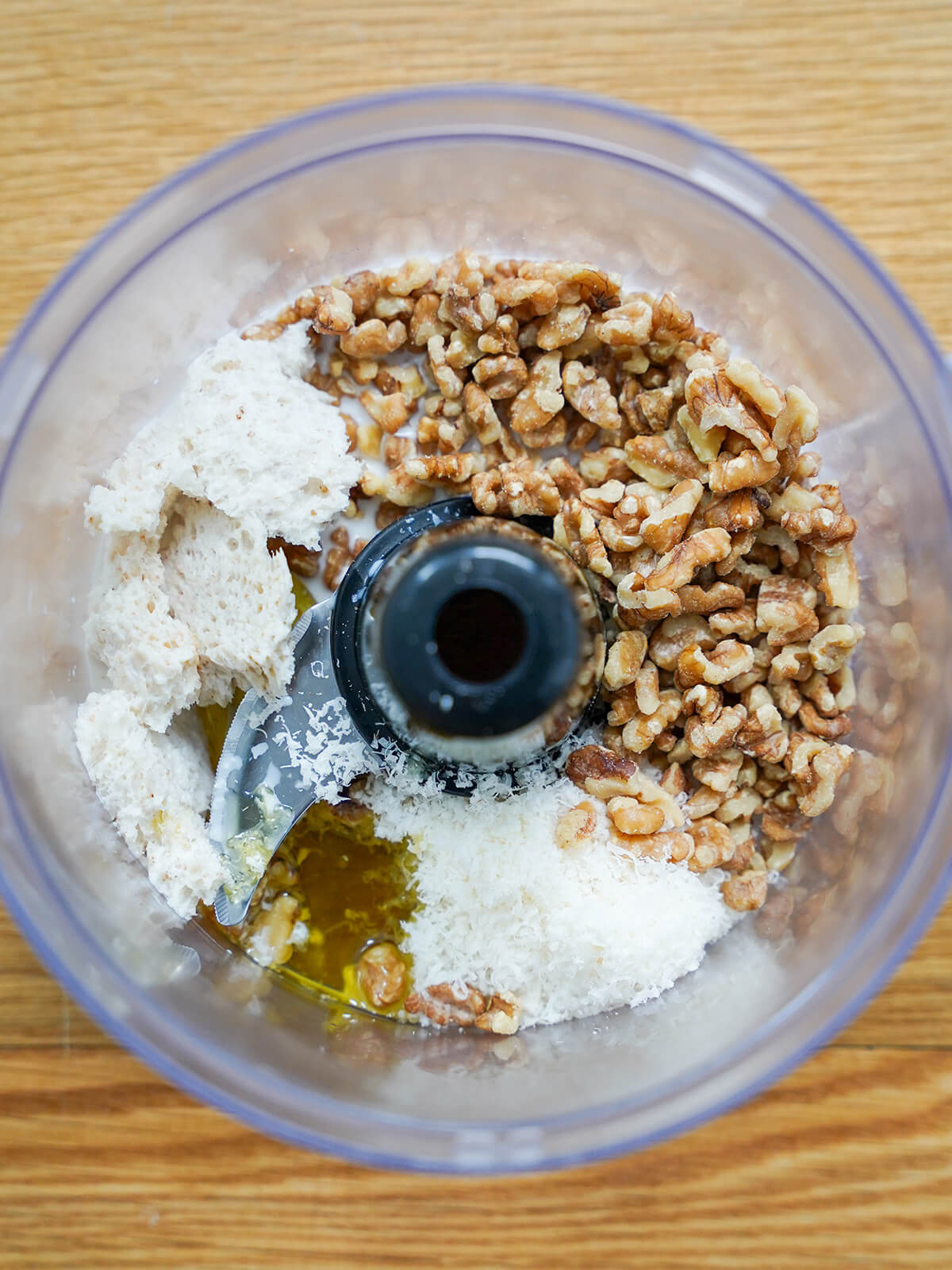
This walnut sauce comes together so easily as all you do is soak some bread in milk, then blend it up with the walnuts, garlic, olive oil and cheese.
Traditionally, you mix everything with a pestle and mortar, but these days you more often use a food processor or blender. Just take care to not over-blend, particularly with a blender, as it can impact the flavor. If the blades over-work, they can make the sauce bitter.
At this stage, the sauce will be a little thick, like a pesto. Then, when you come to use it, you gently loosen and warm the sauce with a little of pasta cooking water (or water from cooking gnocchi). You'll be amazed at how smooth, creamy and flavorful it becomes.

Serving and storing walnut sauce
This sauce works with many different types of pasta, from spaghetti and linguini to casarecce and others. It's traditionally served with pansotti, a kind of filled ravioli-like pasta with a herb and cheese filling, and certainly works with other, similar filled pastas.
We often use it with some homemade pumpkin pasta which pairs really well and it's also delicious with gnocchi. And while it's most traditionally used with pasta and gnocchi, you could also use it as part of appetizers, such as dotted on endive leaves along with some cheese and ham, or spread on crostini.
If you have extra sauce, you can store it in an airtight container in the fridge for a couple days. You can also freeze it, again in an airtight container, for a couple months. Just be sure to defrost it slowly int he fridge before using.
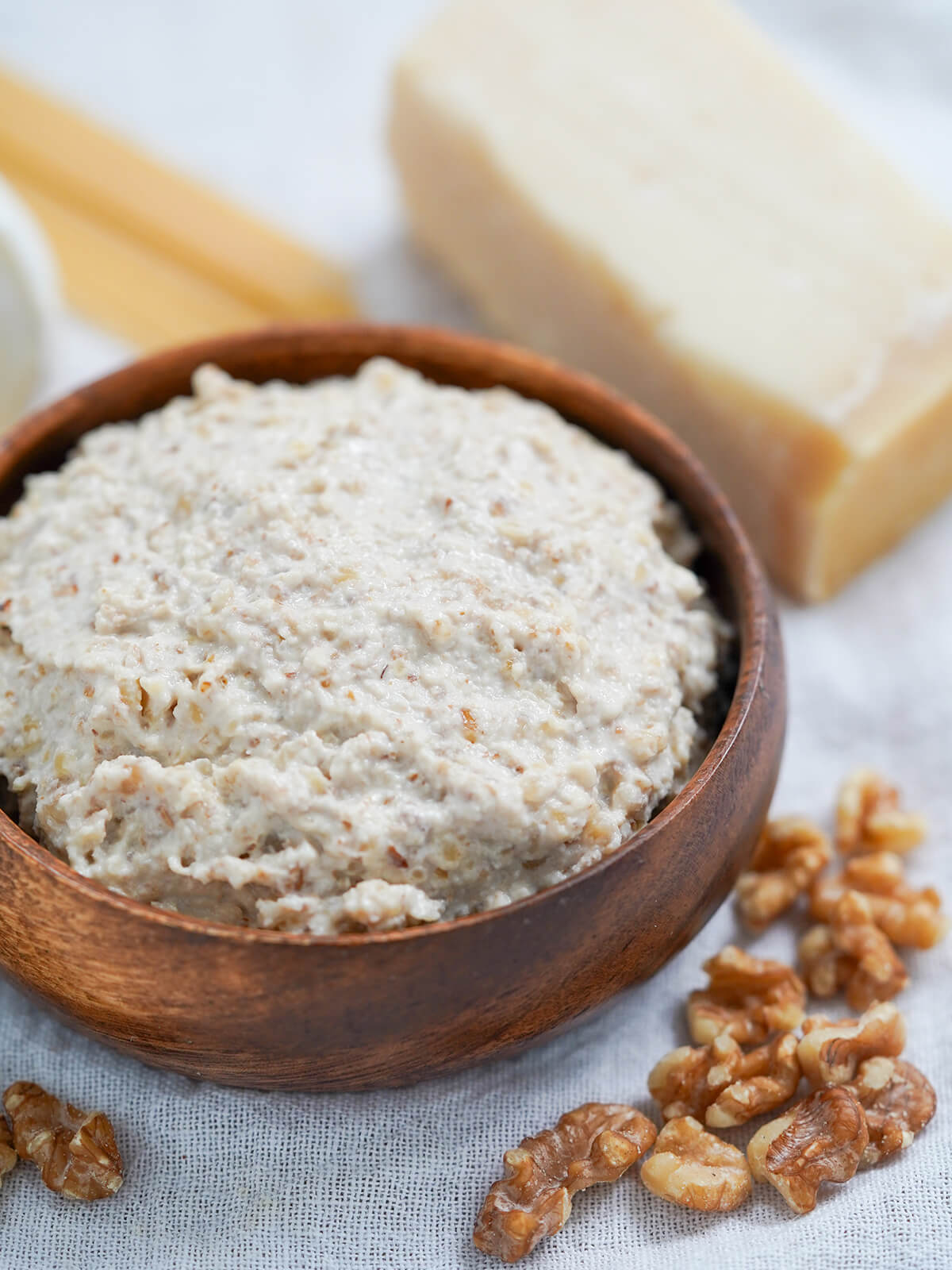
Ligurian walnut sauce might be less well known than it's local cousin, but it's no less worthy of giving a try. This sauce is easy to make, and with a wonderful flavor and texture. A delicious addition way to make pasta and gnocchi into a tasty meal.
Try these other pasta sauces:
- Pesto alla Trapanese (a Sicilian fresh tomato almond sauce)
- Creamy bacon sauce with spinach
- Butternut squash sauce
- Carrot top pesto (a delicious way to use those leftover green tops!)
Plus get more Italian recipes in the archives.
Walnut sauce (salsa di noci)
Ingredients
- ½ oz bread (½oz/15g is approx ½ slice weight without tough crusts) ideally a rustic white bread
- ¼ cup milk
- ¾ cup chopped walnuts
- ½ clove garlic or a very small clove
- ¼ cup parmesan grated (note this is volume for freshly grated, use a little less if using pre-grated)
- 2 tablespoon extra virgin olive oil
- some salt, pepper and pasta water (see below)
Instructions
- Tear up the bread and put it into a small bowl. Pour over the milk and leave to soak while you measure out everything else.
- Put the walnuts, garlic, grated parmesan and olive oil into a food processor or small blender. Squeeze out the excess milk from the bread (but don't discard yet) and add it in as well. Blend them all together until well combined and smooth, but take care not to over-blend (particularly with a blender).
- Add a little of the reserved milk if needed to help make the sauce relatively smooth and not too thick. Add a little salt and pepper, to taste. Set aside until pasta is cooked.
- When your pasta is ready, don't discard all the pasta cooking water - keep some so you can add a little of the pasta water to thin down the sauce and help it become nice and creamy as you stir the sauce through the hot pasta.
Video
Notes
Nutrition (per serving)
See some of my favorite cooking tools and ingredients in the Caroline's Cooking Amazon store.
This post was originally shared in October 2017 and has been updated, primarily with additional information and new photos. At that time, it was shared in partnership with Pomora.
See some other ideas for cooking and baking with nuts:
- Barberry Pistachio Saffron Rice by Food Lust People Love
- Canadian Pecan Butter Tarts by Tara's Multicultural Table
- Healthy Granola Cakes by Sneha's Recipes
- Pecan Chicken by Family Around The Table
- Pumpkin Nut Braid by Passion Kneaded
- Pumpkin Praline Cheesecake by A Day in the Life on the Farm
Remember to pin for later!
Nicole says
So true – a good quality olive oil makes such a difference! We love walnuts and this sauce sounds really delicious, I can’t wait to try it!
Caroline's Cooking says
Indeed it does, you can really tell the difference in the flavor. Hope you enjoy the sauce!
Ramona says
This is definitely a recipe that I must try - I make a sweet version ( my dad’s favourite and I used to love it as a kid) but never had walnut in savoury pasta dish. I really want to try this now. I am sure I will love it.
Caroline's Cooking says
Thanks, love the sound of a sweet walnut sauce as well, and definitely recommend you try this too!
Brian Jones says
Oh boy, I love walnuts and use them with pasta quite a lot but have never heard of a sauce like this... Definitely excited to give this a try!
Caroline's Cooking says
It's that bit unusual but the flavor is wonderful!
Kelster says
This is definitely new to me. Glad you suggested how to use it.
Caroline's Cooking says
It's definitely less well known, but worth a try!
Tara says
Yum! I would love to try this sauce with gnocchi. So perfect for autumn when basil is no longer in season.
Caroline's Cooking says
Thanks Tara, that's very true, it's a great alternative when herbs are out of season for pesto-making and this would be great with gnocchi.
Barrie says
This is such a great idea- I love how creamy it looks too!
Caroline's Cooking says
Thanks Barrie! It become so wonderfully creamy with just a little water from the pasta.
Ellen says
I love the idea of using this with pasta. Would be great to throw in some seasonal veggies too.
Caroline's Cooking says
Thanks Ellen, yes some veg in there too would be great.
sneha datar says
Great recipe of walnut sauce . Thank your for hosting this event.
Caroline's Cooking says
Thanks for joining Sneha! And do try the sauce, it's delicious.
Wendy Klik says
I have never heard of this Caroline but I am definitely trying it.
Caroline's Cooking says
Thanks Wendy, hope you enjoy as much as we did!