
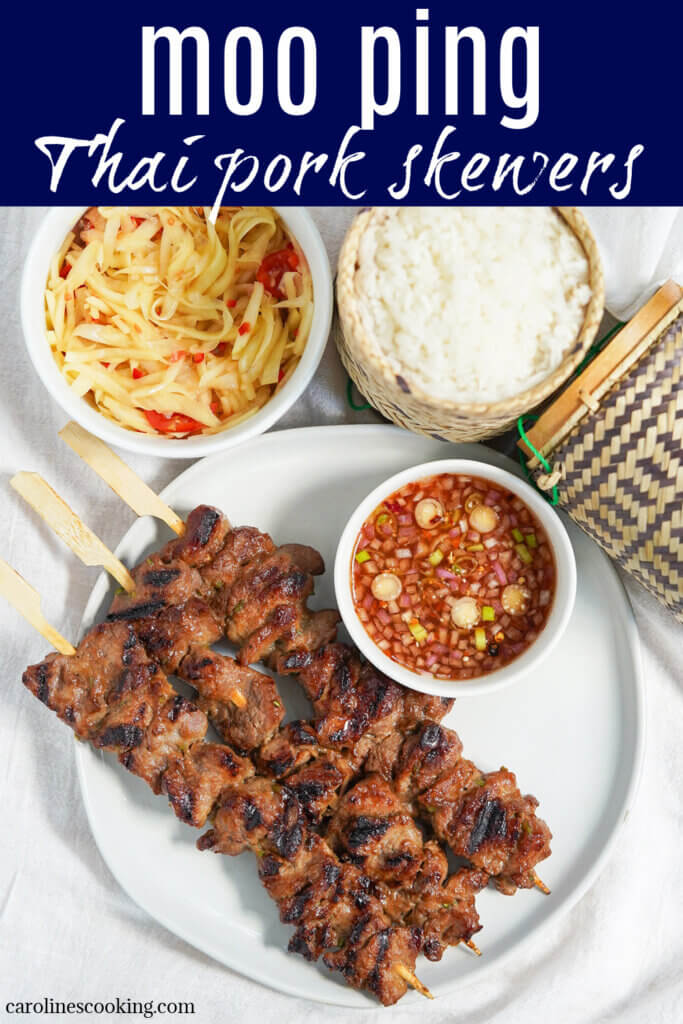
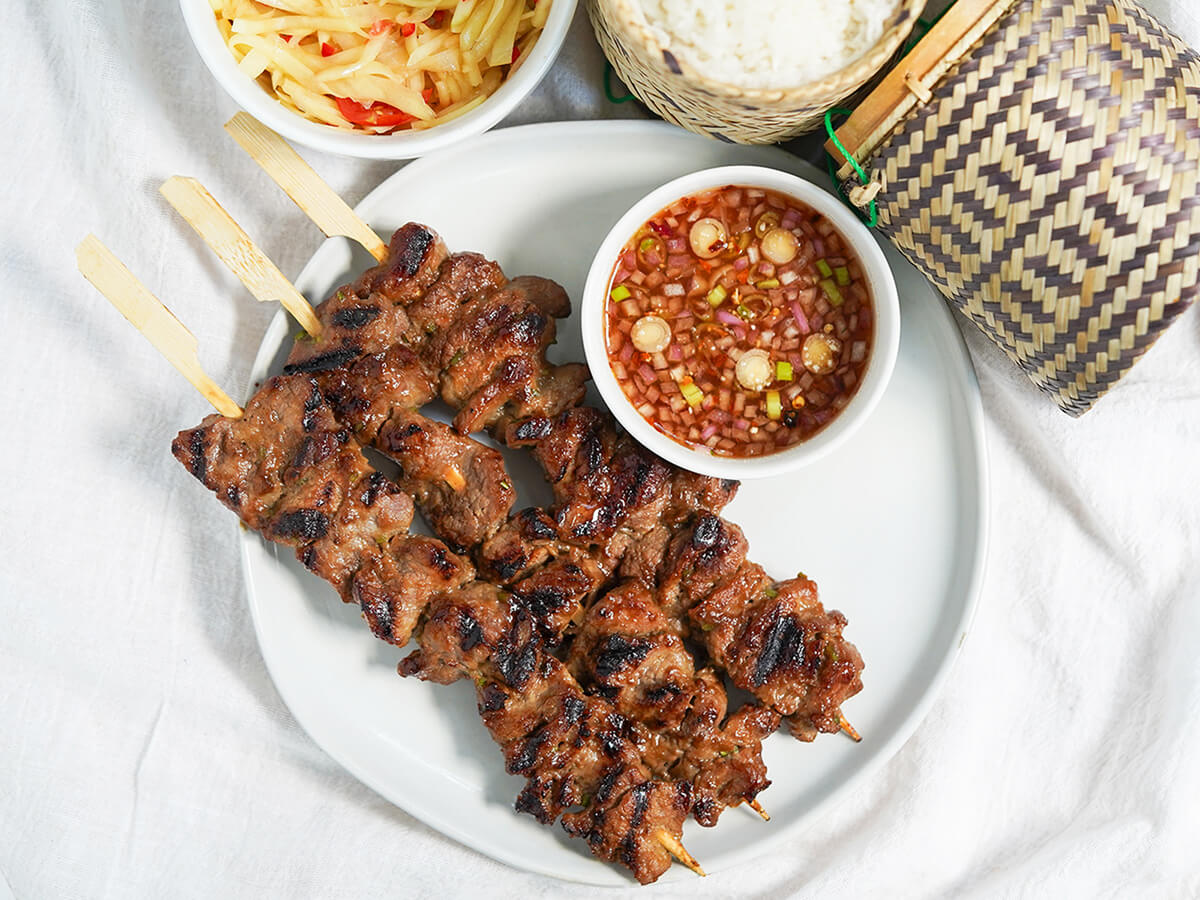
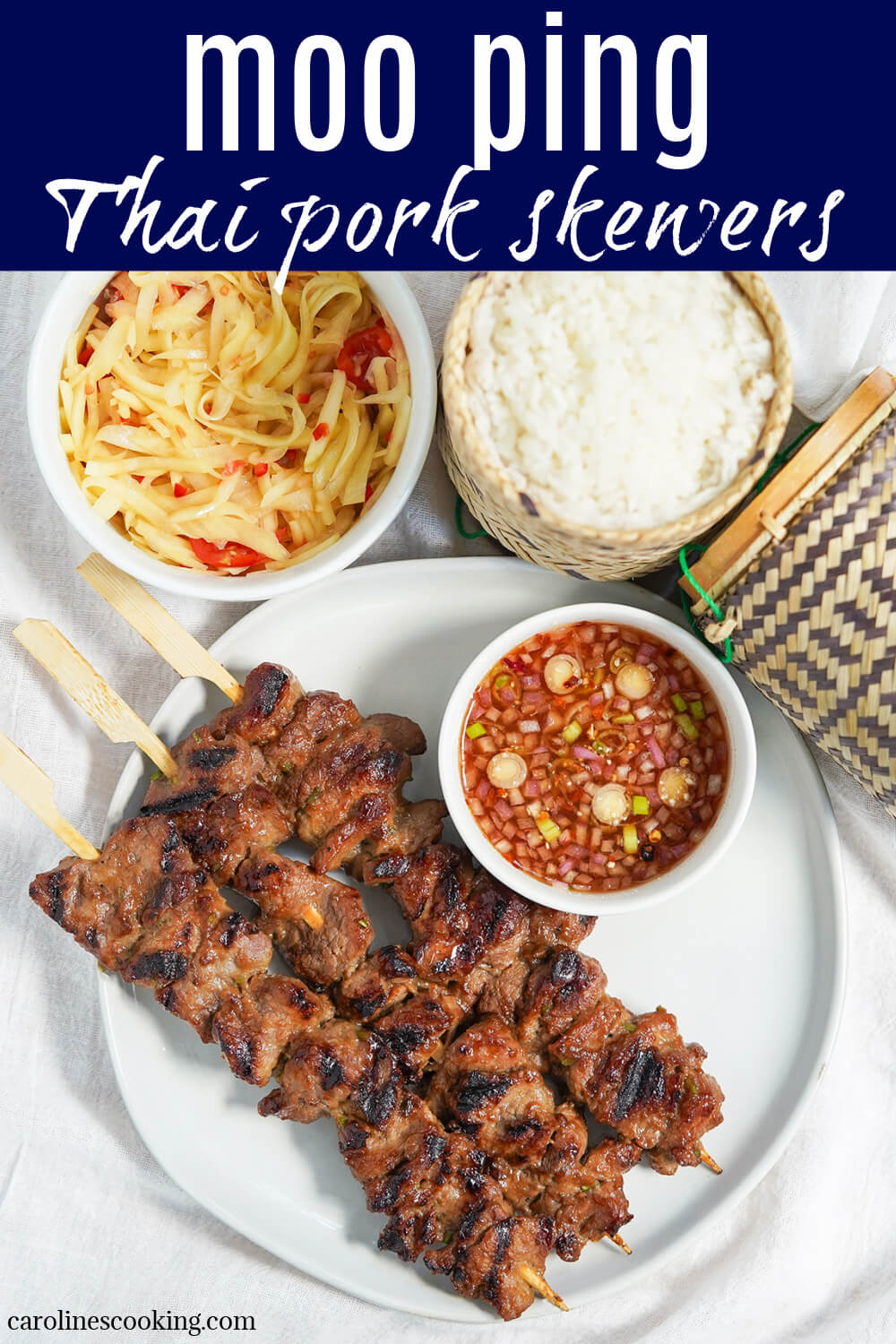
Moo ping are fantastically tender, flavorful Thai pork skewers that are packed with sweet-salty-savory flavor from the tasty marinade. They make a great snack or main with a selection of sides.
This post may contain affiliate links, where we earn from qualifying purchases. See more details in the policy page.
This can maybe be said about a few cuisines, but I sometimes think Thai food can often be put in a box of one type of dish - curries. And while I love a good Thai curry, there's a lot more to the cuisine than that.
I'm a huge fan of Thai salads like pomelo salad and Thai green papaya salad which are fantastically fresh and bright. Some Thai soups, like tom yum soup and tom kha gai have a delicious balance of flavors.
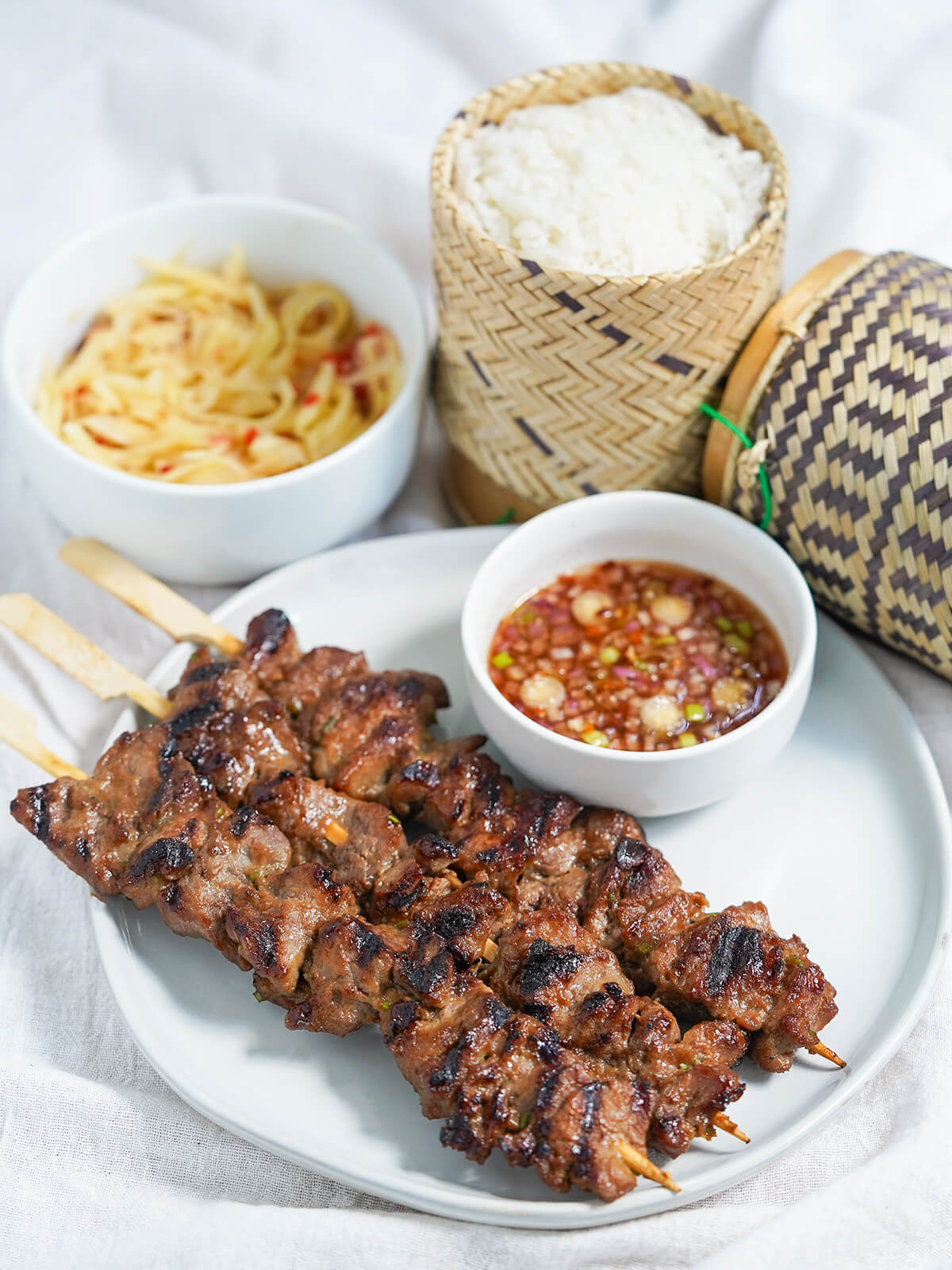
These Thai pork skewers are another delicious Thai dish that are wonderfully different from the classic "box". They have lots of flavor, but without being overpowering. They're umami rather than spicy and the slight sweetness helps give a delicious caramelization. Believe me, they're addictively good!
Where are moo ping from?
Moo ping are from Thailand and in particular the Northeastern region, Isan. They grew in popularity when carts were converted into food stands during the 1950s and you can now find these skewers all over the country. "Moo" means "pork" and "ping" means "grilled" so the name is literally grilled pork.
While these make a great snack or can be a main if you have a few and bump up the sides, they're possibly most popular in places like Bangkok as a quick on the go breakfast. Stalls serve skewers with a little bag of sticky rice on the side and often some punchy dipping sauce, jaew.
You'll find a few variations in exactly what goes in the marinade and what cuts of pork to use. Some is quite which sauces and quantities, but the main variation is whether milk, or coconut milk, is used or it's more of a simple soy-based marinade. These days, the milk style is more common as it has more flavor and the milk/coconut milk helps tenderize the meat.
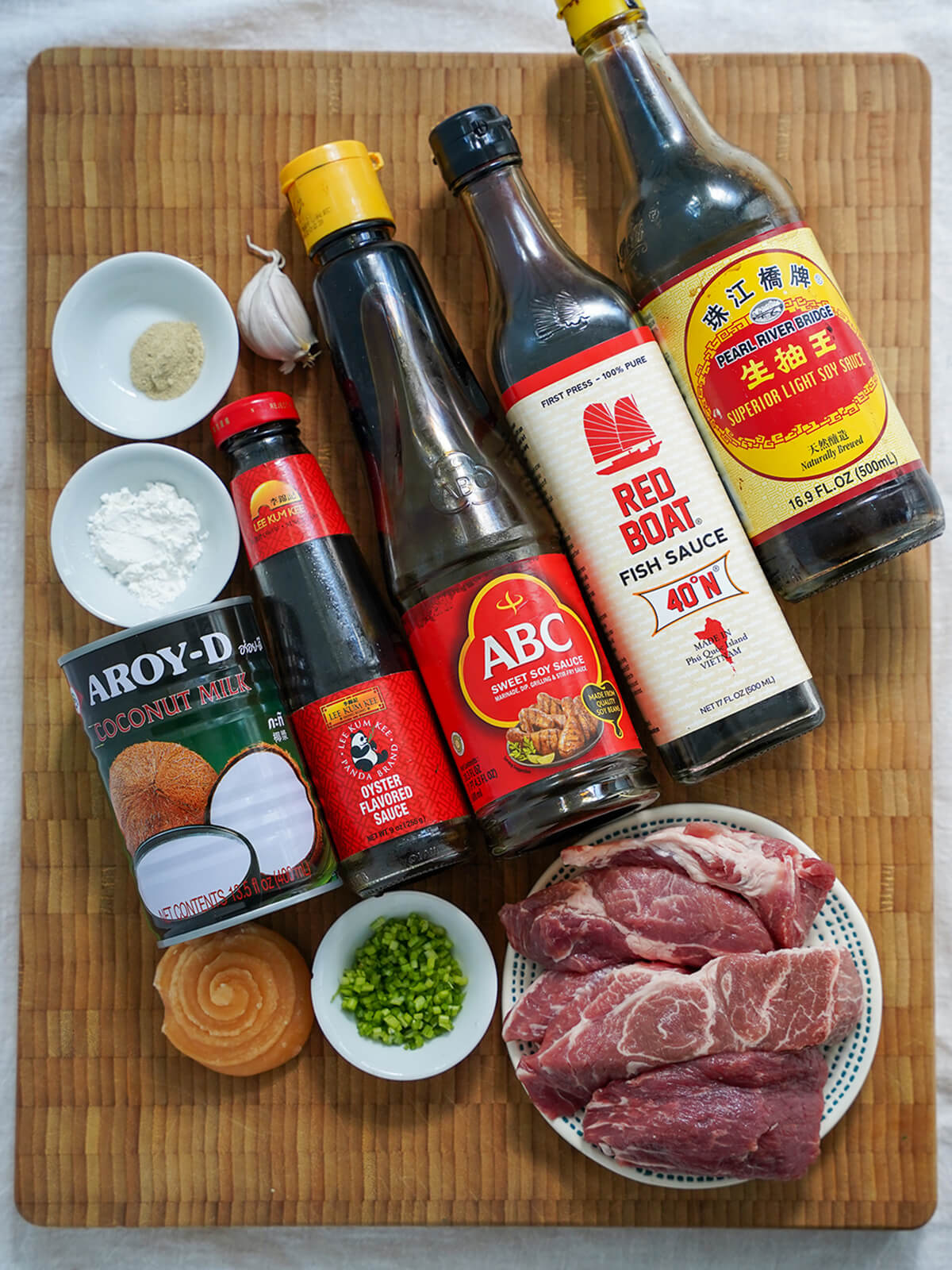
Moo ping ingredients
I've gone with the coconut milk-based sauce here and used a fairly typical mix of seasonings that give lots of sweet, salty and savory flavor:
- Pork - the main ingredient! Here I use pork shoulder (or pork butt) as it's a flavorful cut and has a good balance of meat and fat.
- Coconut milk - the base of the sauce, it adds richness and helps tenderize the meat. I recommend looking for Thai brands as they tend to have a better richer consistency.
- Garlic - this adds lots of tasty aromatic flavor.
- White pepper - this is the closest to spicy you'll find in this. White pepper has a bit of bite but it's a bit more muted and musky than black pepper. If you like, you can use a bit of both.
- Soy sauce - this adds a bit of salty, savory flavor.
- Thai black soy sauce of kecap manis - Thai black soy is more traditional but can be trickier to find, but kecap manis is a clase alternative. These add a tasty, rich mix of sweet, umami with some aromatic spice.
- Fish sauce - a classic Thai ingredient that adds depth and umami flavor.
- Oyster sauce - this also adds umami flavor but with a touch of sweetness.
- Palm sugar - this adds sweetness, with a definite caramel flavor. If you can't find it, coconut sugar is your closest alternative or else brown sugar.
- Cilantro root or stems - these add a nice touch of fresh herbiness.
- Corn starch (UK: corn flour) - this helps to tenderize the meat and lock in moisture.
The marinade takes minimal preparation as it's mainly just measuring and mixing.
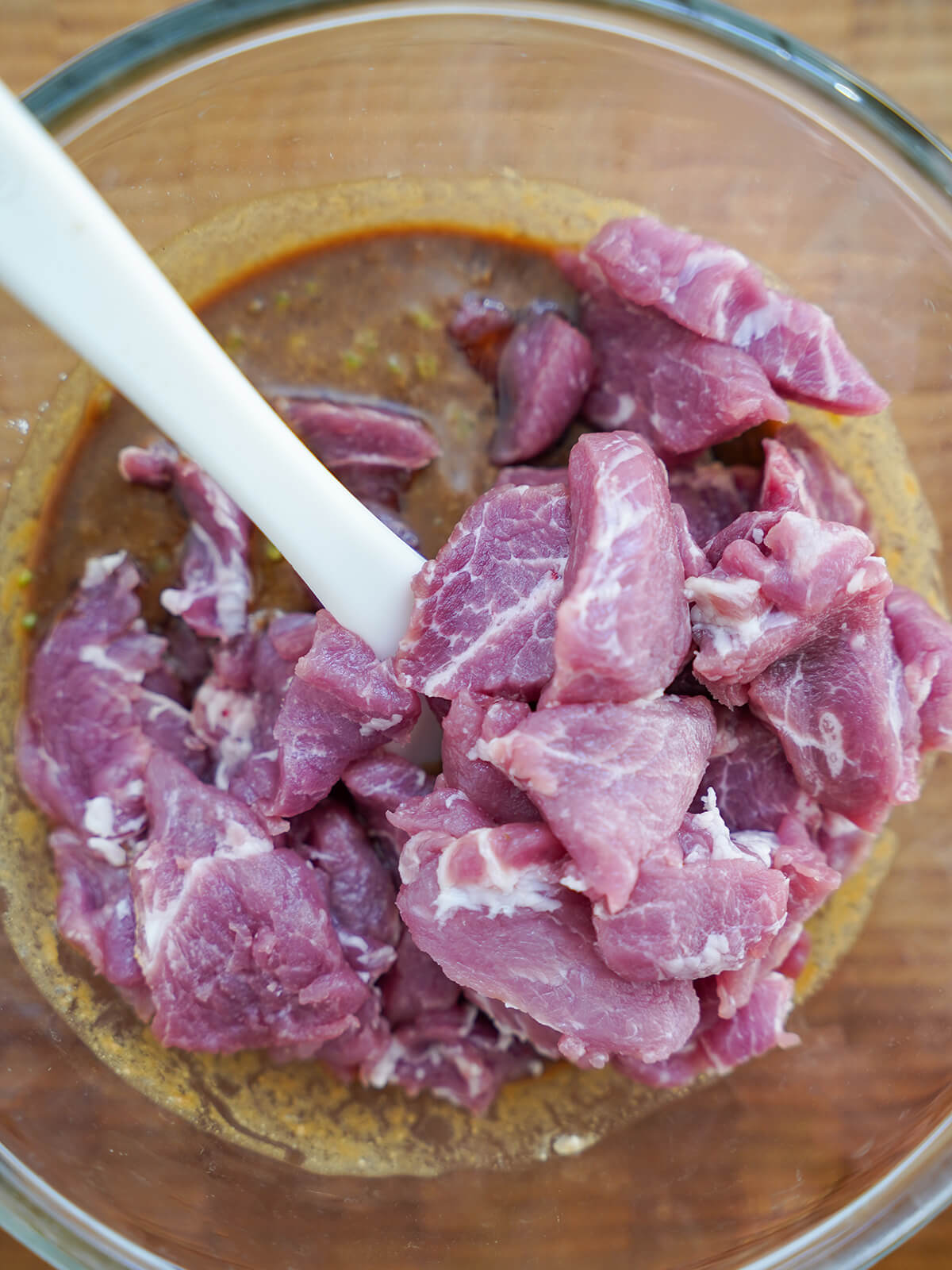
Preparing the pork to make skewers
There are two main ways to make these, one using leaner pork then chunks of pork fat at either end of the skewer, and the other using a slightly fattier cut. Personally I prefer the slightly fattier cut of pork shoulder or pork butt as I feel it has more flavor and you have less chance of it getting dry. But, you want to make sure you prepare the pork correctly.
Pork shoulder has more fat, which helps keep it juicy, but also more connective tissue, which can be hard to eat. The meat is also not quite as naturally tender, unless these are broken down. But, you can help things along in a couple ways.
First, cut the pork into lengths, about 1 inch (2.5cm) wide, and as long as they go in the piece of pork, following the grain. As you cut, find and cut out pieces of sinew and/or connective tissue, as far as you can - I often find they guide where I end up cutting. Cut off any large, thick pieces of fat but don't remove all of the fat. For one, it would be pretty hard, but also the fat gives flavor and helps keep the meat juicy.
Then, cut each section into thin-ish slices, around ¼ inch (5mm) thick, across the grain. Cutting across the grain helps the meat to be more tender and being thin helps the marinade get into the meat even more. Then coat all the slices in the marinade and leave it to absorb the flavors.
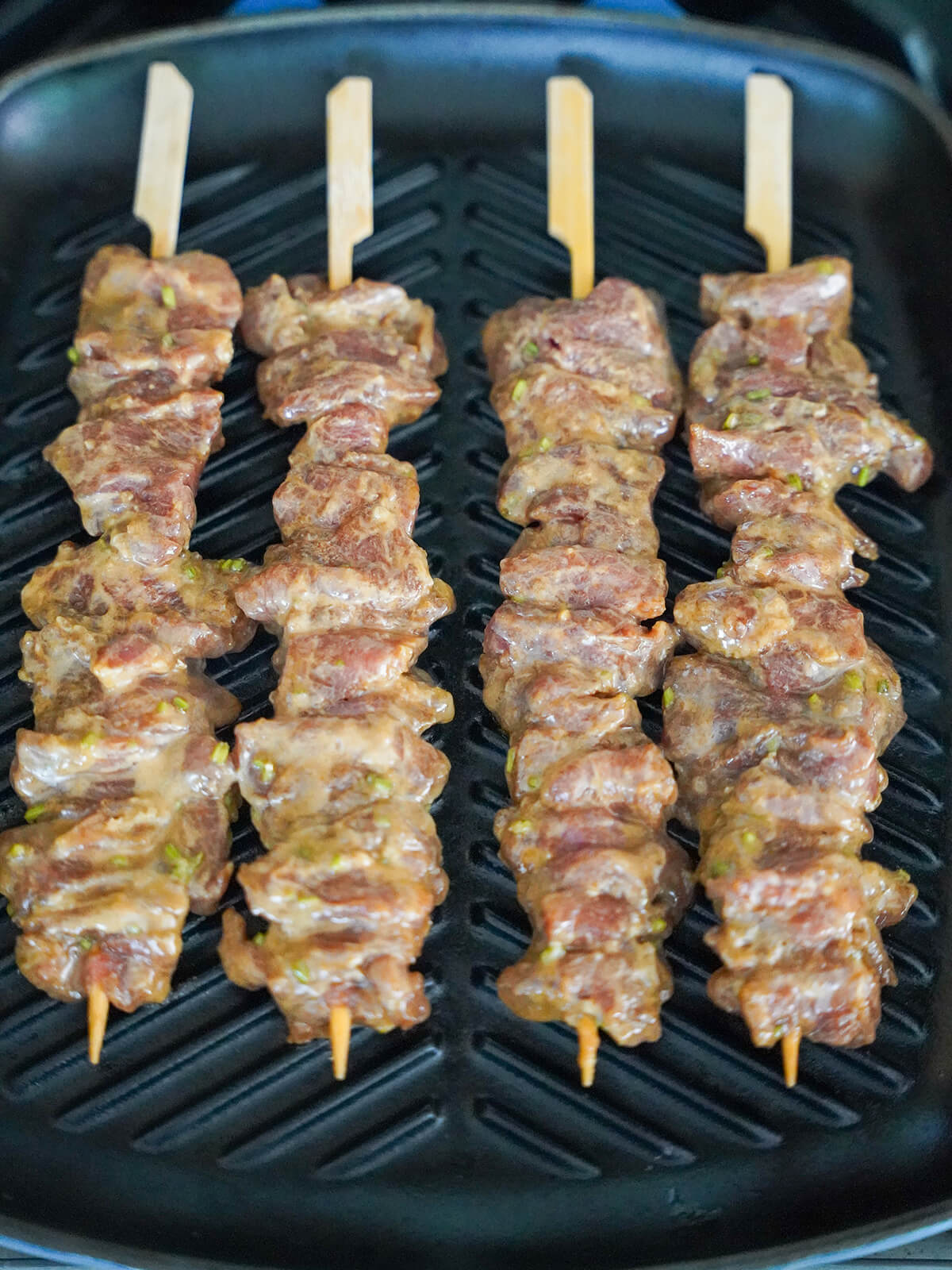
When ready to cook, thread the pork slices onto the skewers so the pieces of pork lie relatively flat, threading through the thin side. This lets as much meat as possible have contact with the heat and cook quickly.
Sides for moo ping
As mentioned above, the classic way to serve these is with sticky rice on the side, and often with a dipping sauce such as jaew (which is easy to make yourself, I used this cooking with Nart recipe). While not always the case, Thai green papaya salad is another common addition that is great to balance out the richness.
That said, you can make this into a meal in a slightly less traditional way, too. If you can't source sticky rice, which can sometimes be a little tricky, then I'd suggest jasmine rice as an alternative. You could also opt for some neutral, fresh vegetable sides like green beans or broccoli. A simple slaw or salad, particularly with eg a lime or ginger dressing, could be good, too.
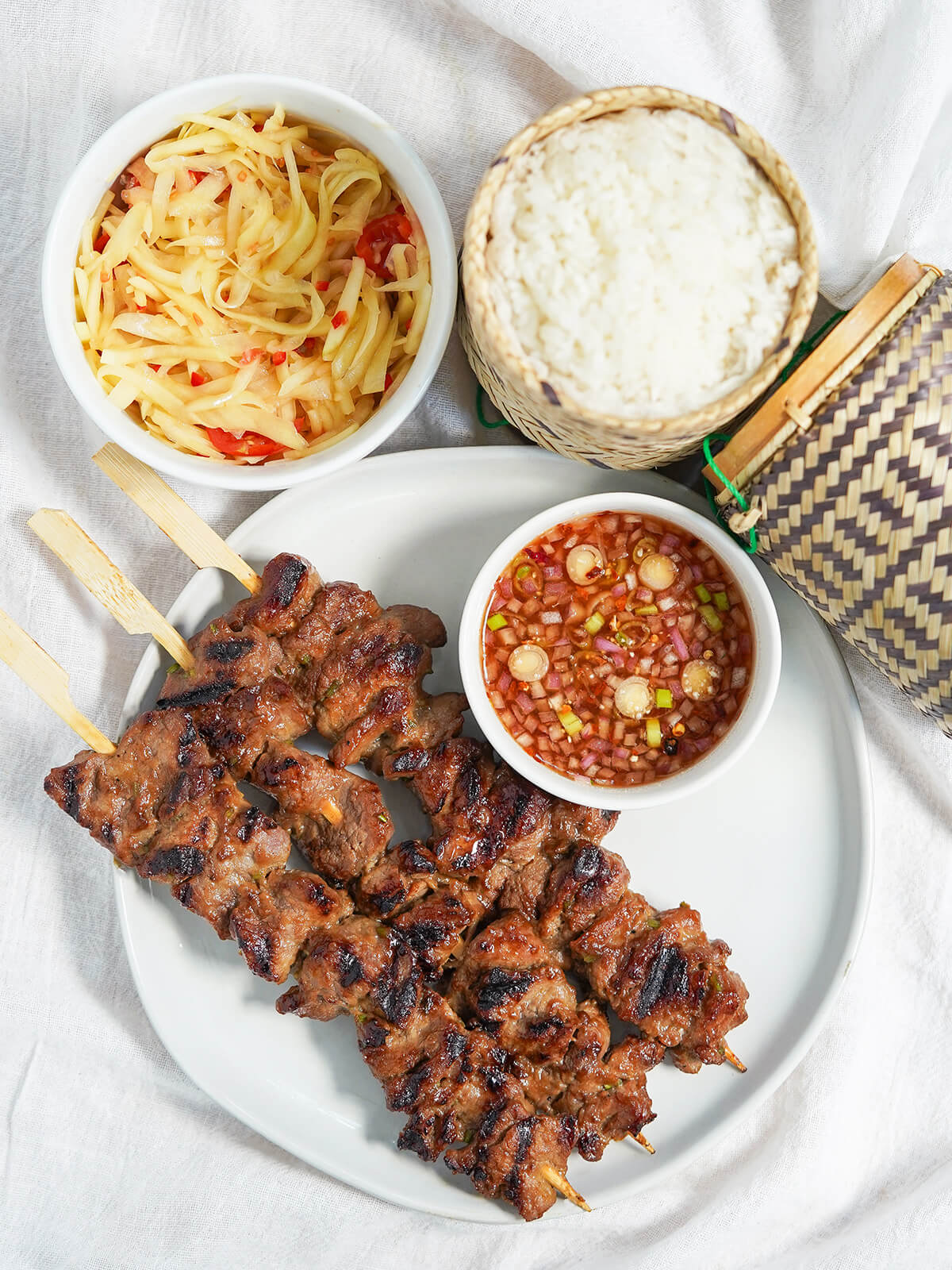
Moo ping are wonderfully tasty Thai marinated pork skewers that make a great snack or main, depending on what you pair with them. The marinade is packed with sweet, salty, umami flavors, making the pork tender and packed with flavor. Addictively good and so easy to enjoy.
Try these other tasty skewers:
- Sosaties (South African skewers with a flavor-packed chili and apricot marinade)
- Anticuchos (Peruvian chili, spice and vinegar-marinated skewers)
- Pinchos morunos (Spanish pork skewers, marinated with warm spices)
- Plus get more pork recipes and Southeast Asian recipes in the archives.
Moo ping (Thai pork skewers)
Ingredients
- 1 lb pork shoulder (or pork butt)
- 3 cloves garlic
- 1 ½ tablespoon cilantro stems coriander, or cilantro/coriander roots
- 1 ½ tablespoon palm sugar grated/shaved from a block
- ¼ cup coconut milk
- 1 tablespoon kecap manis or black soy sauce, if available
- 1 tablespoon light soy sauce
- 1 tablespoon oyster sauce
- ½ tablespoon fish sauce
- ½ teaspoon white pepper
Instructions
- Trim the pork of any excess fat and sinew. Cut into lengths, trying to work along the connective tissue as far as you can so you can remove it, to give you lengths around 1 inch (2.5cm) thick that go with the grain. Then cut into slices around ¼ inch (5mm) thick, cutting across the grain.
- Crush or grate the garlic and finely chop the cilantro/coriander stems or root. Grate the palm sugar then measure out, packing gently. Place all the remaining ingredients in a bowl - the garlic, cilantro stems, palm sugar, coconut milk, kecap manis/black soy, light soy sauce, oyster sauce, fish sauce and white pepper. Mix everything so well combined. Add in the chopped pork and stir so all the slices are coated with the mixture. Cover and refrigerate while it marinates - at least 2 hours, but overnight is also good.
- If you are using wooden skewers, remember to soak them at least 20 - 30 minutes in water before using to avoid them burning.
- When ready to cook, thread the pork onto skewers, threading through the thin side - you can scrunch the slices down a little but thread the pork so it's in line with the other pieces and the flatten it a little so it will lie relatively flat when cooking.
- Cook on the grill for a few minutes each side until the edges are going slightly caramelized and the pork is cooked through - exact cooking time will vary depending on thickness of pork and grill heat etc.
- Serve with sticky rice, jaew dipping sauce and/or sides of your choice.
Video
Nutrition (per serving)
See some of my favorite cooking tools and ingredients in the Caroline's Cooking Amazon store.
Remember to pin for later!
Leave a Reply