
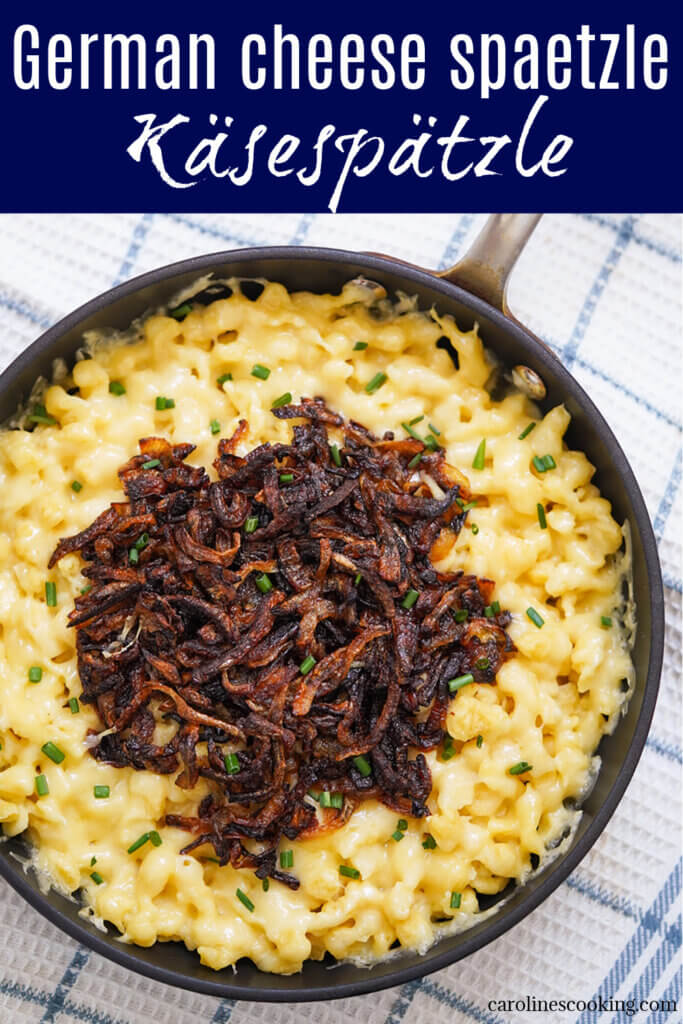
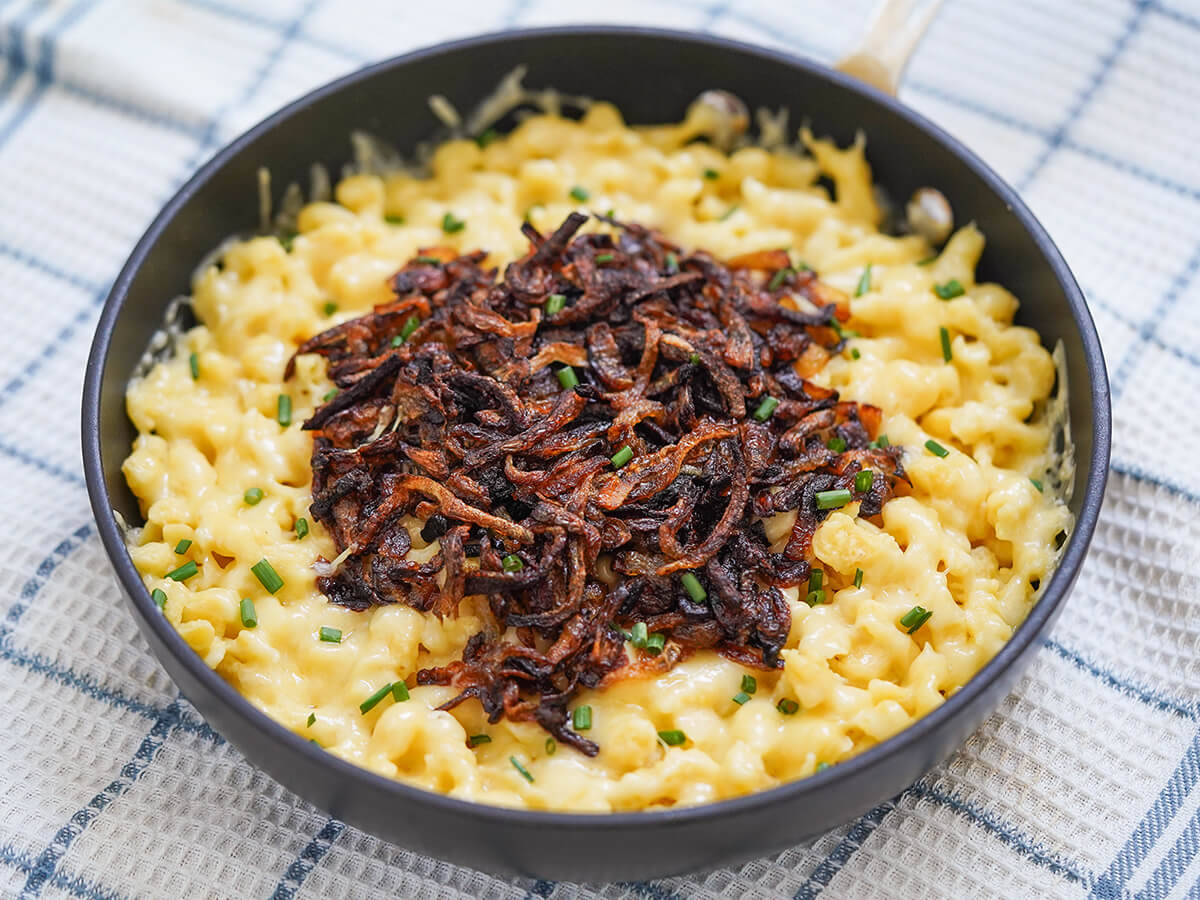
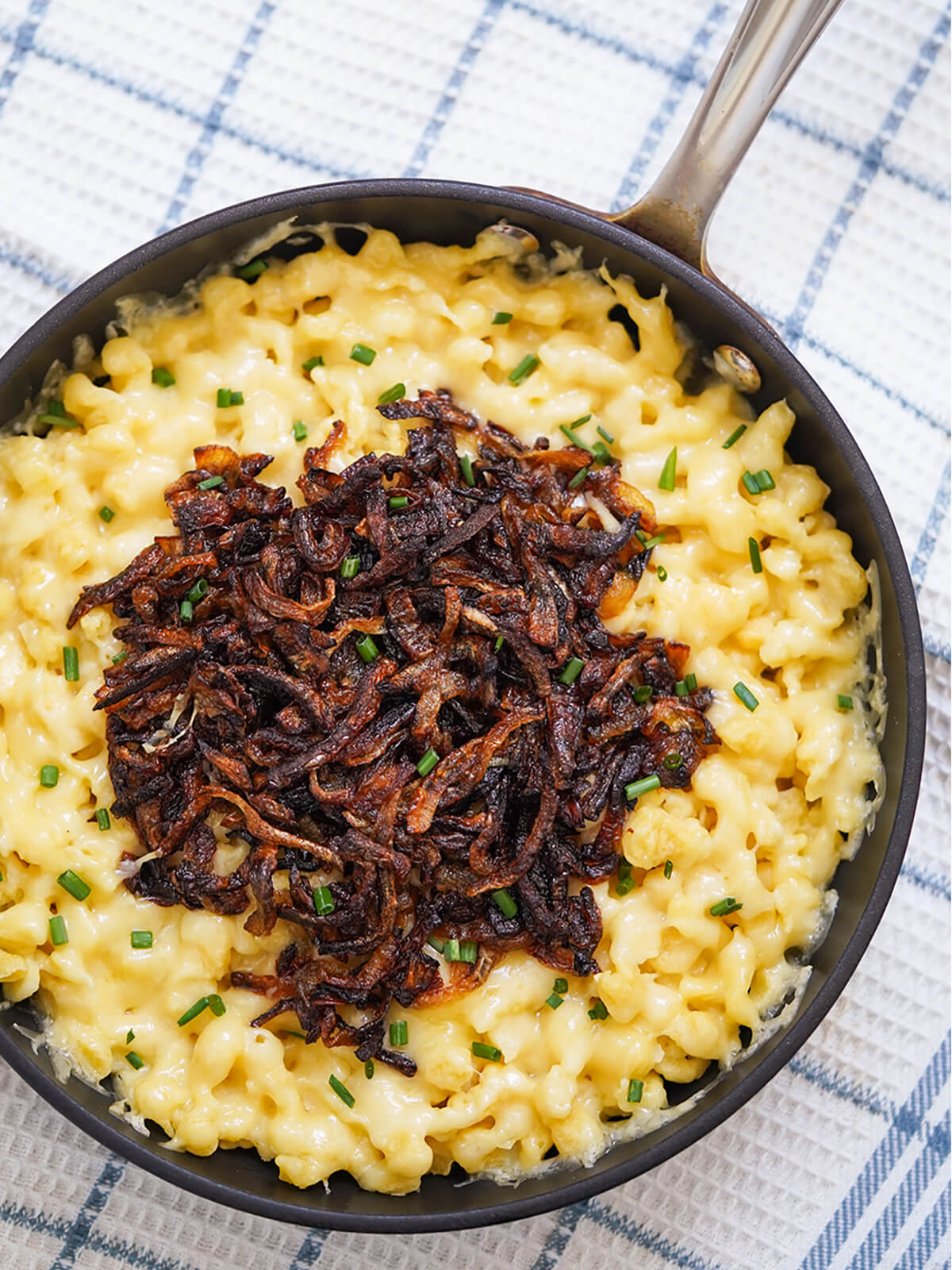
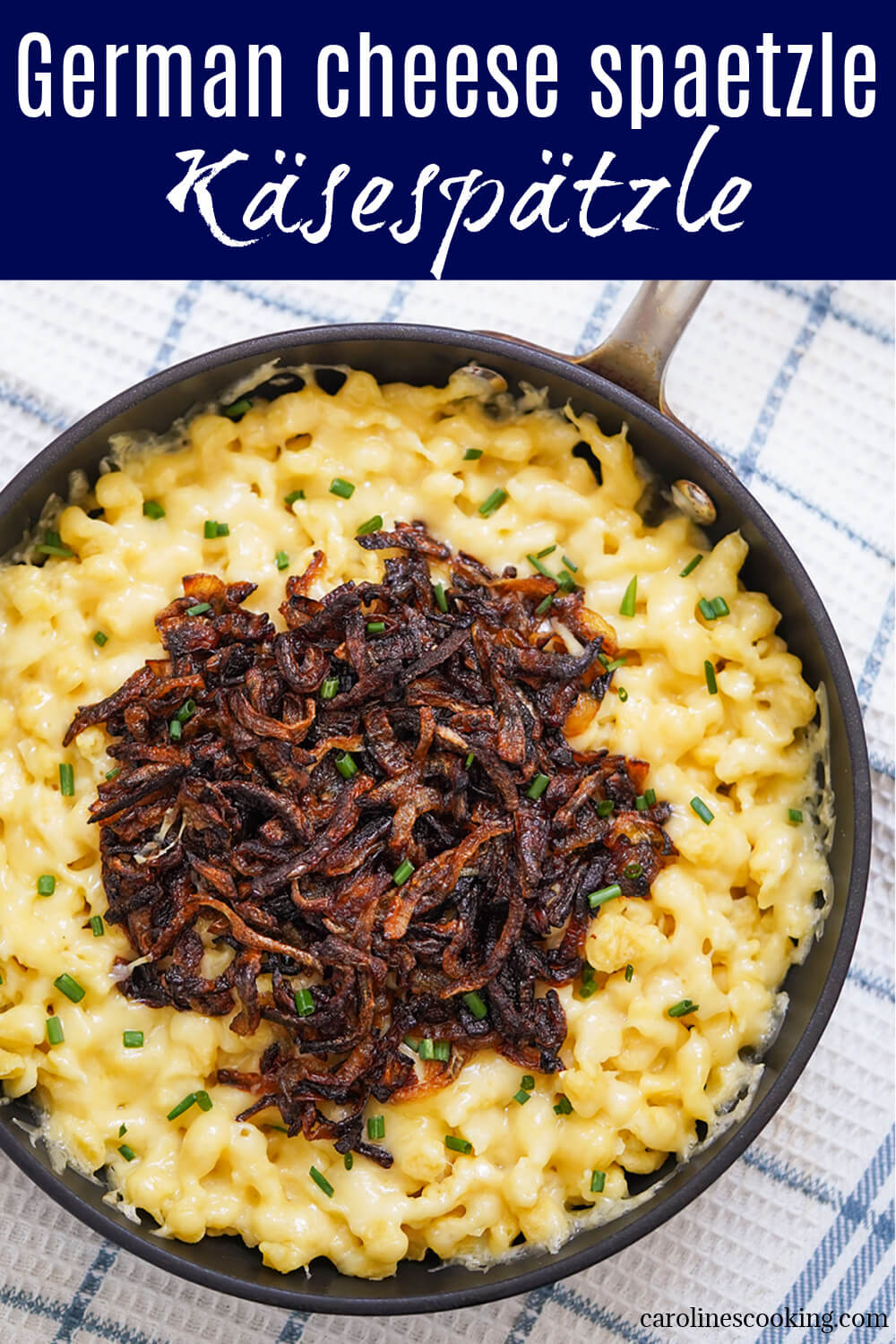
Käsespätzle is a fantastically comforting dish of noodles layered with cheese and topped with caramelized onions, baked until perfectly melty. It's a classic in Alpine ski lodges and beer gardens, but easy and delicious to enjoy at home, too.
This post may contain affiliate links, where we earn from qualifying purchases. See more details in the policy page.
For many years growing up we made regular trips to Austria, particularly in the summer but occasionally in winter. Over the course of the many visits I grew fond of many Austrian and German foods, from Kaiserschmarrn to Goulasch and pancake soup to Jägerschnitzel.
For dishes with a sauce, Spätzle (spaetzle) was always my first choice of side. But then now and then, it could become a main in itself, such as when made into dishes like this.
Origins of Käsespätzle
Käsespätzle, sometimes written as Kaesespaetzle when unable to use umlauts, is a dish from Swabia which is an area in Southwestern Germany, now mainly in modern-day Baden-Württemberg and partly Bavaria. It's made up of Spätzle, a local egg noodle, layered with cheese and onions.
The first written recipe for Spätzle is from around 1725 though the dish is believed to date back much further. The name is a diminutive form of the word "Spatz" which means sparrow, so is literally little sparrows.
Spätzle (spaetzle) grew in popularity across the region and became a popular side dish, as well as being combined with other ingredients to make other dishes. The most well known, and likely most popular, of these is cheese spaetzle.
Exactly when and where this dish evolved is unclear, but you'll now find it across much of the Germanic area, particularly Southern Germany, Austria, Liechtenstein and Switzerland. It's very much a classic mountain dish - it's hearty, filling and draws on simple ingredients you would find locally. It's a popular dish in Alpine mountain lodges and enjoyed these days as much by skiers and hikers as the farmers it was originally created for.
Ingredient notes
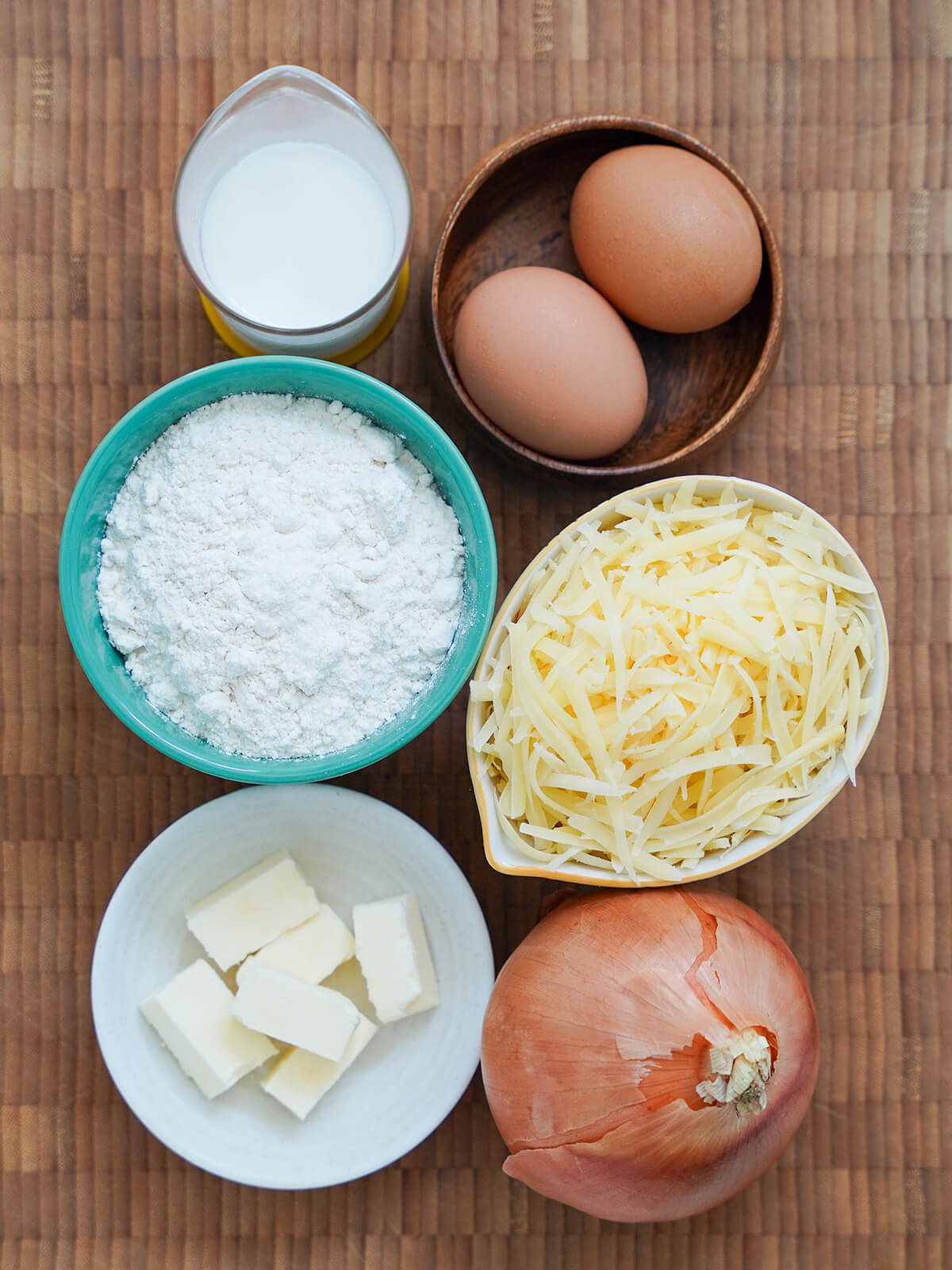
You don't need many ingredients for this dish, and in fact you can make things a little easier with ready-made Spätzle, though I highly recommend making your own. You'll need:
- Eggs, flour and milk for Spätzle - some use water but I prefer milk. Either way, it's a simple combination that comes together really easily.
- Cheese - you can use a few different cheeses here, depending on what you have and how strong a flavor you prefer. In the Swabia area, the most typical are Emmental or Bergkäse (mountain cheese). I'd recommend Emmental or Jarlsberg for a milder flavor, Gruyere or smoked Gouda for a slightly stronger flavor. A blend can also work well.
- Onion - despite the name being about the cheese and Spätzle, the onions are in many ways what makes this dish stand out as they add lots of great flavor. Some make they crispy, by tossing the onion lightly in flour before cooking more quickly. Others cook them slowly until caramelized, as I opt for here. You can also do a mix. It may seem like a lot, but they do cook down.
- Butter - you use butter to cook down the onions, adding flavor as you cook. It's worth using more than you might think you need to ensure the onions don't burn.
As you can see, it's a pretty short list. The part that takes the longest is cooking down the onions, and in fact you can easily make the Spätzle as the onions are cooking, just making sure you stir now and then. So to me, it's just as easy (and better) to make your own.
Sauce variations
Generally, most consider the original Swabian dish to be simply noodles, cheese and onions, as here. However some make this with more of a cheese sauce. Making more of a bechemel/cheese sauce and making it more like mac and cheese is really not the traditional dish at all, and more a variation found outside the country.
On the other hand, you might find some make this using some cream in Germany and Austria, too. Some would say that is another, similar dish called Kasnocken that you typically cook on the stove rather than in the oven. But you will find the names used a little interchangeably.
Here I've kept with the Swabian style as it's both simpler and you get nice slightly crisp bits of cheese around the edges. But if you are only able to warm on the stove, it can be good to add just a little cream to help loosen the cheese. You will need to stir a little to warm it evenly.
Tips for making this dish
As mentioned, this is pretty easy to make, but a couple things to note. First, I'd recommend cutting the onions both relatively thin and in even thickness as this will help them cook more evenly. Start the onions cooking first as they take the longest. Don't cook over too high a heat and add more butter as needed, to help avoid burning.
Then, prepare the Spätzle batter and let it rest a little before cooking. In the meantime, grate the cheese so it's ready to go, butter the dish you will use for the oven and pre-heat the oven.
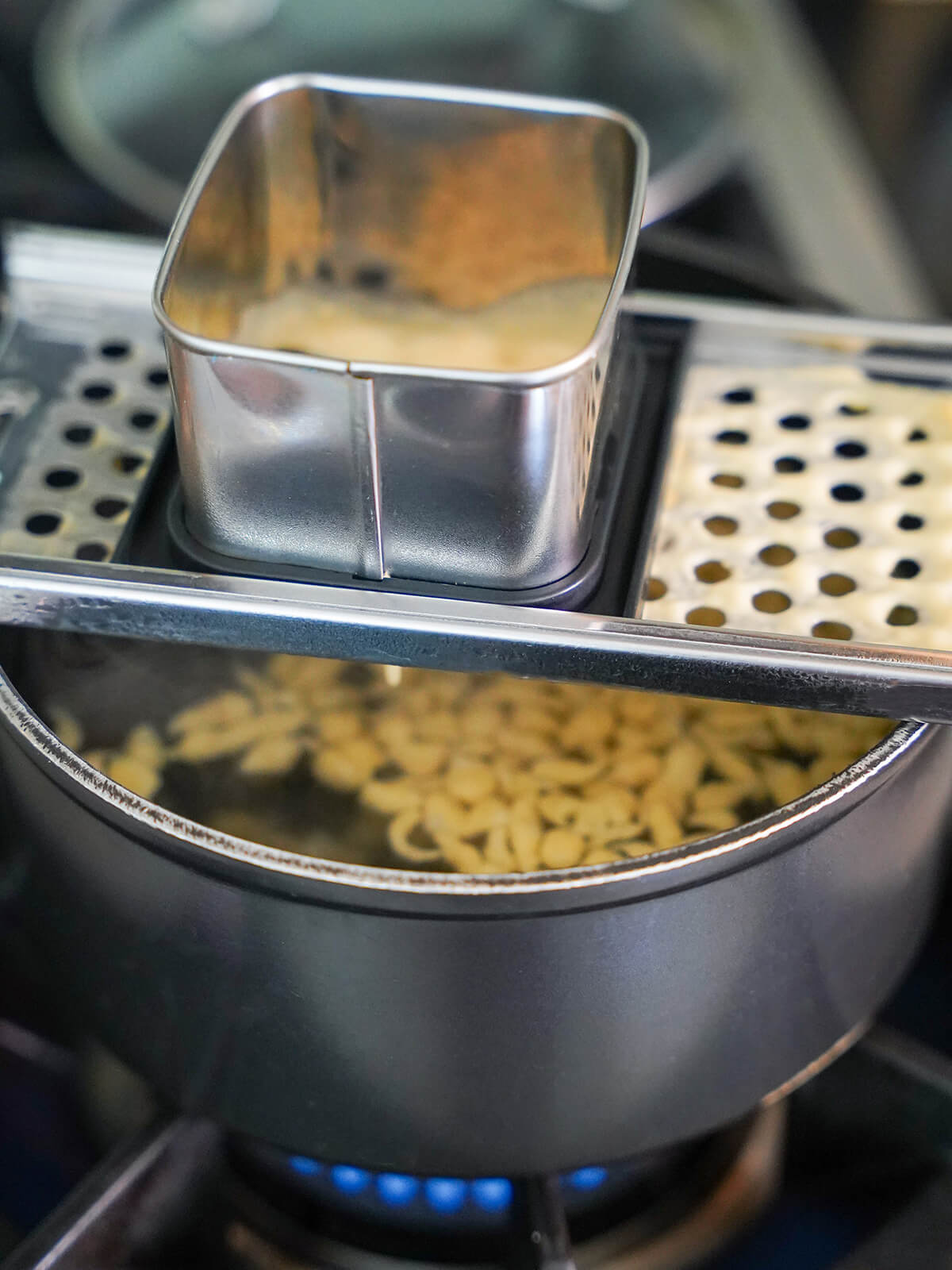
Traditionally, you would use a board method to cook Spätzle, scraping thin strips of dough into the hot water one after another. These days, a press, a bit like a ricer (which can also work) allows you to get similar strips of noodle more easily.
However, outside of Swabia, Spätzle are often shorter and so a spaetzle maker, as I use here, is more common. It's a pretty inexpensive tool and makes them really quick and easy to make. Another option is to press the dough through a colander, which is what I did before getting the maker. It's a little more work, but still functional.
Spätzle are a bit like gnocchi in that they cook pretty quickly and are done once they float to the top. Then drain and either start layering directly or place in a dish until you have cooked them all first.
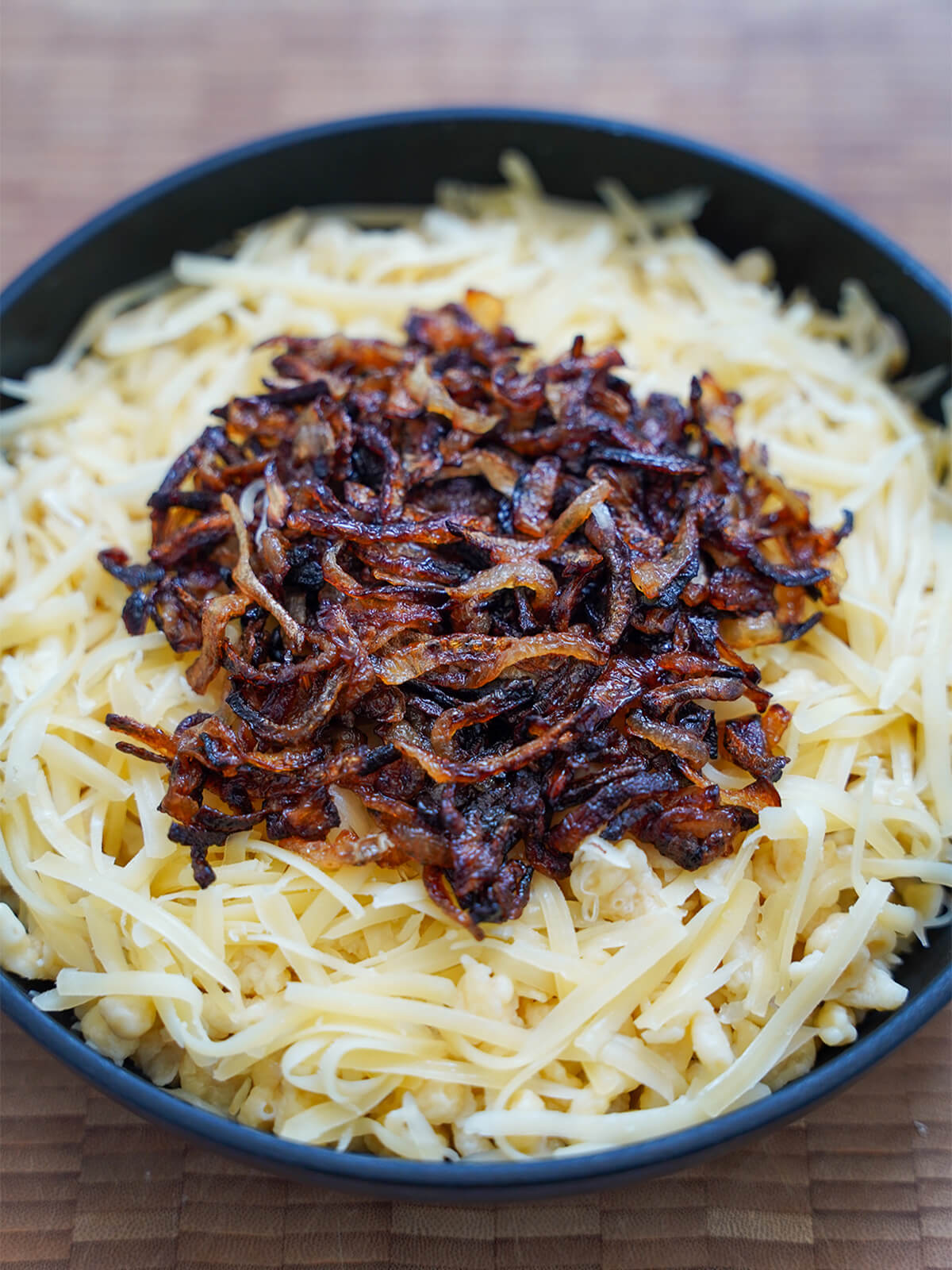
You can make two or three laters of Spätzle and cheese, as you prefer and depending on the size of the dish/skillet you are using. But always finish with cheese on top. You can layer the onions in there too, or place in a mound on top. Then place in the oven just long enough to get the cheese deliciously melty.
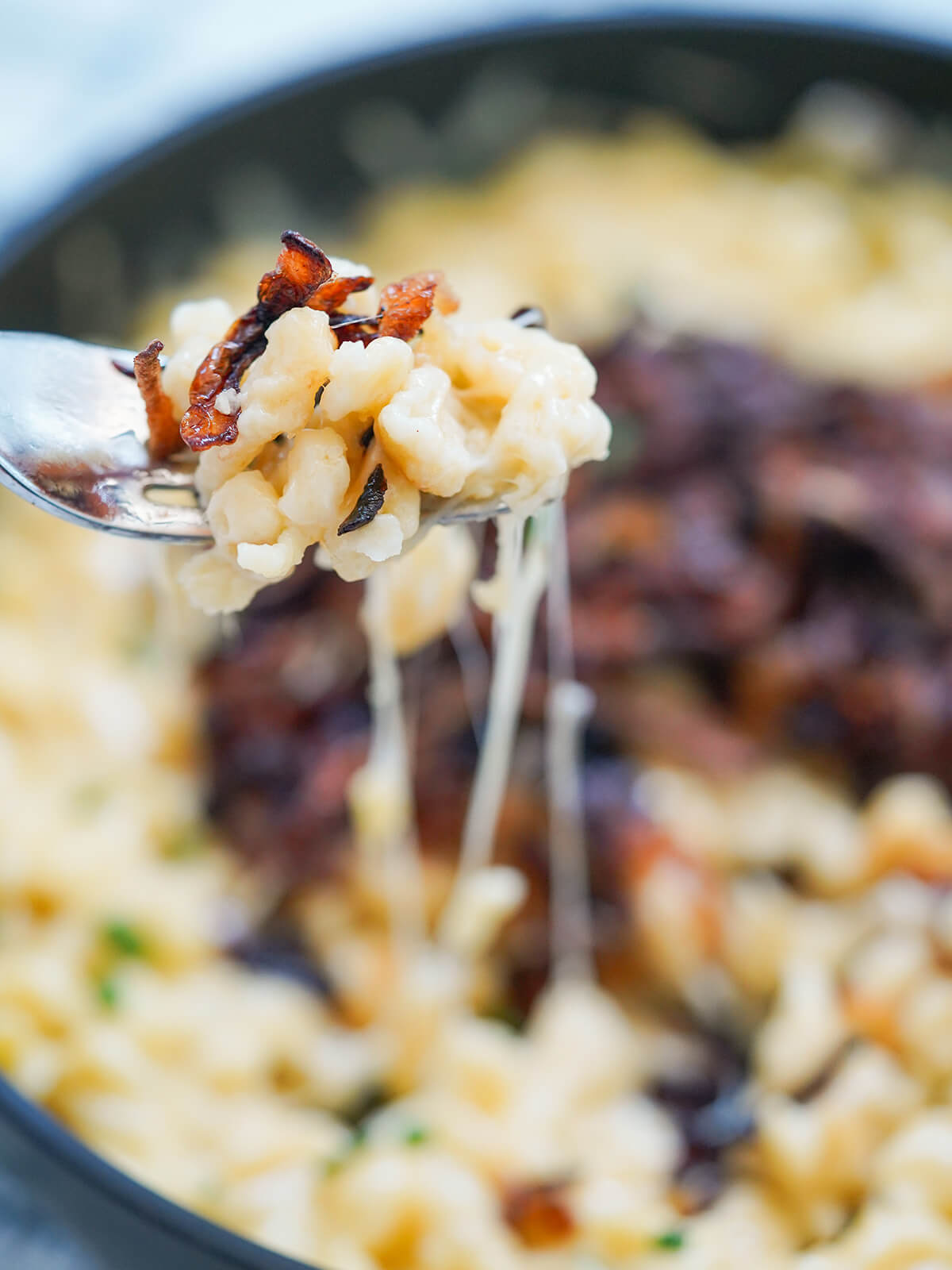
Käsespätzle, cheese spaetzle, is a wonderfully hearty, comforting dish that's delicious as a meal in itself, balanced out with a green salad, or as a side to other dishes.
Try these other comforting cheesy dishes:
- Cauliflower cheese, a British classic side with a tasty cheese sauce.
- Adjaruli khachapuri Georgian cheese bread, topped with an egg (and lots of cheese!)
- Endives au jambon, tender Belgian endives wrapped in ham and baked with a cheese sauce over the top. Fantastically comforting.
- Gougères, French cheese puffs that are light yet wonderfully cheesy.
- Plus get more main courses and German recipes in the archives.
Käsespätzle, German cheese spaetzle
Ingredients
For caramelized onions
- 1 large onion
- 3 tablespoon butter approximately, or a little more if needed
For spaetzle
- 1 ⅓ cups all purpose flour plain flour
- 2 eggs
- 6 tablespoon milk or water - can add a bit more to make a slightly softer dough that can be easier to work with
To make dish
- 1 ½ cups Emmental cheese packed, or a little more as needed. See notes
Instructions
- Halve the onion and cut into relatively thin slices of even thickness. Cut larger slices in half again. Melt the butter in a wide skillet/frying pan over medium heat and add the onions. Cook the onions, stirring now and then, so that they cook down and gradually start to brown. Reduce heat or add a little more butter if needed if the onions start to burn - you want them to gently brown together so they are caramelized. Towards the end of browning, if you like add a pinch of salt and sugar to add flavor and help them get very slightly crisper. Remove from heat once evenly mid-brown in color and caramelized.
- As the onions are cooking, mix together the flour, eggs, and part of the milk until the mixture is smooth. Add the rest of the milk and mix in well then set aside a couple minutes. Bring a wide pot of water to the boil.
- Grate the cheese ready for the next step, and preheat the oven to 400F/200C. Butter either a small skillet (mine used here is 8in/20cm) or a medium-small oven dish.
- Using a spaetzle maker (or ricer/colander if you don't have one), carefully place spaetzle maker over the pot of boiling water and press the dough through the holes into the water. Once they float to the top, remove with a slotted spoon/strainer to drain then place in a dish and repeat until all of the spaetzle are made.
- In the prepared skillet/dish, layer up the speatzle, followed by a layer or cheese, making at least two layers or three depending on your dish, ending with a layer of cheese. Make sure the cheese is spread relatively evenly over the top (add a little extra if needed). Top with a mound of caramelized onions in the middle then place th
- Top the cheese-covered spaetzle with a mound of caramelized onions in the middle then place the skillet/dish in the oven and bake for around 10 minutes until the cheese has melted. Serve either as it is, or with a side of green salad, or as a side dish to other mains.
Notes
Nutrition
I use this spaetzle maker which makes these easy to make (affiliate link).
See some of my favorite cooking tools and ingredients in the Caroline's Cooking Amazon store.
Remember to pin for later!
Leave a Reply